

World Anthropology Day
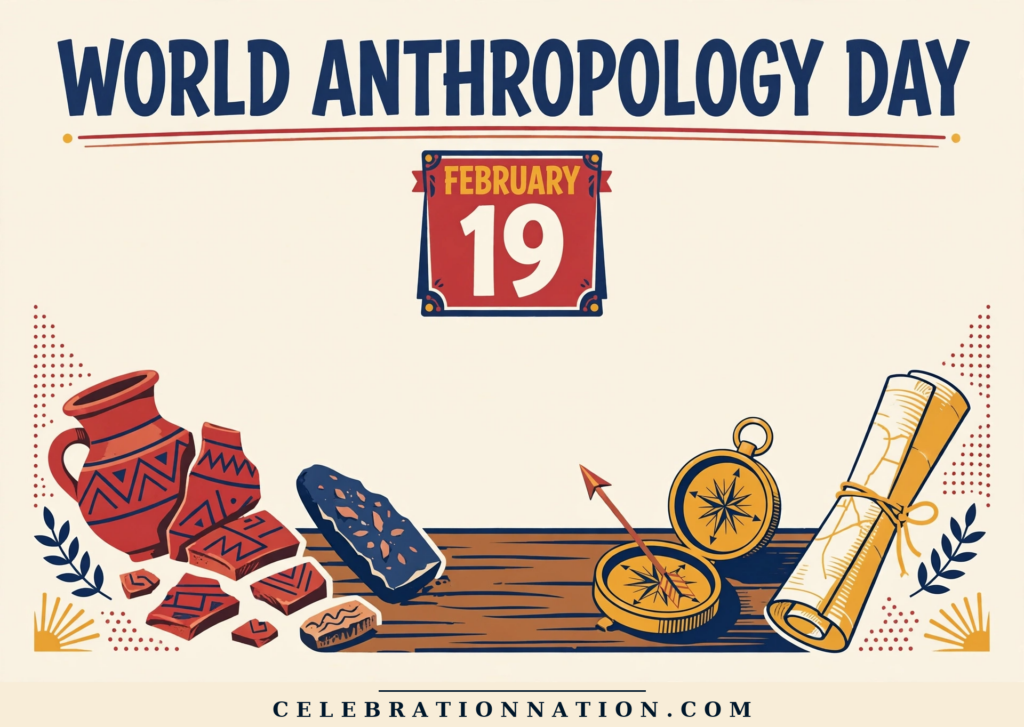
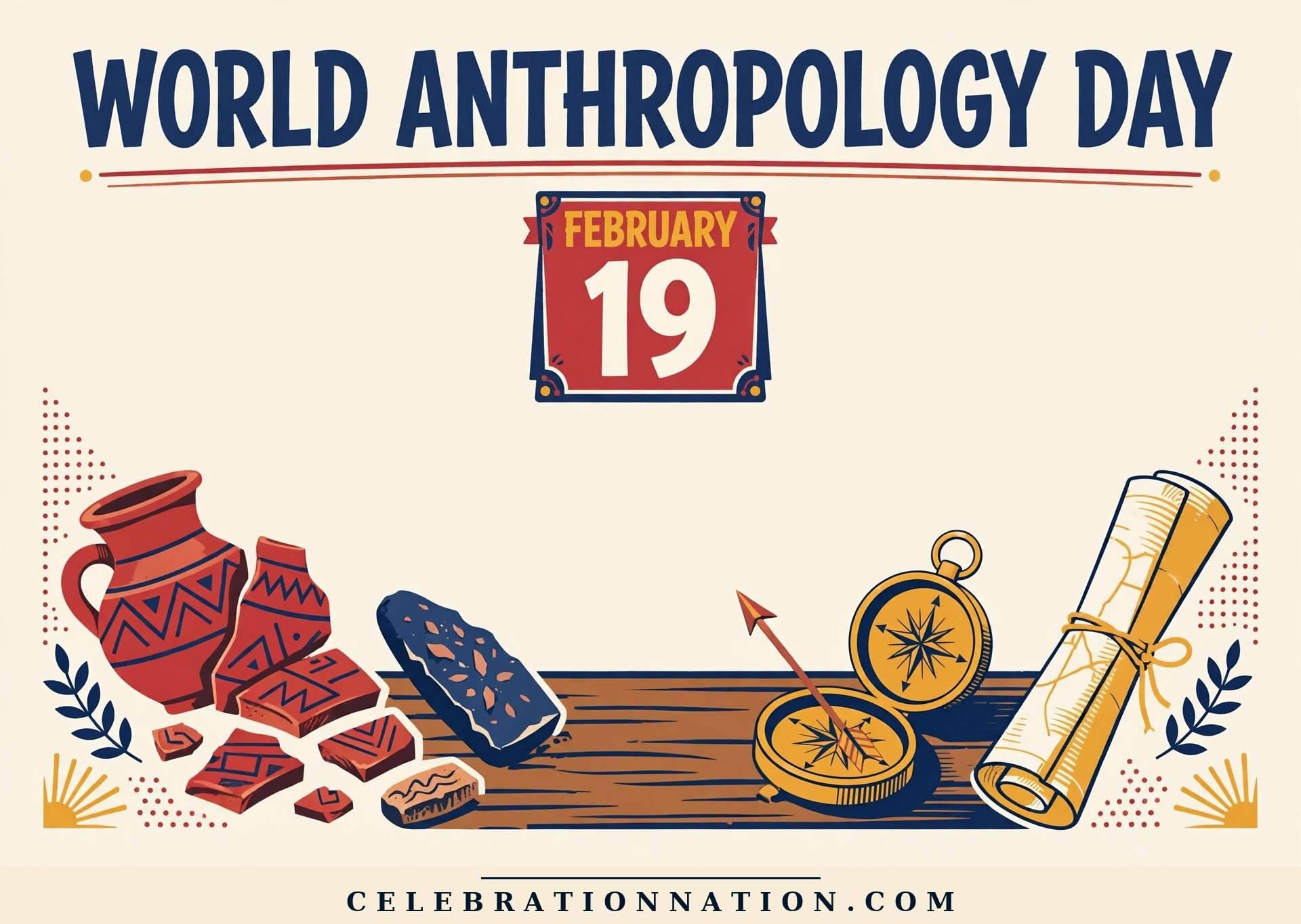
World Anthropology Day invites us to appreciate our shared humanity through the lens of cultural diversity.
- Roots
- Established in 2015 by the American Anthropological Association
- Vibe
- A celebration of cultural understanding and appreciation
- Also on Feb 19
- Iwo Jima Day · Arabian Horse Day · Chocolate Mint Day
- Hashtag
- #WorldAnthropologyDay
3 ways to celebrate
Explore a culture
Watch a documentary about a culture you know little about.
Visit a museum
Tour an anthropology or natural history museum with friends.
Share traditions
Invite classmates or coworkers to share a family tradition.
Plan ahead
World Anthropology Day is observed on the third Thursday in February. Here is where it lands for the next ten years, handy for planners, marketers and party people.
Fast facts
The story
World Anthropology Day was created to promote the relevance of anthropology in modern society. This day falls on the third Thursday of February every year and encourages people to engage with the diverse cultures that enrich our world. The American Anthropological Association initiated this observance in 2015, aiming to highlight the insights anthropology offers regarding human behavior and cultural practices.
Read the full story
Anthropology, the study of humans and their societies, plays a crucial role in understanding the complexities of cultural interactions. With roots tracing back to ancient civilizations, anthropology has evolved into a vital field addressing contemporary issues such as globalization, migration, and social justice. By examining cultural diversity, anthropologists contribute to policy-making, education, and community development.
Celebrating World Anthropology Day can take many forms, including public discussions, workshops, and exhibitions that showcase various cultural practices. Institutions across the United States and beyond often hold events designed to highlight the importance of anthropology in fostering dialogue and understanding among different communities. These activities not only celebrate the discipline but also encourage individuals to reflect on their own cultural identities.
As we observe this day, it's essential to recognize that anthropology is not just an academic pursuit, it is a tool for social change. Engaging with anthropology can help bridge cultural divides and promote empathy and understanding in an increasingly interconnected world. By participating in World Anthropology Day, we can all contribute to a greater appreciation of our shared humanity.
““Never doubt that a small group of thoughtful, committed citizens can change the world; indeed, it is the only thing that ever has.”
MARGARET MEAD
Did you know?
Anthropology's Roots
The term 'anthropology' comes from the Greek words 'anthropos' (human) and 'logos' (study).
Famous Anthropologists
Margaret Mead and Claude Lévi-Strauss are notable figures in the field.
Cultural Relativity
Anthropology emphasizes understanding cultures on their own terms.
Fieldwork Importance
Ethnographic fieldwork is a core method in anthropology.
Subfields of Anthropology
Cultural, biological, linguistic, and archaeological anthropology are the main branches.
Global Impact
Anthropology informs policies on migration, health, and education.
Cultural Preservation
Anthropologists often work to preserve endangered cultures and languages.
Around the world
Every culture celebrates a little differently.
- USNorth AmericaHome to diverse indigenous cultures and immigrant communities.
- BRSouth AmericaRich in indigenous heritage and cultural practices.
- FREuropeA tapestry of languages, customs, and traditions.
- JPAsiaDiverse cultures ranging from ancient traditions to modern practices.
- AUOceaniaHome to unique indigenous cultures and languages.
- ZAAfricaA continent of diverse tribes and rich cultural history.
Keep the party going
See the calendar



Celebrate every day, all year
Official gear from the people who track 1,700+ celebrations.
Browse the shop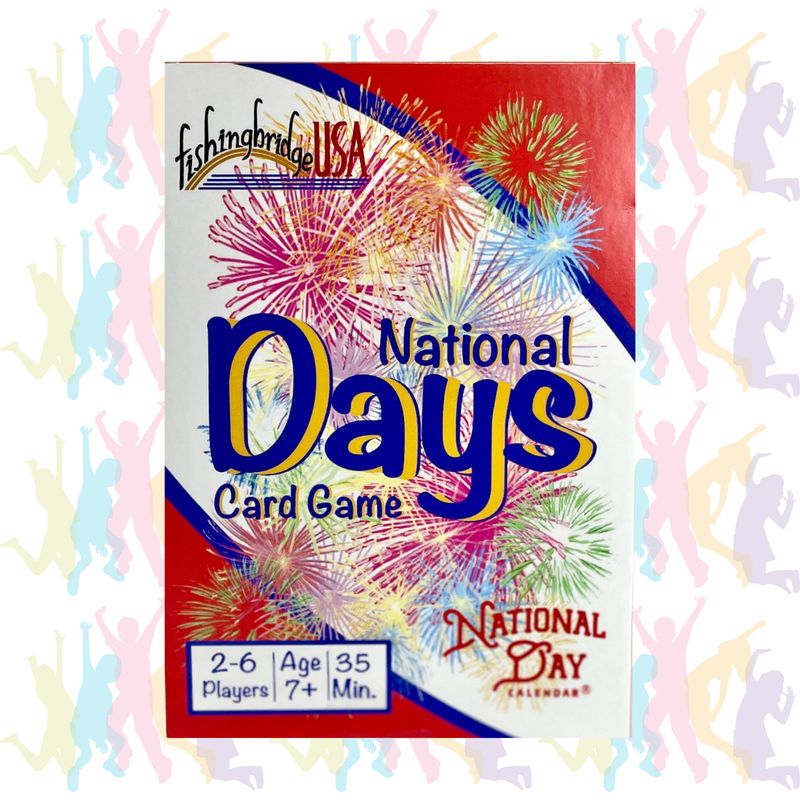 National Day Celebration Card GameA party in a box, any day of the year.
Never miss a reason to celebrate.
One quick morning email with today's celebrations, ideas and posters. Free, unsubscribe anytime.
🎉 You're on the list! Watch your inbox for The Daily Confetti.