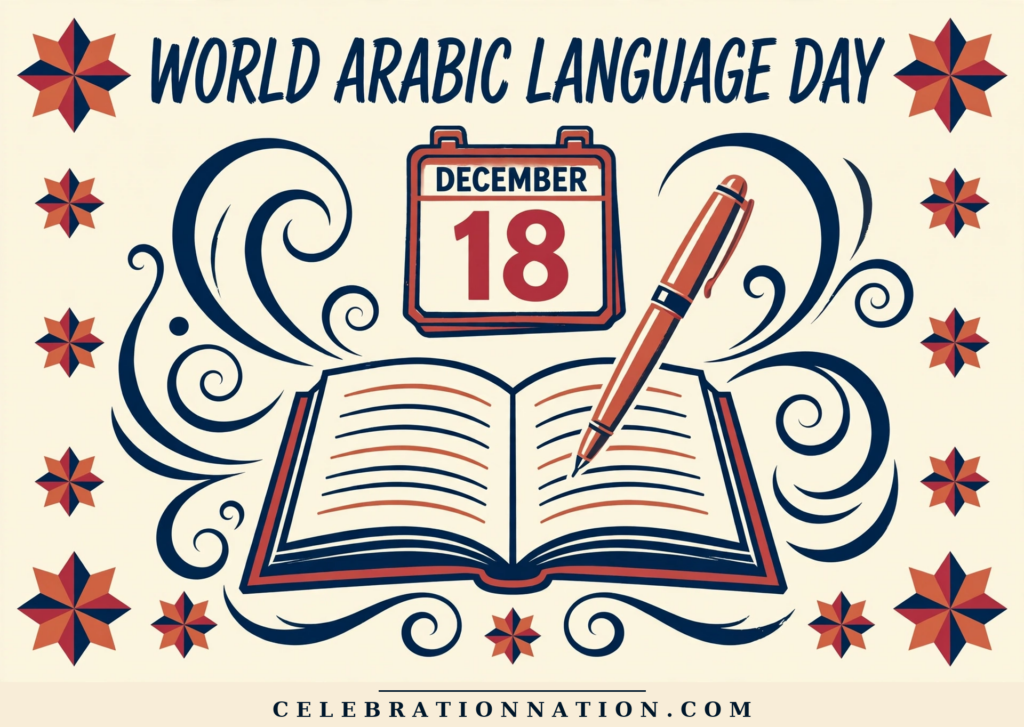
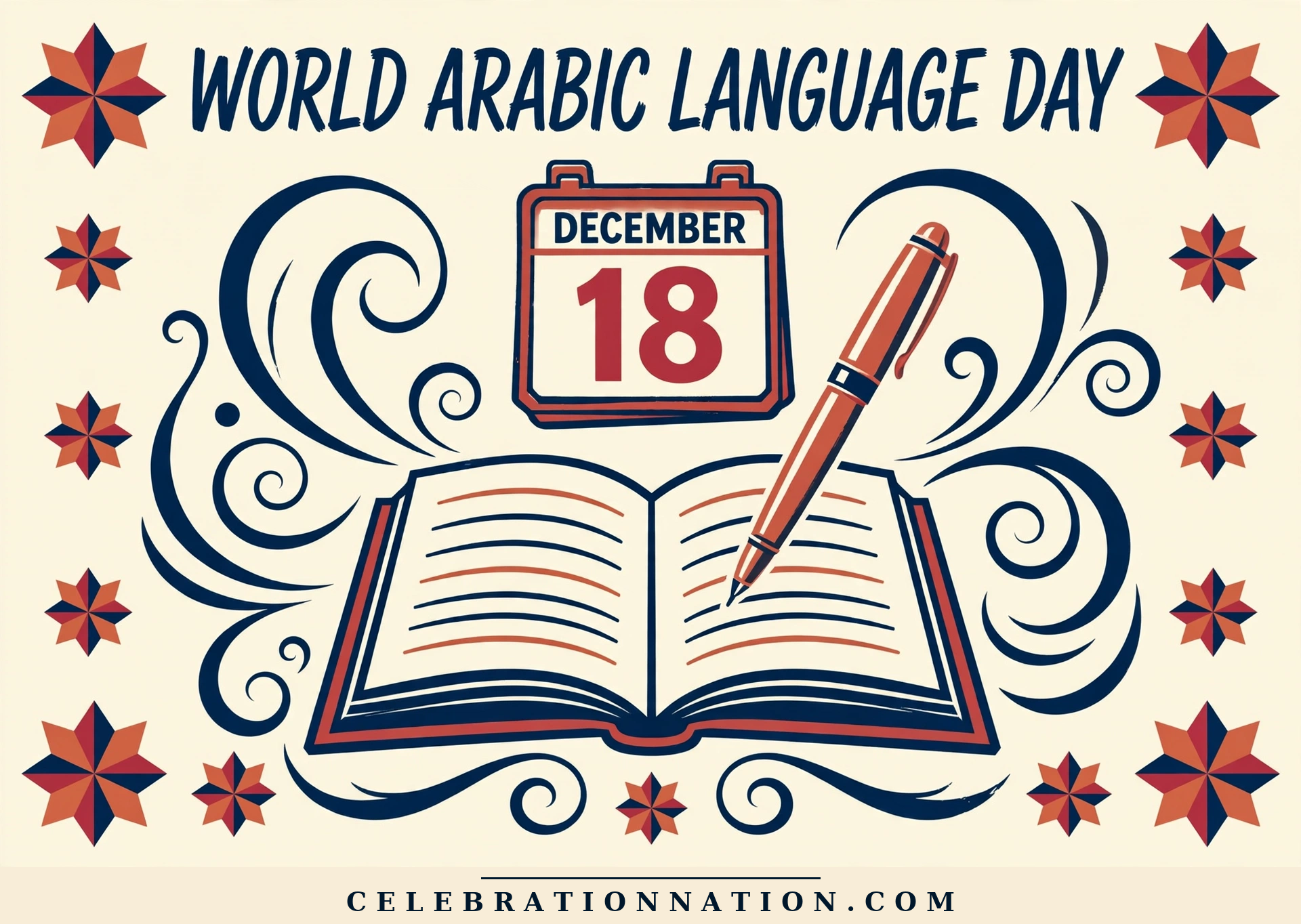
World Arabic Language Day
Join us in honoring the richness of the Arabic language and its global impact. Arabic is one of the six official languages of the United Nations.
- Roots
- Established by UNESCO in 2012
- Vibe
- A celebration of linguistic heritage and diversity.
- Also on Dec 18
- Answer the Telephone Like Buddy the Elf Day · International Migrants Day · Roast Suckling Pig Day
- Hashtag
- #WorldArabicLanguageDay
3 ways to celebrate
Learn five phrases
Pick up basic Arabic greetings at home and practice them until they feel natural.
Cook Arabic dinner
Gather friends to cook a Middle Eastern meal while an Arabic playlist fills the kitchen.
Share a proverb
Post a favorite Arabic proverb on the office board with its English meaning.
Plan ahead
World Arabic Language Day is observed on December 18 every year. Here is where it lands for the next ten years, handy for planners, marketers and party people.
Fast facts
The story
Arabic, a Semitic language with deep historical roots, is not only a means of communication but also a vessel of culture and identity for millions. Celebrated on December 18, World Arabic Language Day highlights the significance of Arabic in the global landscape, encouraging people to appreciate its poetry, philosophy, and literature. The day was established by UNESCO in 2012, marking a commitment to promote linguistic diversity and cultural dialogue.
Read the full story
The Arabic language boasts a rich history, tracing back more than 1,500 years. It is the language of the Quran, which adds to its spiritual significance for Muslims around the world. Arabic has significantly influenced many languages, including Spanish, Portuguese, and even English, with countless borrowed words. As the language continues to evolve, it remains a vital part of the cultural fabric in countries across the Middle East and North Africa.
Celebrating World Arabic Language Day involves recognizing the contributions of Arabic speakers to the arts, sciences, and global discourse. Events are held in schools, universities, and cultural centers, featuring poetry readings, traditional music, and discussions about the importance of preserving linguistic heritage. The day serves as a reminder of the power of language in fostering understanding and cooperation among diverse communities.
In the United States, Arabic is among the most widely spoken languages, particularly in metropolitan areas with vibrant Arab-American communities. Celebrating this day offers an opportunity to learn more about Arabic culture, engage with local communities, and promote the learning of Arabic as a second language. As we embrace diversity, World Arabic Language Day reminds us that every language enriches the tapestry of human experience.
Did you know?
The Arabic Alphabet
Consists of 28 letters, written from right to left.
Dialects Varied
Arabic has numerous dialects, which can differ significantly.
UNESCO's Role
UNESCO promotes Arabic language education globally.
Language of Science
Arabic has contributed many terms in mathematics and medicine.
Cultural Significance
Arabic calligraphy is considered a fine art form.
Arabic in the US
Arabic is spoken by communities across the United States.
A Rich Vocabulary
Arabic has many words for expressing emotions and concepts.
Around the world
Every culture celebrates a little differently.
- EGEgyptHome to one of the oldest Arabic dialects and a rich literary tradition.
- SASaudi ArabiaThe birthplace of the Arabic language and Islamic culture.
- LBLebanonKnown for its vibrant arts scene and contributions to Arabic literature.
- IQIraqA historical center for poetry, philosophy, and science.
- TNTunisiaCelebrates a unique dialect and rich cultural heritage.
- MAMoroccoFeatures a blend of Arabic and Berber languages in its culture.
Keep the party going
See the calendar
Celebrate every day, all year
Official gear from the people who track 1,700+ celebrations.
Browse the shop 2027 Wall + Desk Calendar BundleCelebrate every day at home and at work.
Never miss a reason to celebrate.
One quick morning email with today's celebrations, ideas and posters. Free, unsubscribe anytime.
🎉 You're on the list! Watch your inbox for The Daily Confetti.