




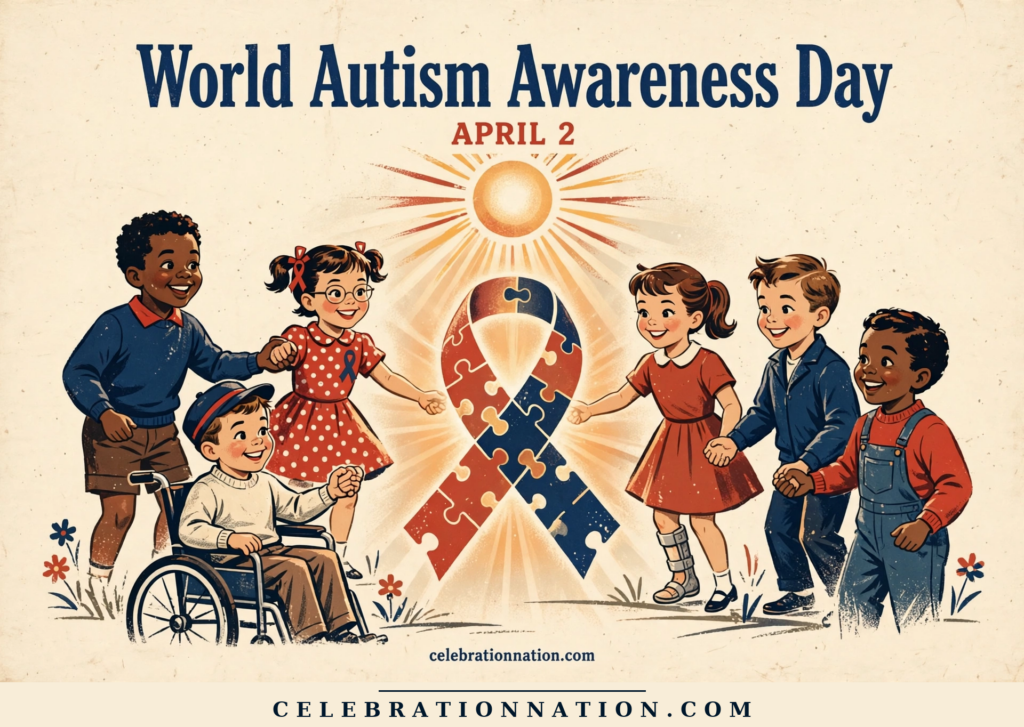
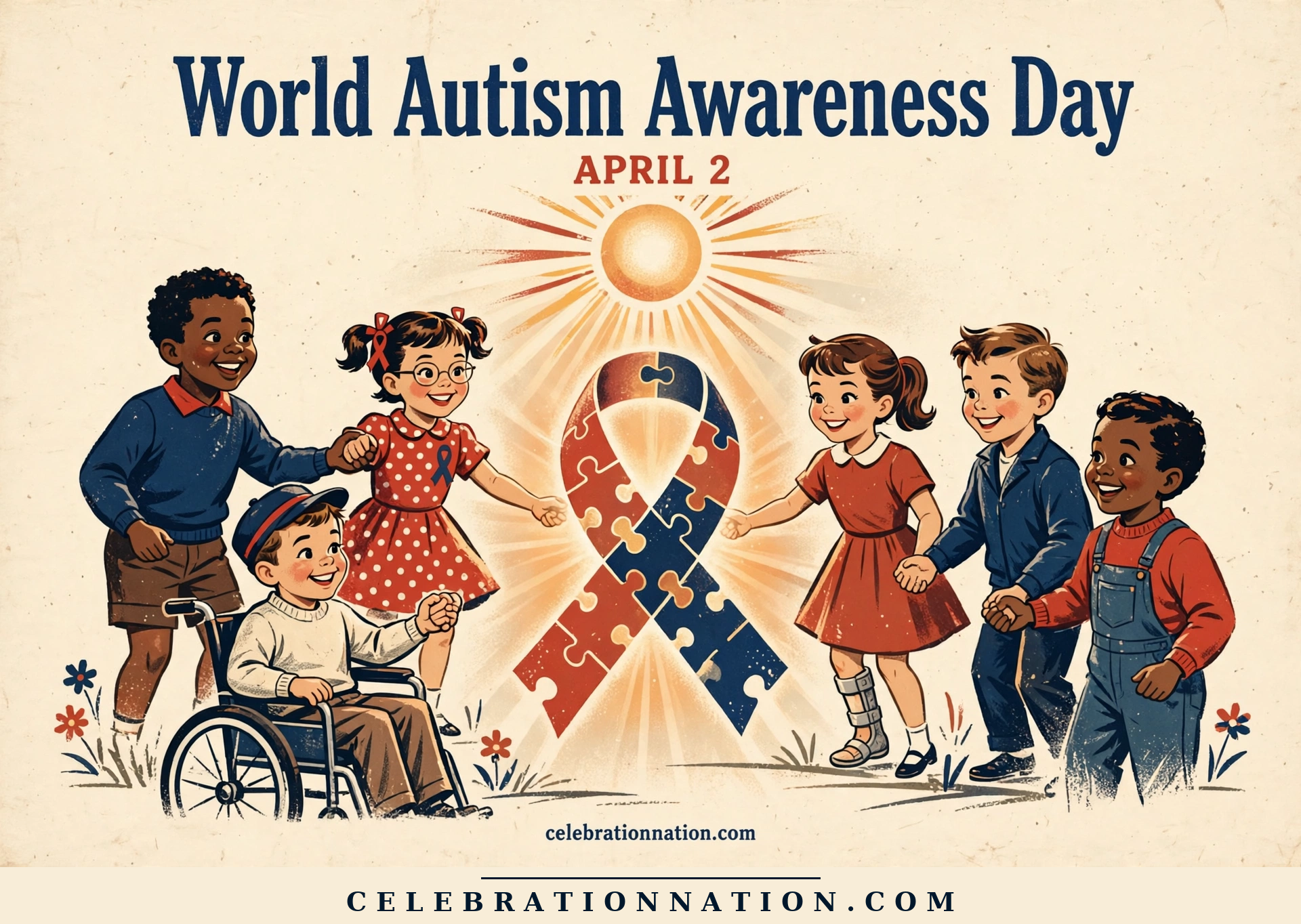
World Autism Awareness Day
World Autism Awareness Day isn't about diagnosis — it's about dignity. About showing up, showing support, and pushing for change.
- Roots
- Established by the UN in 2007
- Vibe
- A day for awareness, understanding, and acceptance
- Hashtag
- #WorldAutismAwarenessDay
Ways to celebrate
Small, doable ways to celebrate World Autism Awareness Day.
- Share one reputable resource with your network.
- Donate to a patient-led organization working on autism awareness.
- Check in on someone you know who's living with it.
- Book the screening or appointment you've been putting off.
- Listen more than you speak.
Make it your kind of celebration
Family
Have the real conversation at the table — stigma-free, no lecture.
Kids
Answer questions honestly and age-appropriately.
Couples
Check in with each other's appointments, screenings, and follow-ups.
Office
Share vetted resources and encourage people to use their benefits.
School
Bring in an expert, survivor, or advocate to speak for a class period.
Community
Run a donation drive, a walk, or a listening session for those affected.
Just me
Reach out to someone you know is living with it. Ask how they're doing for real.
Plan ahead
World Autism Awareness Day is observed on April 2 every year. Here is where it lands for the next ten years, handy for planners, marketers and party people.
Fast facts
The story
World Autism Awareness Day was established in 2007 by the United Nations to promote awareness and acceptance of individuals on the autism spectrum. This initiative aims to foster a better understanding of autism, a complex neurological condition that affects communication, behavior, and social interaction. The day encourages conversations around the challenges faced by autistic individuals and the importance of creating inclusive environments.
Read the full story
In the United States, April 2 serves as a reminder of the increasing prevalence of autism. According to the Centers for Disease Control and Prevention, approximately 1 in 36 children is diagnosed with autism, highlighting the need for greater awareness and support. Across the globe, various organizations and communities unite to host events that educate the public on autism and its impact on families.
Celebrating World Autism Awareness Day is not just about recognizing autism but also about embracing the diverse perspectives and talents of autistic individuals. From art and music to science and technology, many autistic individuals contribute uniquely to society. By promoting acceptance, we help dismantle stereotypes and foster a culture of inclusion that benefits everyone.
As we observe this important day, consider ways to spread awareness, whether by wearing blue, attending local events, or simply engaging in conversations about autism. Each action, no matter how small, contributes to a larger movement of understanding and support for individuals with autism and their families.
Did you know?
First World Autism Awareness Day
Celebrated on April 2, 2008.
Symbol of Autism Awareness
The puzzle piece is widely recognized as a symbol.
Blue Light It Up
Landmarks around the world are illuminated in blue.
Autism Acceptance Month
April is recognized as Autism Acceptance Month.
Autism Spectrum
Autism is referred to as a 'spectrum' due to its varying degrees.
Global Participation
Countries around the world participate in awareness activities.
Research Funding
Increased funding is needed for autism research and services.
Around the world
Every culture celebrates a little differently.
- USUnited StatesLocal events and awareness campaigns are held nationwide.
- GBUnited KingdomMajor cities host marches and educational programs.
- CACanadaCommunity events promote understanding and support.
- AUAustraliaAwareness initiatives focus on inclusion and acceptance.
- INIndiaGrowing awareness efforts aim to support families and individuals.
- ZASouth AfricaEducational workshops and community gatherings take place.
Keep the party going
See the calendar

Celebrate every day, all year
Official gear from the people who track 1,700+ celebrations.
Browse the shop 2027 National Day Wall CalendarGet the 2026 edition free. 1,700+ observances.
Never miss a reason to celebrate.
One quick morning email with today's celebrations, ideas and posters. Free, unsubscribe anytime.
🎉 You're on the list! Watch your inbox for The Daily Confetti.