




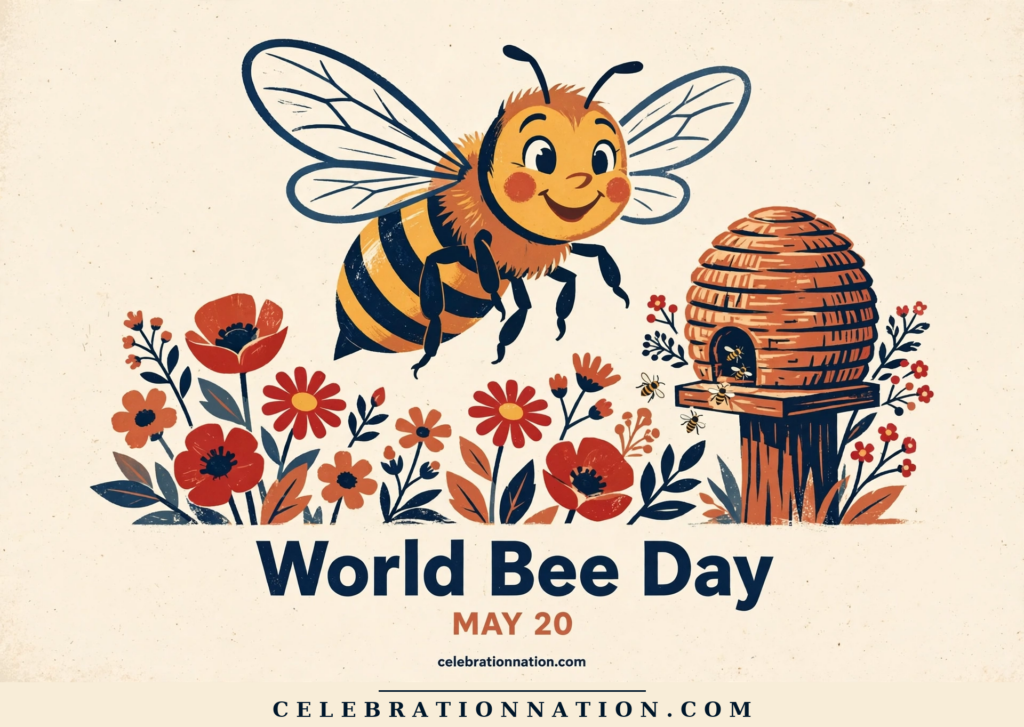
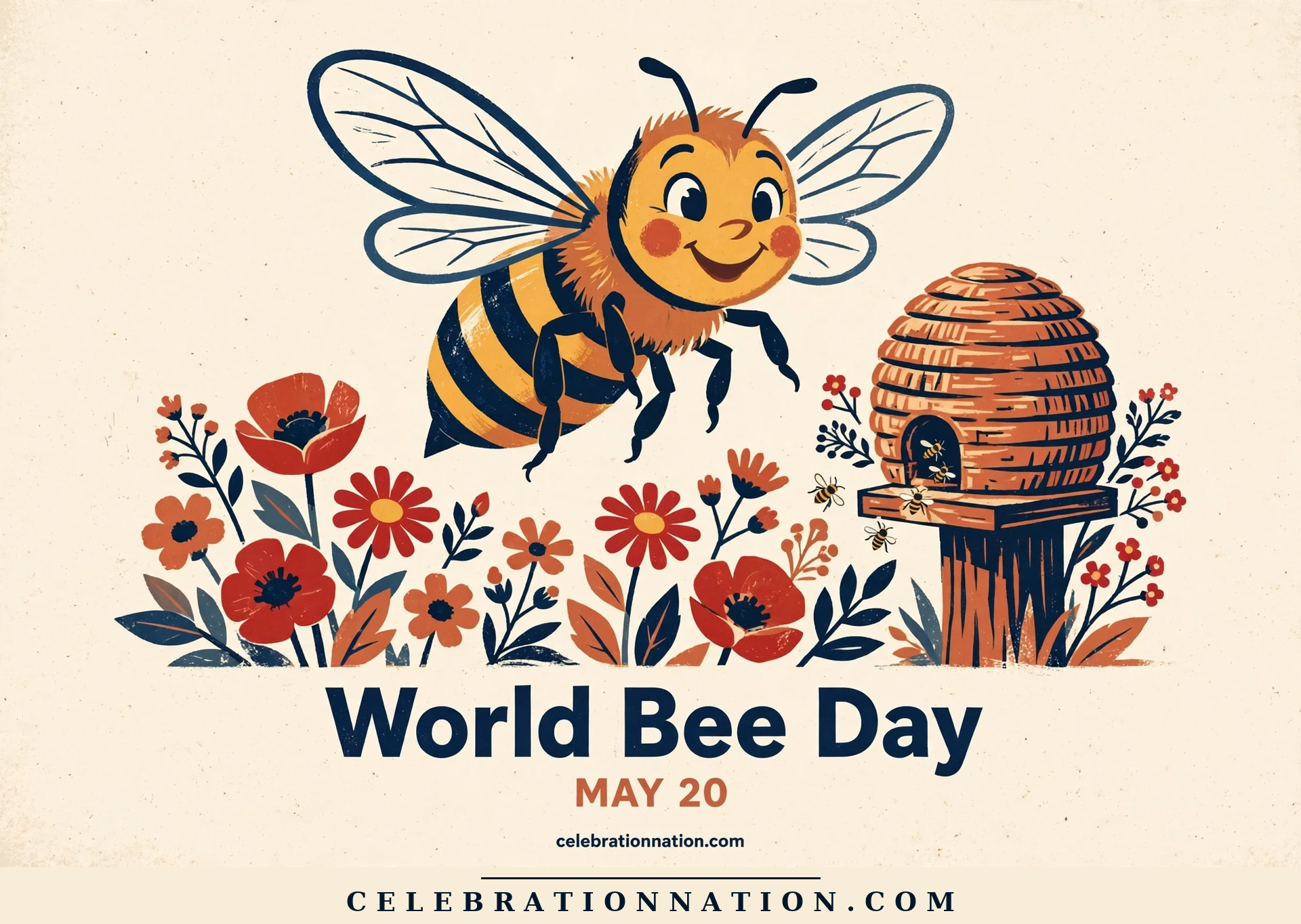
World Bee Day
On World Bee Day, we learn something new about the creatures we share the planet with — and maybe fall a little more in love with the world.
- Roots
- Established by the UN in 2017
- Vibe
- A day of awareness and appreciation.
- Also on May 20
- World Metrology Day · International Red Sneakers Day · Be a Millionaire Day
- Hashtag
- #WorldBeeDay
Ways to celebrate
Small, doable ways to celebrate World Bee Day.
- Learn something specific about the species — one surprising fact.
- Donate to an organization doing real work for them.
- Choose one product at the store with the animal's welfare in mind.
- Share what you learn with a kid who'll care.
- Spend 10 minutes outside looking for them or their tracks.
Make it your kind of celebration
Family
Watch one short documentary together about the animal and talk about what you learned.
Kids
Help them research it, then have them teach you one new fact at dinner.
Couples
Plan a zoo, aquarium, or sanctuary visit and go as a real date.
Office
Share a quick 'did you know' on the team chat or a lunchtime Learning session.
School
Run a one-day classroom mini-project about the species and its ecosystem.
Community
Donate to or volunteer with a conservation nonprofit focused on the animal.
Just me
Read one long-form article about them. Let yourself get into it.
Plan ahead
World Bee Day is observed on May 20 every year. Here is where it lands for the next ten years, handy for planners, marketers and party people.
Fast facts
The story
World Bee Day, observed every year on May 20, was established in 2017 by the United Nations to raise awareness about the importance of bees and other pollinators. This date was chosen to honor Anton Janša, an influential beekeeper from Slovenia, whose work in the 18th century helped advance the field of apiculture. The day serves as a reminder of the crucial role that bees play in maintaining biodiversity and food security across the globe, with one-third of the food we consume being dependent on pollinators.
Read the full story
In the United States alone, honeybees contribute over $15 billion annually to the economy through their pollination services. As climate change, habitat loss, and pesticide use threaten bee populations, the significance of World Bee Day has grown. Events and activities are organized worldwide, ranging from educational workshops to community gardening projects, to foster a greater understanding of how to protect these essential creatures.
Celebrations often include local farmers' markets, where consumers can buy honey and other bee products, reinforcing the connection between bees and the food on our tables. Many organizations also use this day to launch campaigns aimed at preserving bee habitats and promoting sustainable farming practices. Engaging with local beekeepers can offer firsthand insights into their vital work and the challenges they face.
Ultimately, World Bee Day is about more than just bees; it's about understanding the interconnectedness of our ecosystems and the critical role that all pollinators play in our survival. By taking action, whether through planting bee-friendly plants, supporting local honey producers, or advocating for policies that protect pollinators, we can all contribute to a healthier planet.
“"Bees and other pollinators are fundamental for the health of ecosystems and food security.”
UNITED NATIONS
Did you know?
Bees Communicate
Bees use a waggle dance to communicate the location of food.
Bee Lifespan
Worker bees live about 5-6 weeks, while queens can live for years.
Honey Production
A colony of bees produces about 60-100 pounds of honey annually.
Pollination Power
One bee can visit up to 2,000 flowers in a single day.
Bee Species
There are over 4,000 species of native bees in the U.S.
Bee Threats
Pesticides, habitat loss, and disease threaten bee populations.
Bee Culture
Many cultures revere bees and their products for their health benefits.
Around the world
Every culture celebrates a little differently.
- USNorth AmericaHome to the American honeybee, crucial for agriculture.
- BRSouth AmericaDiversity in bee species supports unique ecosystems.
- EUEuropeBees contribute significantly to food production.
- AUAustraliaNative bees play a key role in local flora.
- CACanadaBeekeeping is vital for local crops and biodiversity.
- INAsiaHome to many unique bee species and practices.
Keep the party going
See the calendar

Celebrate every day, all year
Official gear from the people who track 1,700+ celebrations.
Browse the shop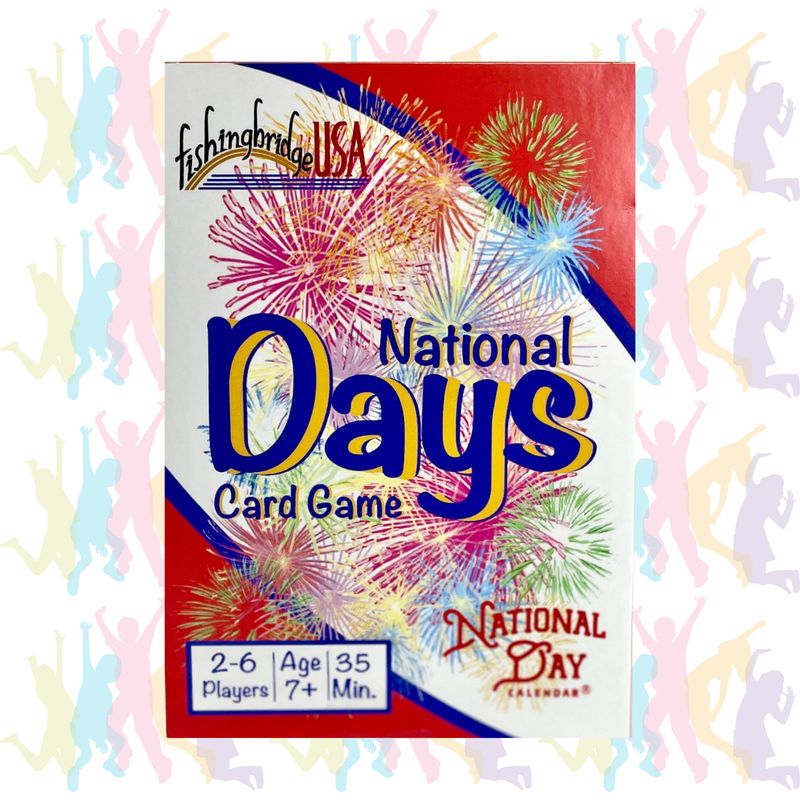 National Day Celebration Card GameA party in a box, any day of the year.
Never miss a reason to celebrate.
One quick morning email with today's celebrations, ideas and posters. Free, unsubscribe anytime.
🎉 You're on the list! Watch your inbox for The Daily Confetti.