



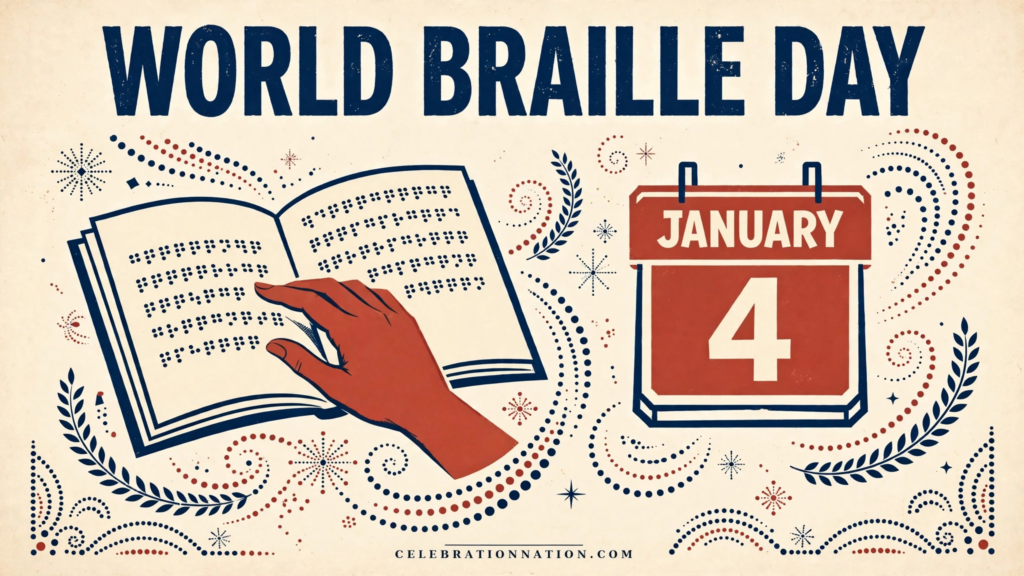
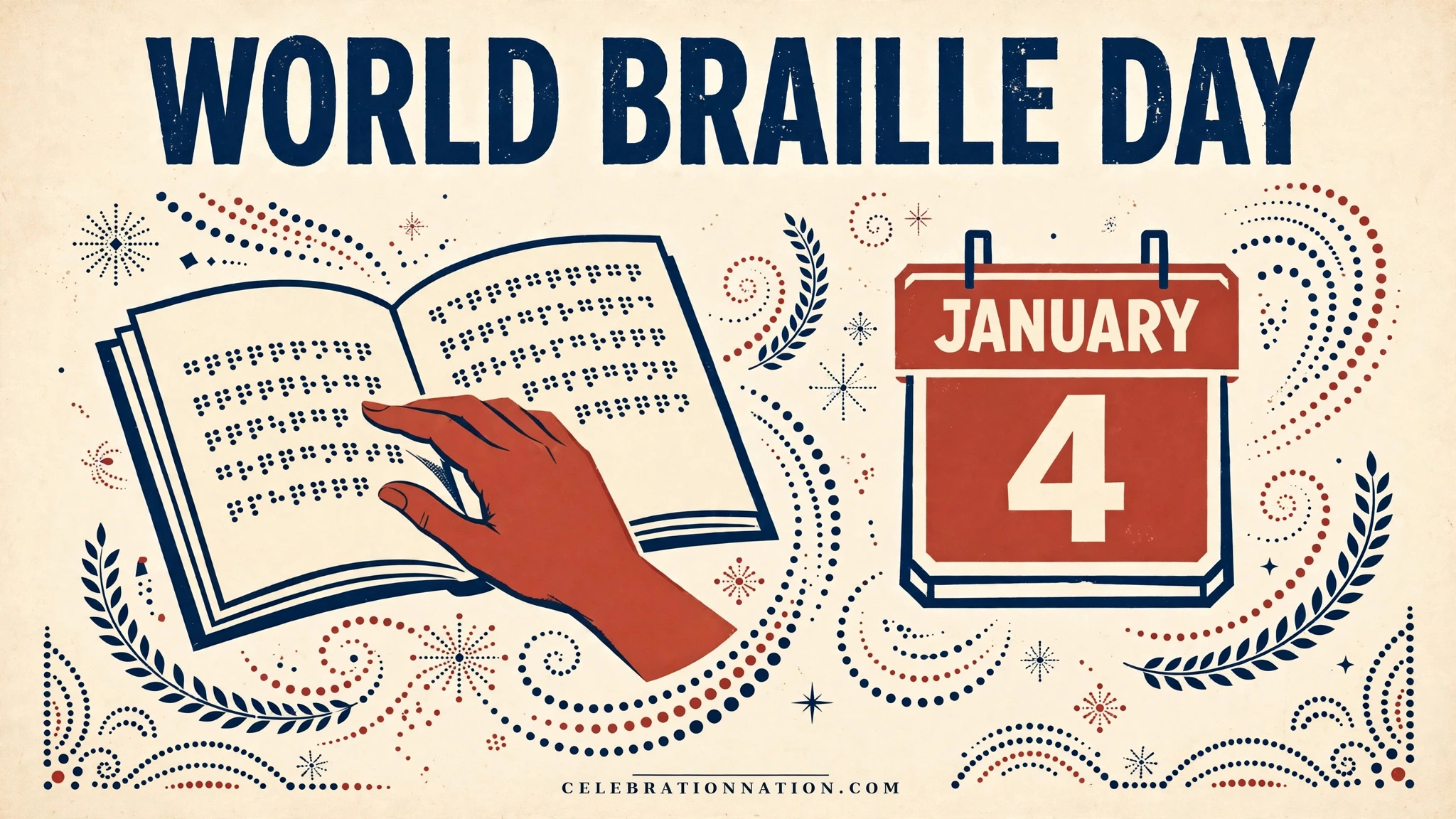
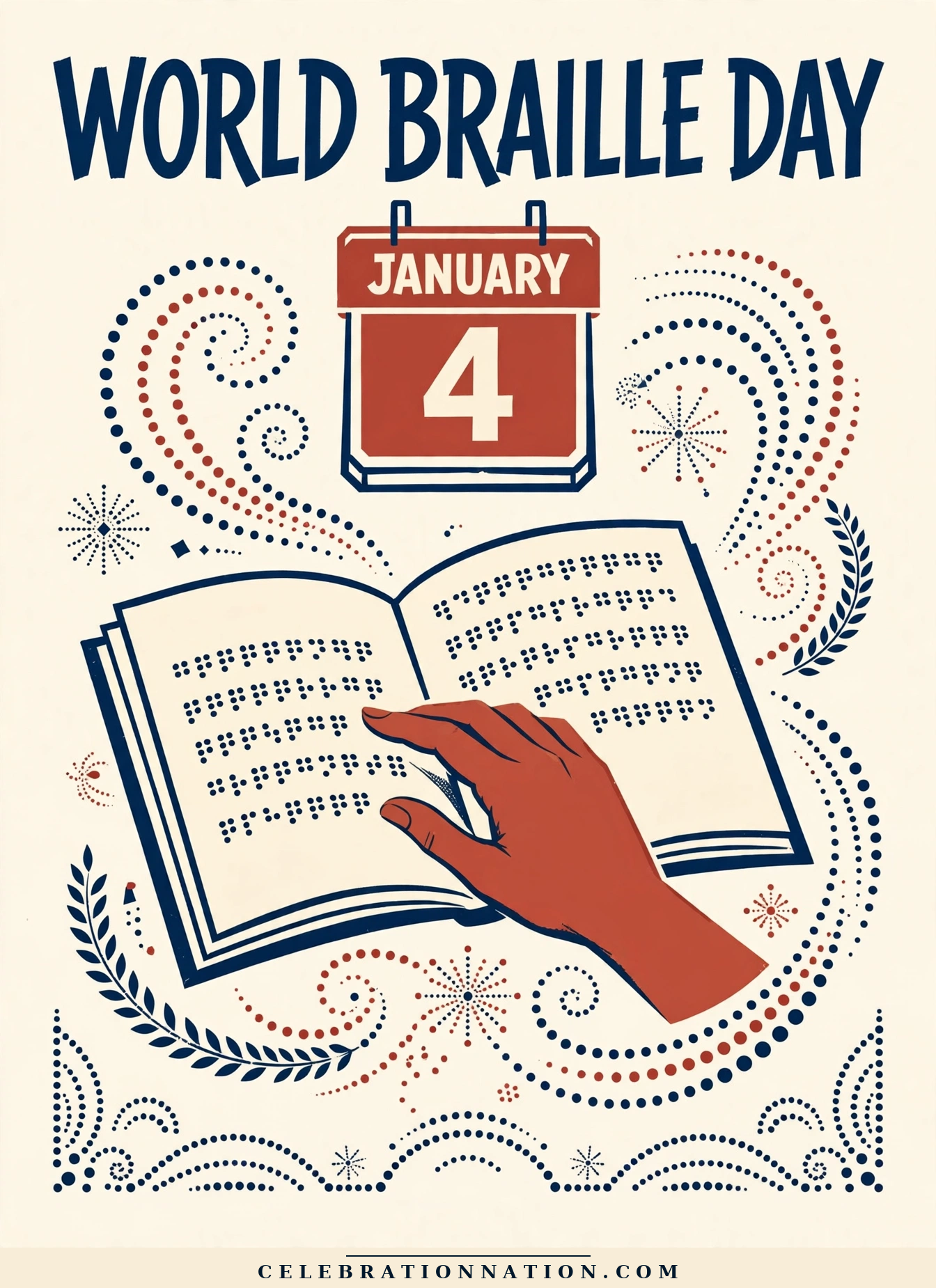
World Braille Day
On this World Braille Day, let us celebrate the power of accessibility for individuals with visual impairments.
- Roots
- Proclaimed by the UN in 2018; first observed in 2019
- Vibe
- A day to raise awareness and promote inclusivity.
- Also on Jan 4
- Missouri Day · Spaghetti Day · Trivia Day
- Hashtag
- #WorldBrailleDay
3 ways to celebrate
Learn the alphabet
Study the Braille alphabet and practice a few letters.
Awareness dinner chat
Talk with friends about accessibility and inclusion.
Accessibility check
Review one workplace doc for screen-reader friendliness.
Plan ahead
World Braille Day is observed on January 4 every year. Here is where it lands for the next ten years, handy for planners, marketers and party people.
Fast facts
The story
World Braille Day, observed each year on January 4, marks the birthday of Louis Braille, who was born in 1809 in Coupvray, France. At the young age of 15, Braille developed a tactile writing system that transformed communication for the visually impaired. This remarkable innovation has allowed countless individuals to read, write, and express themselves independently, fostering a sense of empowerment and dignity.
Read the full story
The significance of Braille extends beyond mere communication; it serves as a bridge to education, employment, and social inclusion. Unfortunately, despite its vital role, access to Braille remains limited. The UN General Assembly proclaimed World Braille Day in 2018 to highlight the need for increased advocacy and resources.
On World Braille Day, various organizations and communities come together to promote awareness of Braille literacy. Events range from educational workshops to public discussions, all aimed at highlighting the importance of this writing system. By engaging individuals of all ages, these activities foster understanding and encourage the adoption of inclusive practices.
As we celebrate World Braille Day, it is crucial to remember that accessibility is a fundamental human right. By supporting initiatives that enhance Braille education and resources, we contribute to a more inclusive society. Together, we can ensure that everyone, regardless of visual ability, can enjoy the benefits of literacy and communication.
Did you know?
Louis Braille's Early Life
Braille lost his sight at a young age due to an accident.
Braille System Popularity
The Braille system was created in 1824.
Braille in the U.S.
The American Printing House for the Blind produces Braille materials.
Global Recognition
World Braille Day was officially recognized by the UN in 2018.
Braille in Technology
Modern devices now integrate Braille displays for accessibility.
Braille's Impact
Braille literacy is linked to higher employment rates among the visually impaired.
Learning Braille
Braille uses a system of raised dots to represent letters and numbers.
Around the world
Every culture celebrates a little differently.
- USUnited StatesVarious organizations hold events to promote Braille literacy.
- FRFranceHome of Louis Braille, where many celebrations take place.
- GBUnited KingdomAwareness programs are organized in schools and communities.
- CACanadaLibraries and institutions host Braille reading sessions.
- AUAustraliaCommunity events focus on Braille education and accessibility.
- INIndiaVarious organizations work to promote Braille literacy among the visually impaired.
Keep the party going
See the calendar

Celebrate every day, all year
Official gear from the people who track 1,700+ celebrations.
Browse the shop 2027 National Day Desk CalendarA new celebration every morning. Daily tear-off.
Never miss a reason to celebrate.
One quick morning email with today's celebrations, ideas and posters. Free, unsubscribe anytime.
🎉 You're on the list! Watch your inbox for The Daily Confetti.