






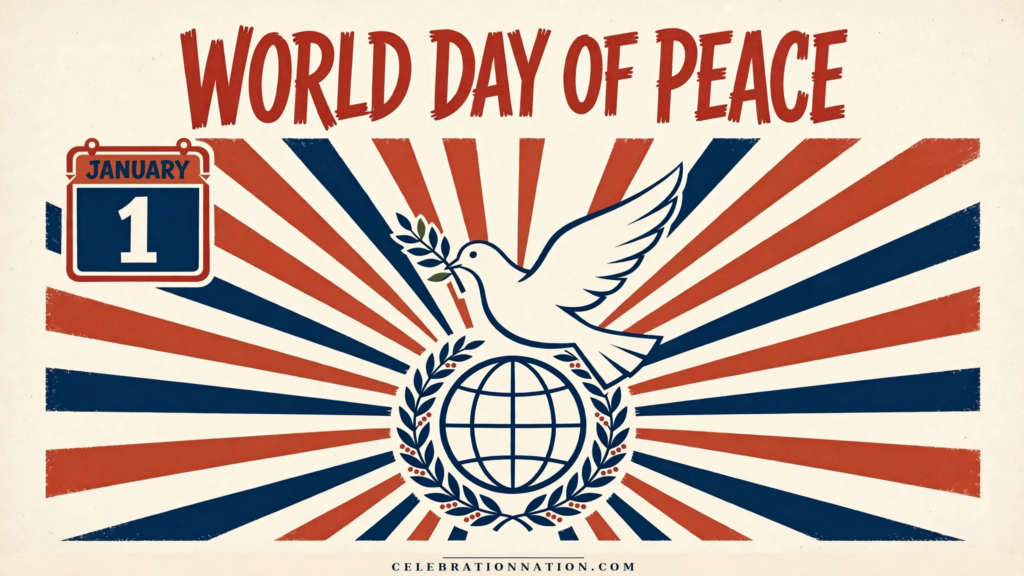
World Day of Peace
On this day, we honor the pursuit of peace in every corner of the globe.
- Roots
- Established by Pope Paul VI in 1967
- Vibe
- A call for reflection and action on peace
- Also on Jan 1
- Euro Day · First Foot Day (Hogmanay) · International Public Domain Day
- Hashtag
- #WorldDayOfPeace
3 ways to celebrate
Quiet reflection
Spend ten minutes in silence thinking about peace.
Peaceful walk together
Take a calm walk with friends and talk about hope.
Kindness pledge
Commit the team to one act of kindness each this week.
Plan ahead
World Day of Peace is observed on January 1 every year. Here is where it lands for the next ten years, handy for planners, marketers and party people.
Fast facts
The story
The World Day of Peace, celebrated on January 1, was established by Pope Paul VI in 1967 as a way to promote peace and encourage dialogue among nations. This observance is not only a day for international leaders to reflect on their commitments to peace but also a time for individuals and communities to engage in meaningful actions that promote harmony.
Read the full story
In the United States, the day is marked by various events, including peace marches, community discussions, and volunteer activities. Organizations, both local and national, often use this day to highlight issues such as social justice, poverty, and the impact of war, encouraging citizens to take part in building a more peaceful world.
Globally, the day serves as a reminder of the ongoing struggles faced by many regions affected by conflict and violence. The Pope's annual World Day of Peace message addresses themes such as human rights, dialogue, and care, underscoring the universal desire for peace.
As we observe World Day of Peace, it is essential to remember that peace starts at the individual level. Through acts of kindness, community service, and open dialogue, we can contribute to a culture of peace that transcends borders and unites us all.
Did you know?
Established by the Pope
Pope Paul VI established the observance, first held in 1968.
Peace Education
Many schools incorporate peace education on this day.
Symbols of Peace
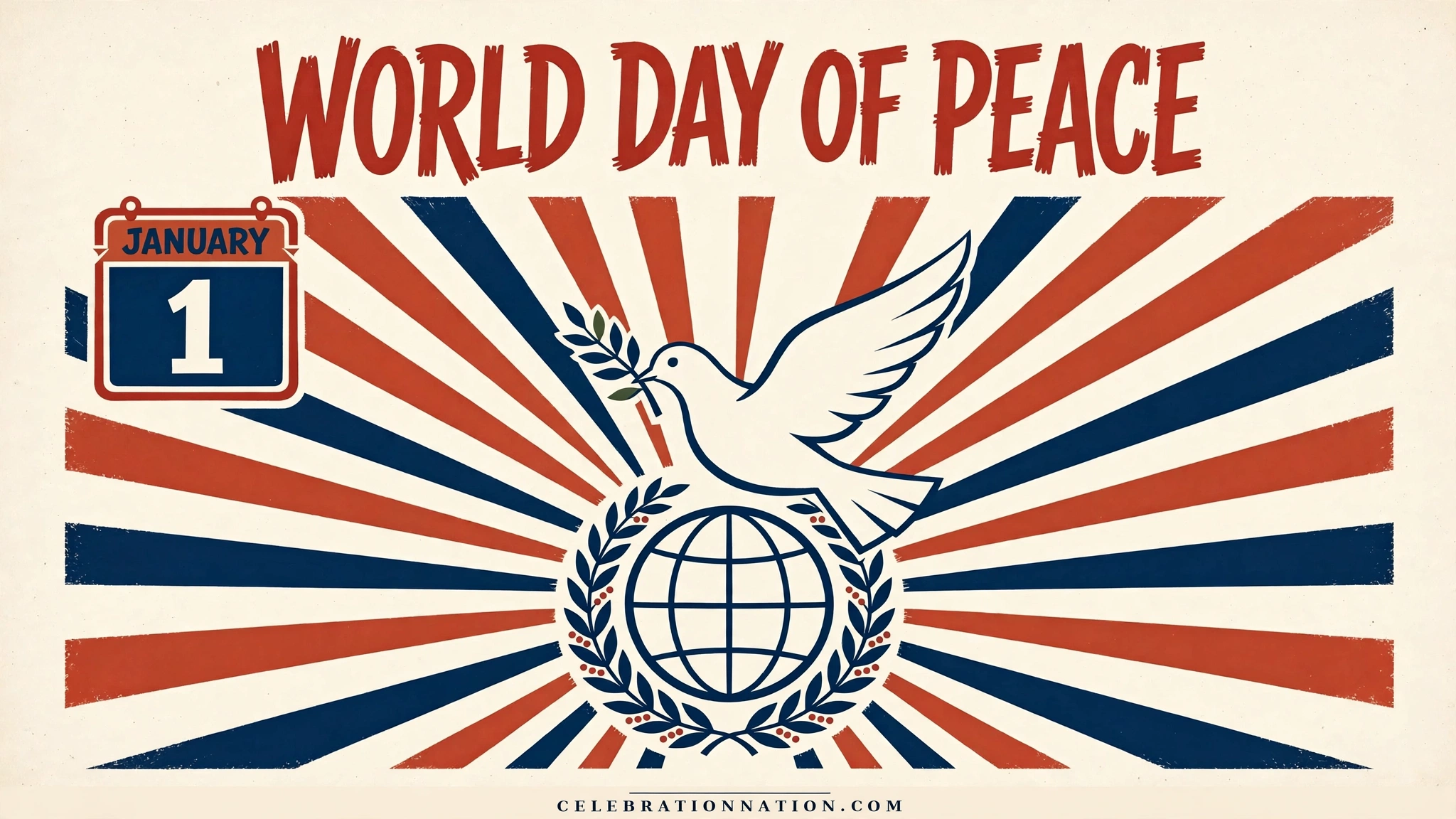
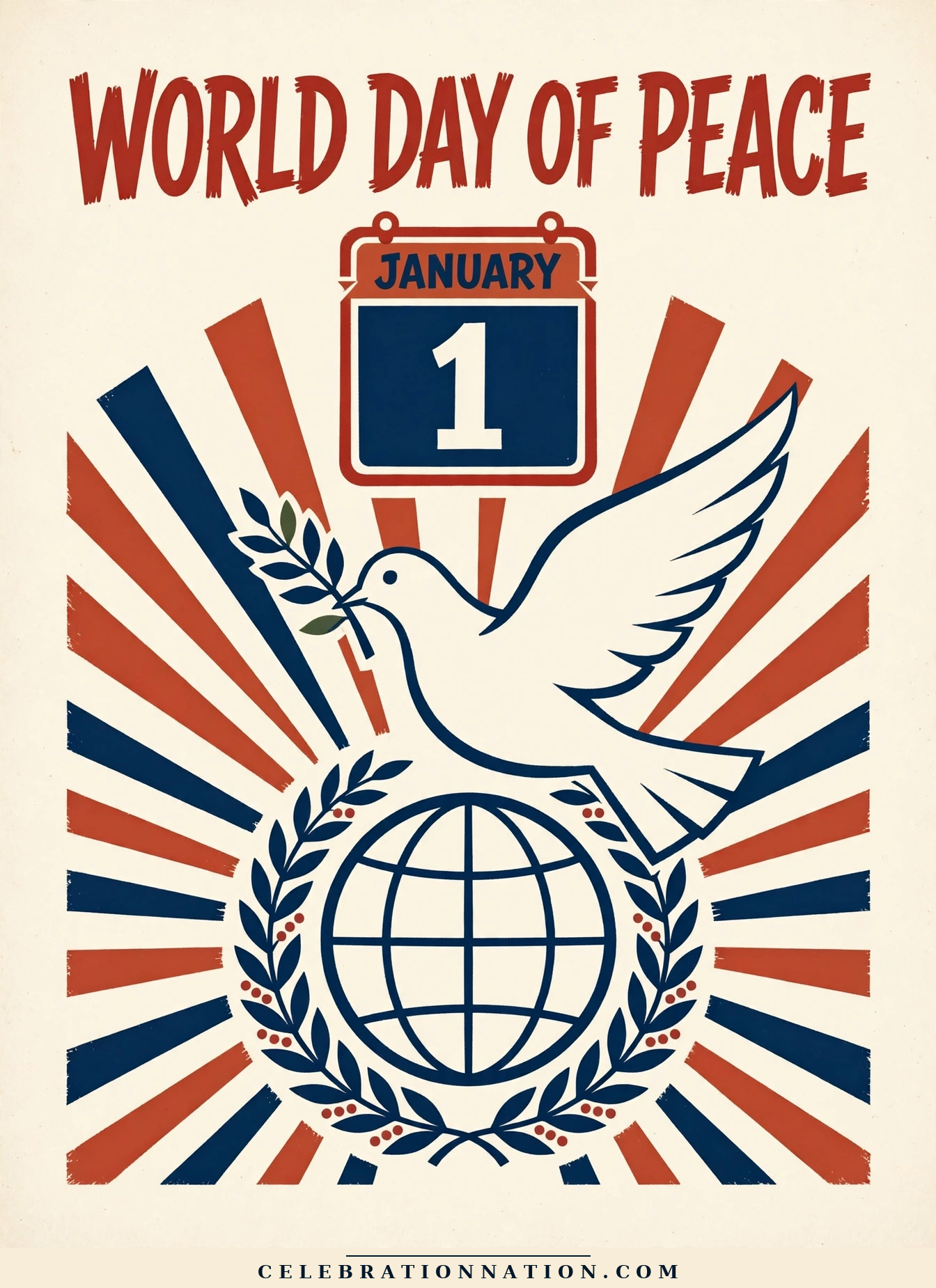
The dove is a universal symbol of peace.
Global Participation
Countries worldwide participate with various events.
UN Resolutions
Papal messages for the day have addressed human rights and peace in the Holy Land.
Community Engagement
Local groups often organize events to promote unity.
Reflection and Action
Individuals are encouraged to reflect on their role in peace.
Around the world
Every culture celebrates a little differently.
- USUnited StatesMany cities host peace marches and community events.
- FRFranceParis often sees gatherings promoting global peace.
- ITItalyVatican City leads the observance with a special message.
- BRBrazilCultural events celebrate peace through music and dance.
- INIndiaCommunities organize interfaith dialogues for peace.
- GBUnited KingdomLondon hosts seminars focused on conflict resolution.
Keep the party going
See the calendar



Celebrate every day, all year
Official gear from the people who track 1,700+ celebrations.
Browse the shop 2027 Wall + Desk Calendar BundleCelebrate every day at home and at work.
Never miss a reason to celebrate.
One quick morning email with today's celebrations, ideas and posters. Free, unsubscribe anytime.
🎉 You're on the list! Watch your inbox for The Daily Confetti.