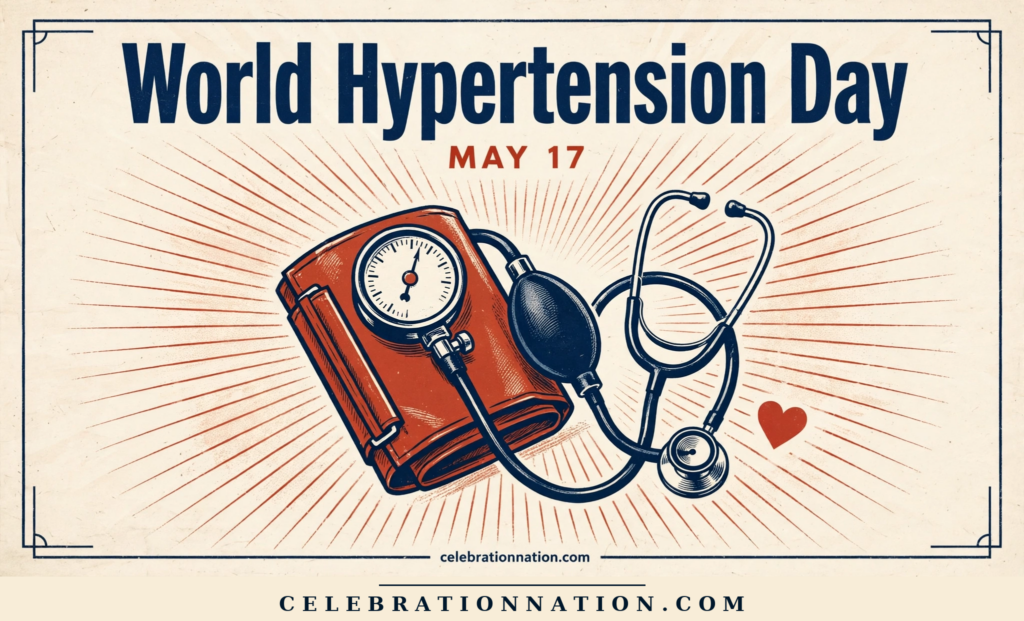
World Hypertension Day
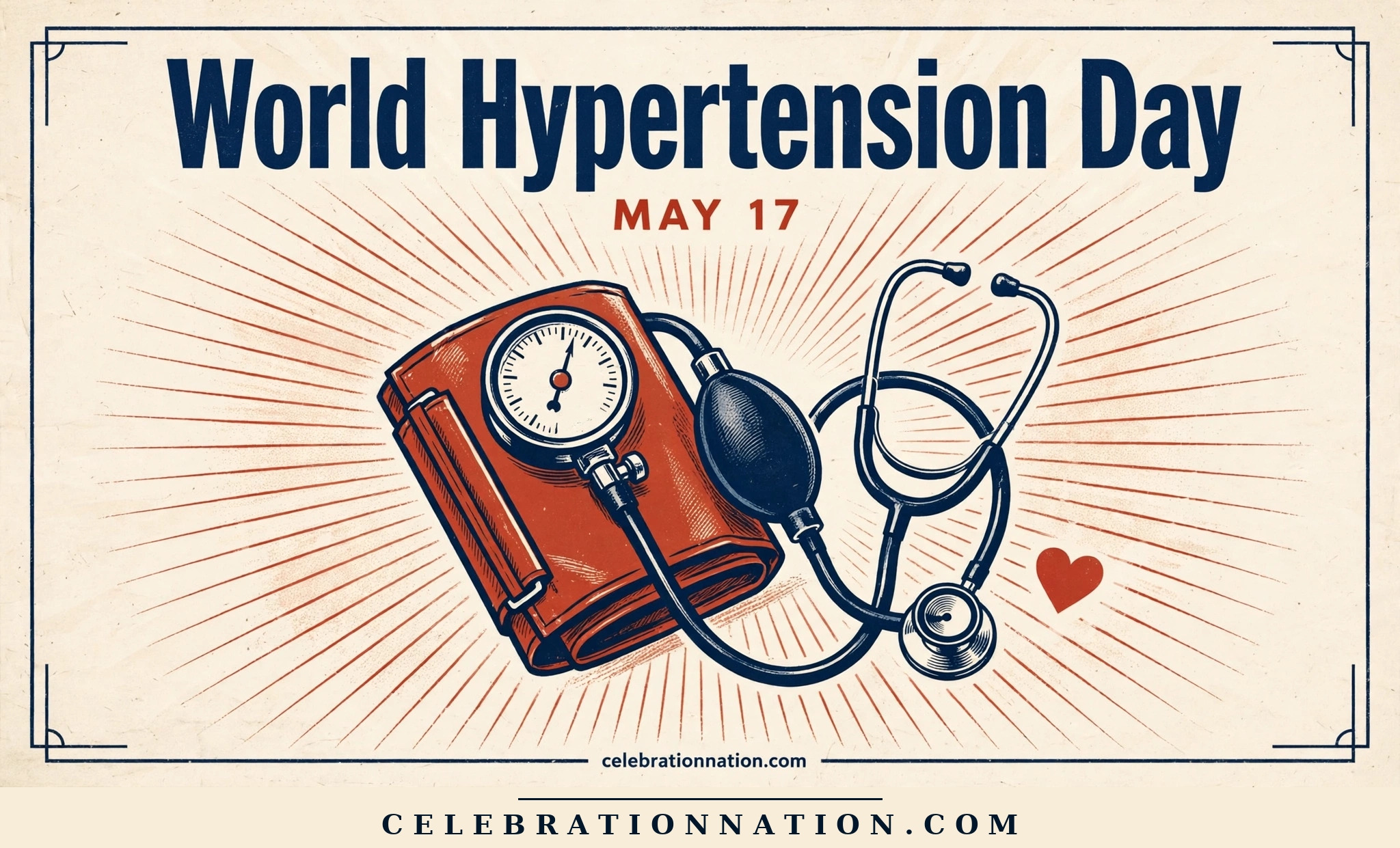
World Hypertension Day is a hand extended — to the patients, caregivers, researchers, and families living with hypertension.
- Roots
- Established in 2005 by the World Hypertension League
- Vibe
- Community-driven health awareness
- Also on May 17
- Walnut Day · World Baking Day · World Telecommunication and Information Society Day
- Hashtag
- #WorldHypertensionDay
Ways to celebrate
Small, doable ways to celebrate World Hypertension Day.
- Share one reputable resource with your network.
- Donate to a patient-led organization working on hypertension.
- Check in on someone you know who's living with it.
- Book the screening or appointment you've been putting off.
- Listen more than you speak.
Make it your kind of celebration
Family
Have the real conversation at the table — stigma-free, no lecture.
Kids
Answer questions honestly and age-appropriately.
Couples
Check in with each other's appointments, screenings, and follow-ups.
Office
Share vetted resources and encourage people to use their benefits.
School
Bring in an expert, survivor, or advocate to speak for a class period.
Community
Run a donation drive, a walk, or a listening session for those affected.
Just me
Reach out to someone you know is living with it. Ask how they're doing for real.
Plan ahead
World Hypertension Day is observed on May 17 every year. Here is where it lands for the next ten years, handy for planners, marketers and party people.
Fast facts
The story
World Hypertension Day serves as a crucial reminder of the importance of blood pressure awareness. Hypertension, often called the silent killer, affects millions worldwide, leading to serious health complications if left unchecked. The observance was initiated in 2005 by the World Hypertension League, aiming to educate the public about the dangers of high blood pressure and encourage regular health checks.
Read the full story
In the United States, approximately 47% of adults have hypertension, according to the Centers for Disease Control and Prevention (CDC). This staggering statistic highlights the need for continued education and proactive health management. By promoting awareness, communities can work together to reduce the prevalence of hypertension and its associated risks, such as heart disease and stroke.
Celebrating World Hypertension Day involves various activities that engage individuals and families alike. From hosting community health fairs to organizing fitness events, these initiatives foster a culture of health and wellness. Schools can also play a significant role by incorporating heart health education into their curriculums, ensuring that children grow up understanding the importance of maintaining healthy blood pressure levels.
As we acknowledge World Hypertension Day each year, we must commit to making informed lifestyle choices. Regular physical activity, a balanced diet, and stress management are all essential components in controlling blood pressure. By coming together as a community, we can make a significant impact on public health and reduce the burden of hypertension across the globe.
Did you know?
A Silent Threat
Hypertension often shows no symptoms, making regular checks vital.
Global Impact
Hypertension is responsible for 45% of deaths from heart disease.
Age Factor
Risk of hypertension increases with age, especially after 45.
Lifestyle Choices
Diet and exercise play crucial roles in blood pressure management.
Cultural Differences
Hypertension prevalence varies widely across countries.
Medication
Many people with hypertension require medication to manage their condition.
Health Disparities
Access to healthcare can significantly affect hypertension management.
Around the world
Every culture celebrates a little differently.
- USUnited StatesHypertension affects nearly half of American adults.
- CACanadaMillions of Canadians live with hypertension.
- GBUnited KingdomHigh blood pressure affects a large share of UK adults.
- AUAustraliaHypertension is a leading risk factor for heart disease.
- NLNetherlandsSignificant public health campaigns focus on hypertension awareness.
- DEGermanyTens of millions of Germans are affected by hypertension.
Keep the party going
See the calendar
Celebrate every day, all year
Official gear from the people who track 1,700+ celebrations.
Browse the shop 2027 Wall Calendar, signed by Marlo AndersonSigned by the founder of National Day Calendar.
Never miss a reason to celebrate.
One quick morning email with today's celebrations, ideas and posters. Free, unsubscribe anytime.
🎉 You're on the list! Watch your inbox for The Daily Confetti.