




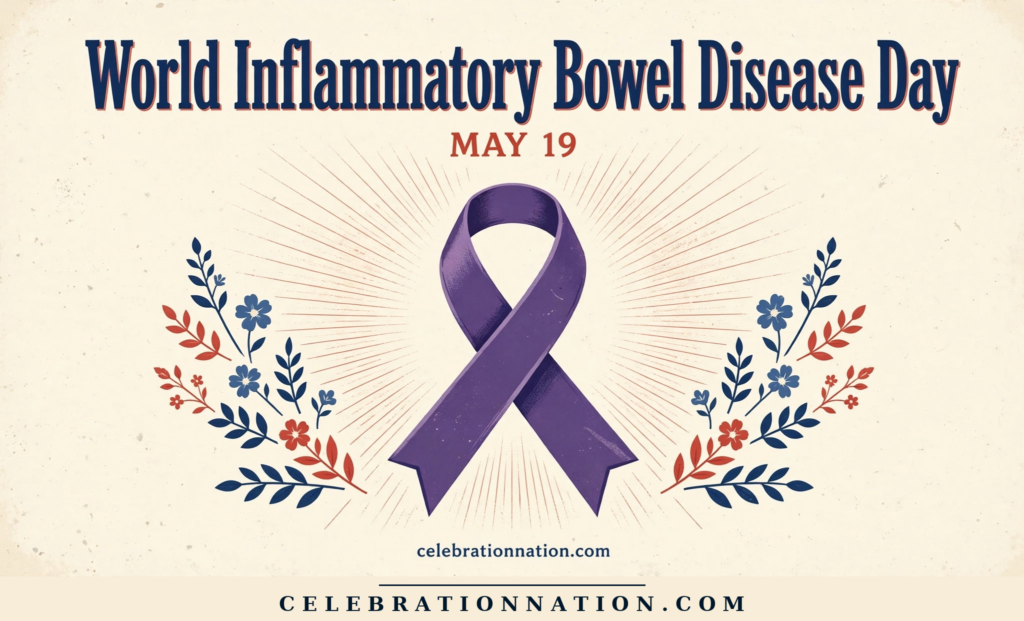
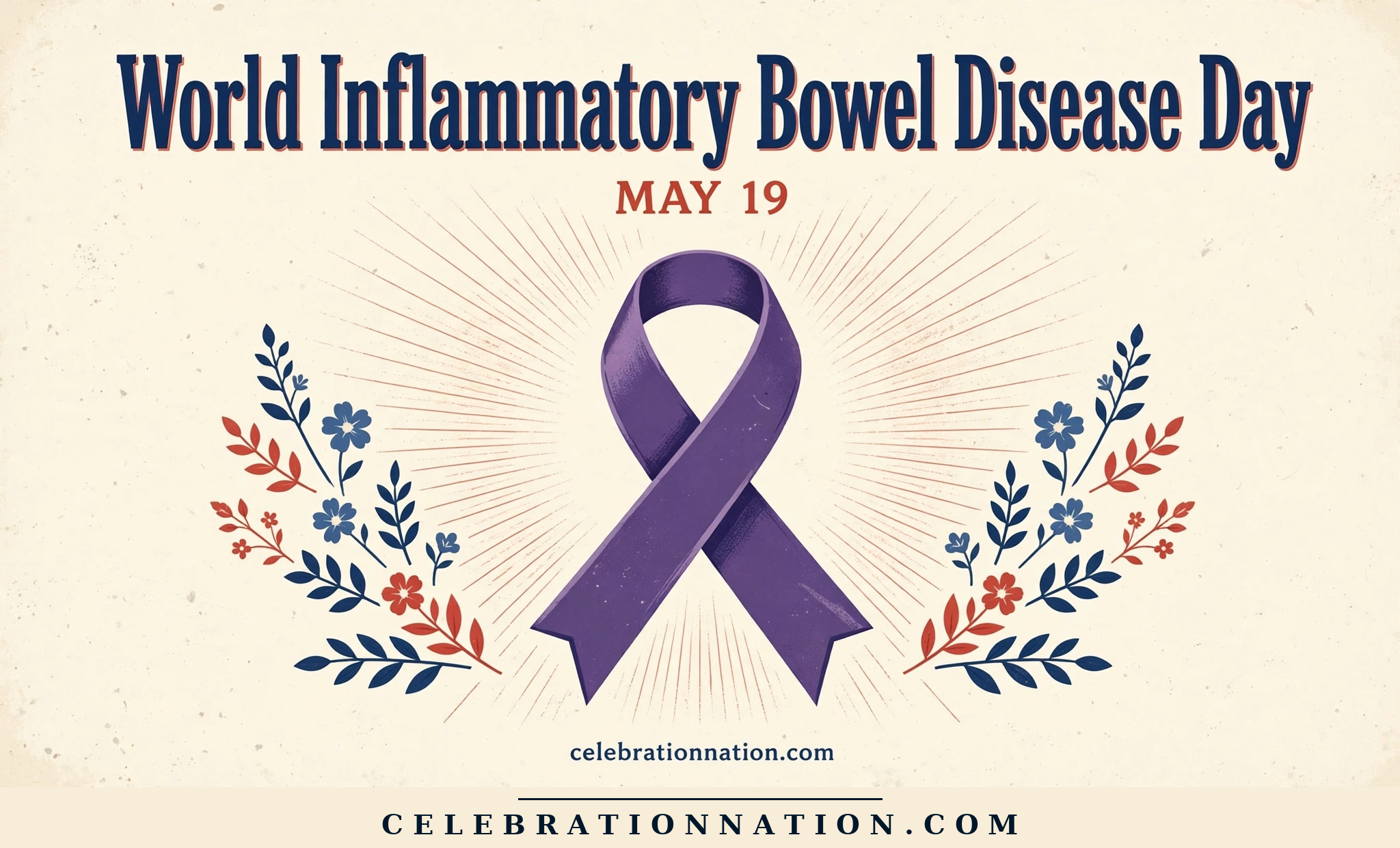
World Inflammatory Bowel Disease Day
World Inflammatory Bowel Disease Day is a hand extended — to the patients, caregivers, researchers, and families living with inflammatory bowel disease.
- Roots
- Established in 2010 by the European Federation of Crohn's and Ulcerative Colitis Associations
- Vibe
- A day of awareness, education, and solidarity
- Also on May 19
- Roadie Day · Devil’s Food Cake Day · May Ray Day
- Hashtag
- #WorldInflammatoryBowelDiseaseDay
Ways to celebrate
Small, doable ways to celebrate World Inflammatory Bowel Disease Day.
- Share one reputable resource with your network.
- Donate to a patient-led organization working on inflammatory bowel disease.
- Check in on someone you know who's living with it.
- Book the screening or appointment you've been putting off.
- Listen more than you speak.
Make it your kind of celebration
Family
Have the real conversation at the table — stigma-free, no lecture.
Kids
Answer questions honestly and age-appropriately.
Couples
Check in with each other's appointments, screenings, and follow-ups.
Office
Share vetted resources and encourage people to use their benefits.
School
Bring in an expert, survivor, or advocate to speak for a class period.
Community
Run a donation drive, a walk, or a listening session for those affected.
Just me
Reach out to someone you know is living with it. Ask how they're doing for real.
Plan ahead
World Inflammatory Bowel Disease Day is observed on May 19 every year. Here is where it lands for the next ten years, handy for planners, marketers and party people.
Fast facts
The story
World Inflammatory Bowel Disease Day originated in 2010, spearheaded by the European Federation of Crohn's and Ulcerative Colitis Associations. On this day, individuals and organizations unite to promote awareness and understanding of inflammatory bowel diseases (IBD) such as Crohn's disease and ulcerative colitis. These chronic conditions affect millions worldwide, with an estimated 3 million Americans diagnosed, impacting not only their health but also their quality of life.
Read the full story
The symptoms of IBD can be debilitating, often leading to hospitalizations and significant lifestyle changes. Many patients face challenges that are invisible to others, making awareness crucial. On May 19, communities come together to share stories, educate others, and advocate for better treatments and support systems for those living with IBD. This observance encourages open dialogue, reducing stigma and fostering compassion.
Various organizations, including the Crohn's & Colitis Foundation, play a vital role in promoting this day. They provide resources, conduct research, and support individuals and families affected by IBD. Events may include educational webinars, local walks, and social media campaigns aimed at increasing understanding of these conditions, highlighting the importance of early diagnosis and ongoing management.
As we observe World Inflammatory Bowel Disease Day, it is essential to remember that every voice matters. By sharing experiences and raising awareness, we can support those struggling with IBD. Whether through social media, community events, or personal outreach, collective efforts can make a significant difference in the lives of individuals and families affected by inflammatory bowel diseases.
Did you know?
What is IBD?
IBD stands for inflammatory bowel disease, encompassing Crohn's disease and ulcerative colitis.
IBD Symptoms
Common symptoms include abdominal pain, diarrhea, fatigue, and weight loss.
IBD Triggers
Stress, diet, and certain medications can exacerbate symptoms.
IBD and Genetics
Family history can increase the risk of developing IBD.
Living with IBD
Managing IBD often requires a comprehensive treatment plan.
IBD Support
Many organizations offer resources and support for IBD patients.
Global Impact
IBD affects millions globally, transcending borders and cultures.
Around the world
Every culture celebrates a little differently.
- USUnited StatesHome to millions living with IBD.
- CACanadaPromotes awareness through various organizations.
- GBUnited KingdomHosts events to support IBD patients.
- AUAustraliaEngages communities in IBD awareness.
- DEGermanyAdvocates for research and support.
- FRFranceRaises awareness through local initiatives.
Keep the party going
See the calendar


Celebrate every day, all year
Official gear from the people who track 1,700+ celebrations.
Browse the shop 2027 Wall Calendar, signed by Marlo AndersonSigned by the founder of National Day Calendar.
Never miss a reason to celebrate.
One quick morning email with today's celebrations, ideas and posters. Free, unsubscribe anytime.
🎉 You're on the list! Watch your inbox for The Daily Confetti.