






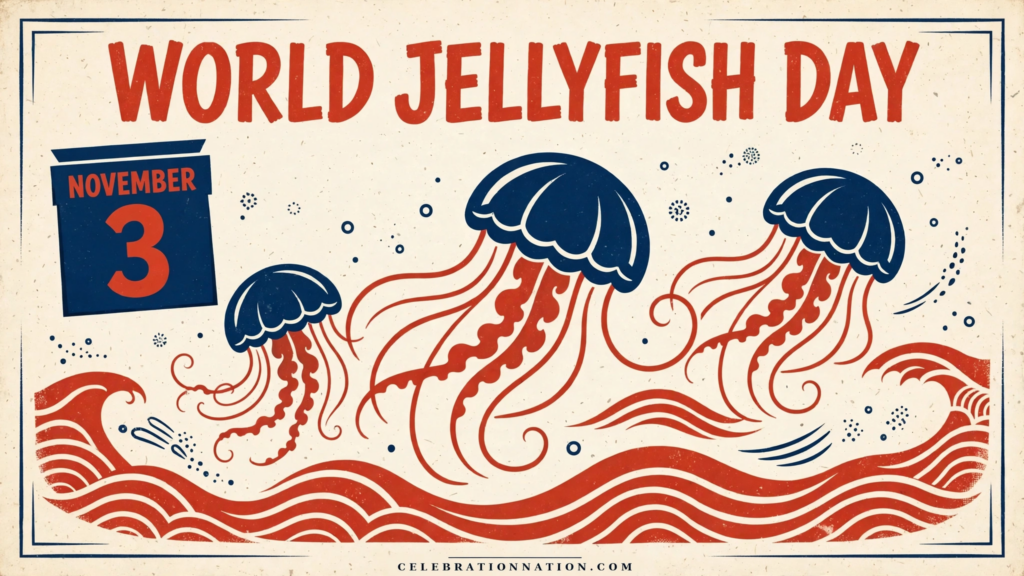
World Jellyfish Day
Join us in honoring the unique jellyfish, a vital part of our oceans and ecosystems.
- Roots
- Established in 2014
- Vibe
- A mix of education and appreciation for marine life
- Also on Nov 3
- Housewife’s Day · Sandwich Day · One Health Day
- Hashtag
- #WorldJellyfishDay
3 ways to celebrate
Watch jellyfish videos
Stream glowing jellyfish footage and unwind.
Visit an aquarium
See the jellyfish exhibit at your local aquarium.
Draw a jellyfish
Sketch one during a creative break and share it.
Plan ahead
World Jellyfish Day is observed on November 3 every year. Here is where it lands for the next ten years, handy for planners, marketers and party people.
Fast facts
The story
World Jellyfish Day, observed on November 3, was established to raise awareness about these intriguing creatures and their ecological significance. With over 200 species inhabiting the world's oceans, jellyfish play crucial roles in marine ecosystems, serving as both predator and prey. Their presence indicates the health of marine environments, making them vital indicators of ocean changes.
Read the full story
These gelatinous animals have existed for over 500 million years, showcasing incredible adaptations. Some species, like the immortal jellyfish (Turritopsis dohrnii), can revert to their juvenile form after maturing, defying the typical life cycle. This unique characteristic has fascinated scientists and inspired various studies on longevity and regeneration.
Jellyfish also contribute to marine biodiversity, providing food for various species, including sea turtles and certain fish. However, jellyfish populations can fluctuate dramatically due to overfishing and climate change, leading to concerns about their impact on marine ecosystems. As we celebrate World Jellyfish Day, it is essential to understand these dynamics and advocate for marine conservation.
Celebrating this day can take many forms, from educational programs to community cleanups. Engaging with local aquariums or ocean conservation organizations can deepen our appreciation for jellyfish and the oceans they inhabit. By learning more about jellyfish and supporting marine health, we can help ensure these remarkable creatures continue to thrive.
Did you know?
Jellyfish Anatomy
Jellyfish are 95% water and have no brain or heart.
Immortal Jellyfish
The Turritopsis dohrnii can revert to its juvenile form.
Jellyfish Stings
Some jellyfish stings can be lethal to humans.
Giant Jellyfish
The lion's mane jellyfish has tentacles that can reach 120 feet.
Colorful Jellyfish
Some jellyfish can glow in the dark due to bioluminescence.
Jellyfish Bloom
Jellyfish blooms can occur when ocean conditions are favorable.
Culinary Delicacy
In some cultures, jellyfish are considered a delicacy.
Around the world
Every culture celebrates a little differently.
- USUnited StatesParticipate in local aquarium events and beach cleanups.
- CACanadaExplore jellyfish exhibits at major aquariums.
- AUAustraliaJoin marine conservation efforts along the Great Barrier Reef.
- GBUnited KingdomWatch documentaries on jellyfish and ocean health.
- JPJapanExperience jellyfish festivals featuring art and education.
- ZASouth AfricaEngage in marine biology workshops focusing on jellyfish.
Keep the party going
See the calendar



Celebrate every day, all year
Official gear from the people who track 1,700+ celebrations.
Browse the shop 2027 Wall + Desk Calendar BundleCelebrate every day at home and at work.
Never miss a reason to celebrate.
One quick morning email with today's celebrations, ideas and posters. Free, unsubscribe anytime.
🎉 You're on the list! Watch your inbox for The Daily Confetti.