






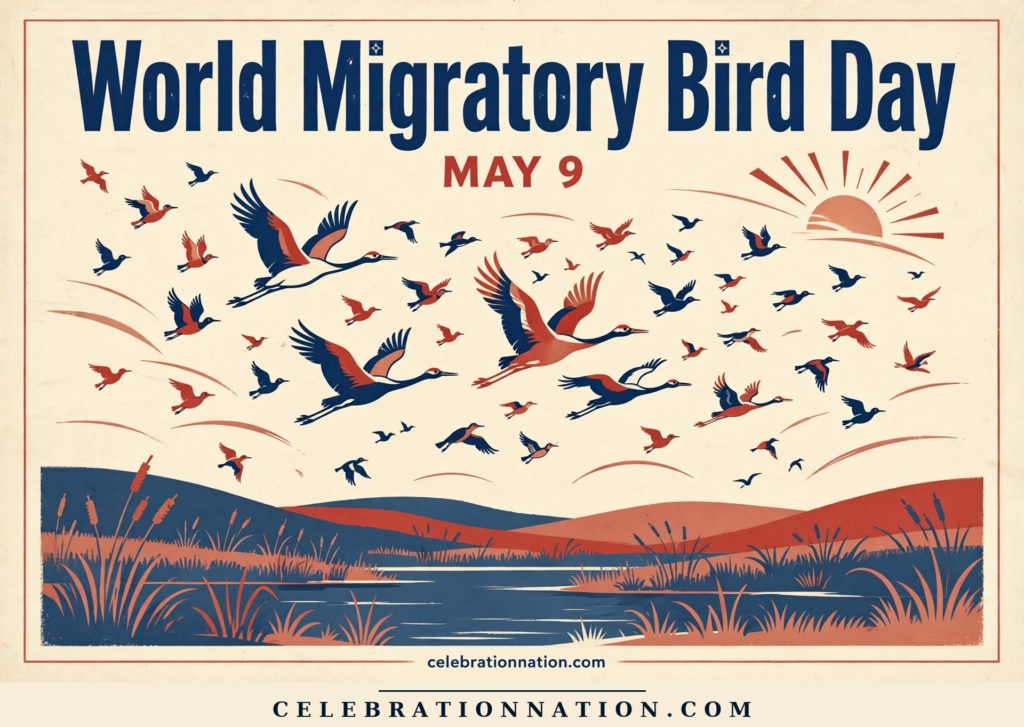
World Migratory Bird Day
On World Migratory Bird Day, we slow down enough to notice the sky and the singers in it.
- Roots
- Launched in 2006 by the UN-backed African-Eurasian Migratory Waterbird Agreement
- Vibe
- A celebration of nature and conservation awareness
- Also on May 10
- Mother’s Day · Clean Up Your Room Day · Lipid Day
- Hashtag
- #WorldMigratoryBirdDay
Ways to celebrate
Small, doable ways to celebrate World Migratory Bird Day.
- Fill the feeders and clean the bath.
- Sit outside for 10 minutes and count the birds you see.
- Download a bird-ID app and learn three songs.
- Donate to a local Audubon or migratory bird initiative.
- Take a kid on a slow-walk birding outing.
Make it your kind of celebration
Family
Start a bird-watching log — who shows up, where, when.
Kids
Build a bird feeder together out of pantry staples and a milk jug.
Couples
Pack a thermos and go on an actual bird walk together.
Office
Plant a small pollinator-friendly planter outside the building — it attracts birds too.
School
Pair the day with a unit on migration, habitat, or local ornithology.
Community
Join or support a local Audubon chapter's education or conservation project.
Just me
Sit outside with coffee for 20 minutes and just listen.
Plan ahead
World Migratory Bird Day is observed on the second Saturday in May. Here is where it lands for the next ten years, handy for planners, marketers and party people.
Fast facts
The story
World Migratory Bird Day is celebrated twice a year, once in May and once in October, marking the peak of migration seasons for many species. This observance encourages people worldwide to engage in bird conservation efforts while appreciating the beauty and complexity of avian migration. As birds travel vast distances, they face numerous challenges, including habitat loss, climate change, and pollution, making awareness and action crucial for their survival.
Read the full story
The day serves not only as a platform for education but also as a call to action. Events are held globally, from guided birdwatching tours to community clean-ups, all aimed at fostering a greater understanding of migratory birds. Organizations and volunteers work tirelessly to create safe environments for these birds and promote policies that protect critical habitats. These efforts highlight the interconnectedness of all species and the crucial role birds play in ecosystems.
In the United States, migratory birds like the American Robin and the Arctic Tern embark on journeys that are nothing short of extraordinary. The migratory patterns of these birds are influenced by various factors, including weather conditions and food availability. Local initiatives often involve schools and community groups that organize events to educate the public and encourage action in support of migratory bird conservation.
As we observe World Migratory Bird Day, let us take a moment to appreciate the incredible feats of these birds and the importance of their protection. By creating bird-friendly habitats, supporting conservation efforts, and spreading awareness, we can all contribute to ensuring future generations can witness the same breathtaking migrations that inspire awe and admiration.
Did you know?
Longest Migration
The Arctic Tern migrates approximately 44,000 miles each year.
Threats to Birds
Habitat destruction is one of the biggest threats to migratory birds.
Birding Hotspots
Places like Point Reyes in California are renowned for birdwatching.
Unique Adaptations
Some species can travel non-stop for days during migration.
Seasonal Nesting
Many migratory birds return to the same nesting sites each year.
Bird Conservation
The Migratory Bird Treaty Act was enacted in 1918 to protect migratory birds.
Bird Watching Growth
Birdwatching has increased in popularity, with millions participating in the U.S.
Around the world
Every culture celebrates a little differently.
- USUnited StatesHome to diverse migratory bird species across various habitats.
- CACanadaImportant breeding grounds for many migratory birds.
- MXMexicoA vital stopover for migrating birds from North America.
- GBUnited KingdomHosts numerous migratory species, especially during winter.
- AUAustraliaHome to unique migratory birds traveling from the Northern Hemisphere.
- BRBrazilSupports a variety of migratory species in its rich ecosystems.
Keep the party going
See the calendar



Celebrate every day, all year
Official gear from the people who track 1,700+ celebrations.
Browse the shop 2027 National Day Desk CalendarA new celebration every morning. Daily tear-off.
Never miss a reason to celebrate.
One quick morning email with today's celebrations, ideas and posters. Free, unsubscribe anytime.
🎉 You're on the list! Watch your inbox for The Daily Confetti.