

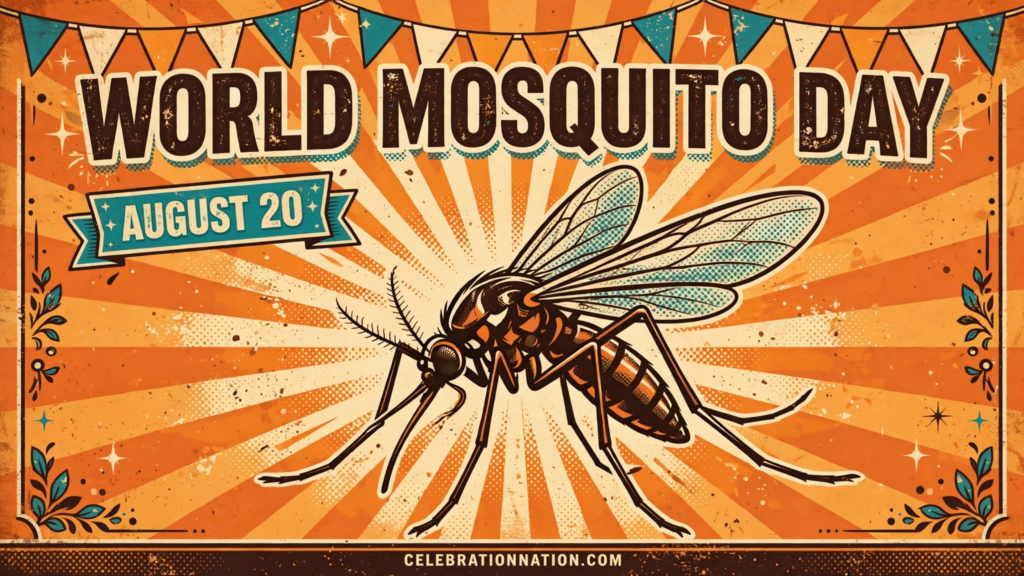
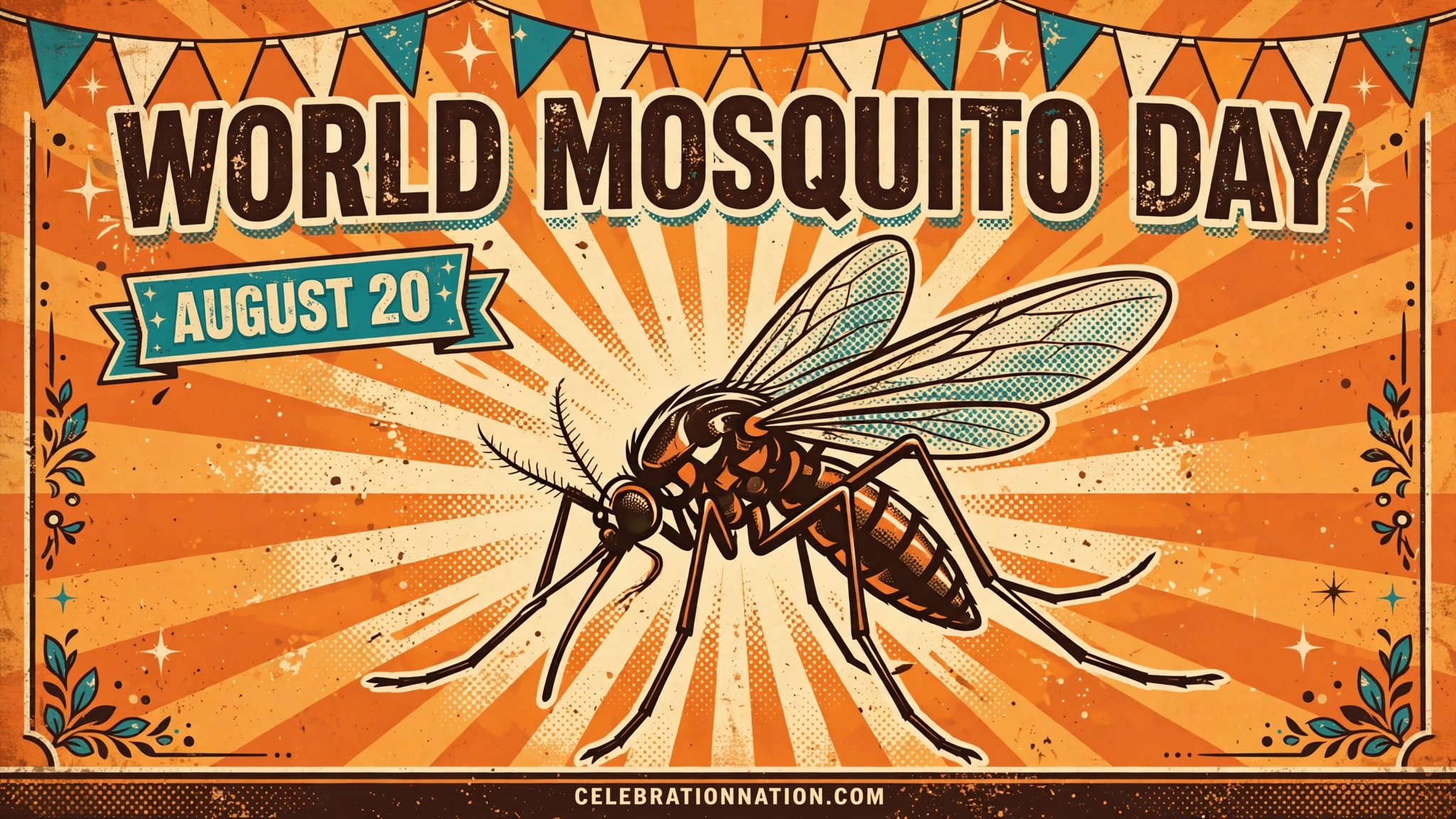
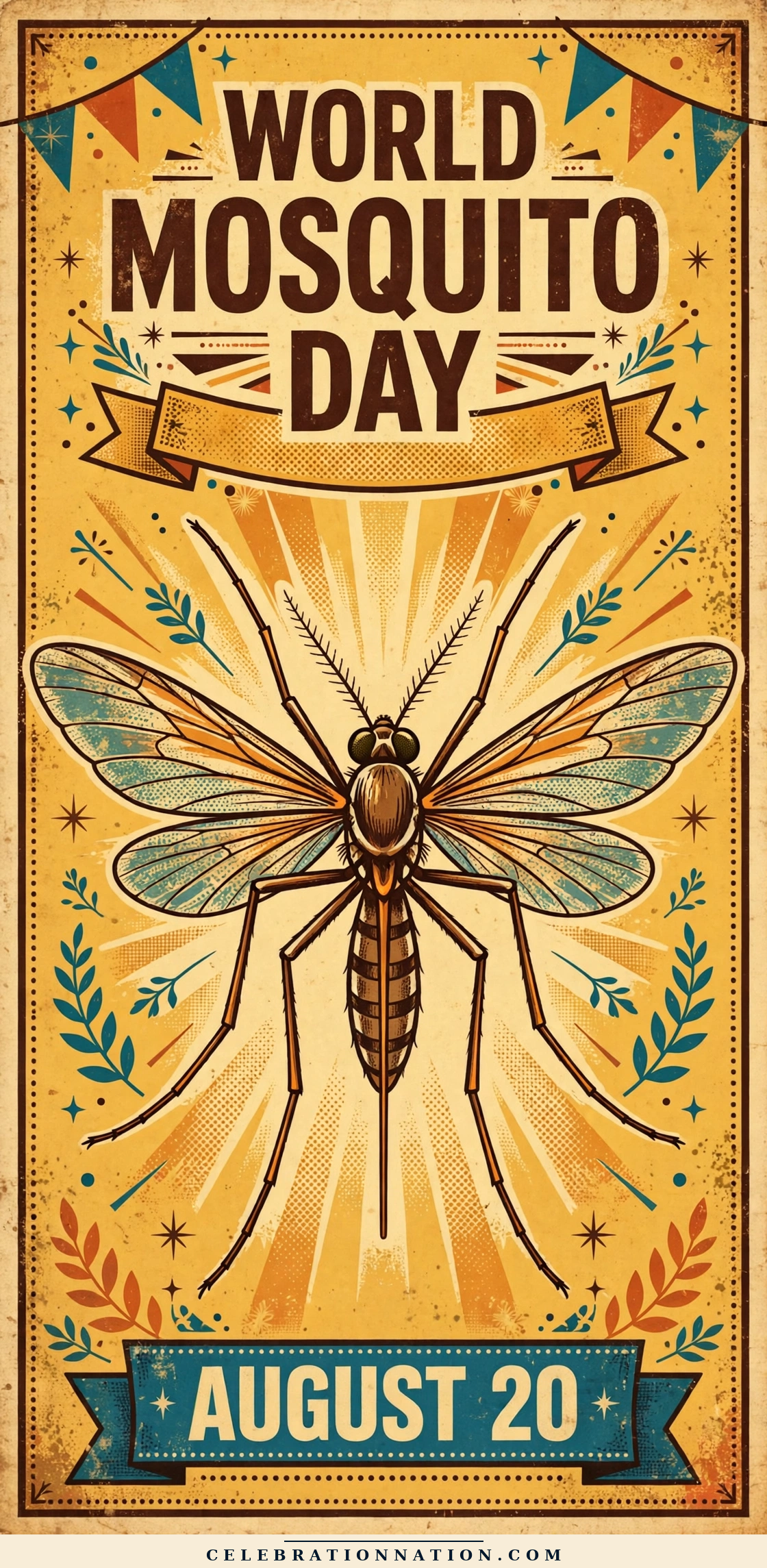
World Mosquito Day
On this day, we reflect on health challenges posed by mosquitoes worldwide.
- Roots
- First observed in 1897 by Sir Ronald Ross
- Vibe
- Community engagement and global awareness
- Also on Aug 20
- Day of Medical Transporters · Accessible Air Travel Day · Bacon Lovers Day
- Hashtag
- #WorldMosquitoDay
3 ways to celebrate
Dump standing water
Clear saucers and buckets so mosquitoes cannot breed.
Plan a bite-free cookout
Set out repellent and fans for an evening outside.
Share prevention tips
Post simple mosquito-proofing tips in the newsletter.
Plan ahead
World Mosquito Day is observed on August 20 every year. Here is where it lands for the next ten years, handy for planners, marketers and party people.
Fast facts
The story
World Mosquito Day commemorates the discovery made by Sir Ronald Ross in 1897, who identified mosquitoes as the carriers of malaria. This pivotal moment in medical history has led to significant advancements in our understanding of mosquito-borne diseases. The day serves not only to honor this discovery but also to raise awareness about the ongoing health crises linked to these insects. With millions affected worldwide, it is crucial to address the implications of mosquito-related illnesses.
Read the full story
In the United States, the fight against mosquitoes includes public health initiatives aimed at controlling their populations. Local health departments often conduct surveillance and spraying programs during peak seasons, particularly in warmer months when mosquitoes thrive. Education campaigns about prevention strategies, such as using repellents and eliminating stagnant water, are vital in minimizing risks. Engaging the community in these efforts can significantly reduce the incidence of diseases.
Globally, initiatives like the World Health Organization's Global Vector Control Response aim to reduce the burden of diseases transmitted by mosquitoes. These programs focus on innovative approaches, such as genetically modified mosquitoes and environmentally friendly insecticides. Countries such as Brazil and India have reported successes in reducing malaria and dengue cases through concerted efforts, showcasing the importance of global collaboration in public health.
As we observe World Mosquito Day, it is essential to remember that awareness and action can lead to significant improvements in health outcomes. By advocating for research, supporting health organizations, and participating in local initiatives, individuals can contribute to the global fight against mosquito-borne diseases. Every effort counts in protecting communities from the threat posed by these tiny but impactful insects.
Did you know?
Mosquito Lifespan
A female mosquito can live up to a month, while males typically live only a week.
Species Count
There are over 3,500 species of mosquitoes worldwide.
Bloodsucking Behavior
Only female mosquitoes bite; they require blood for egg production.
Diversity of Mosquitoes
Some species are more aggressive than others, with varied feeding habits.
Global Health Efforts
Global initiatives aim to eradicate malaria by 2030.
Environmental Impact
Mosquitoes play a role in the ecosystem as pollinators.
Economic Cost
Mosquito-borne diseases cost the global economy billions each year.
Around the world
Every culture celebrates a little differently.
- USUnited StatesThe U.S. implements extensive mosquito control programs to combat diseases.
- BRBrazilBrazil has launched successful campaigns to reduce dengue fever cases.
- INIndiaIndia's efforts include increased public awareness and vector control strategies.
- ZASouth AfricaMalaria remains a significant health challenge in parts of South Africa.
- AUAustraliaAustralia employs innovative methods to control mosquito populations.
- EUEuropean UnionThe EU promotes research on mosquito-borne diseases through collaborative projects.
Keep the party going
See the calendar
Celebrate every day, all year
Official gear from the people who track 1,700+ celebrations.
Browse the shop 2027 Wall Calendar, signed by Marlo AndersonSigned by the founder of National Day Calendar.
Never miss a reason to celebrate.
One quick morning email with today's celebrations, ideas and posters. Free, unsubscribe anytime.
🎉 You're on the list! Watch your inbox for The Daily Confetti.