





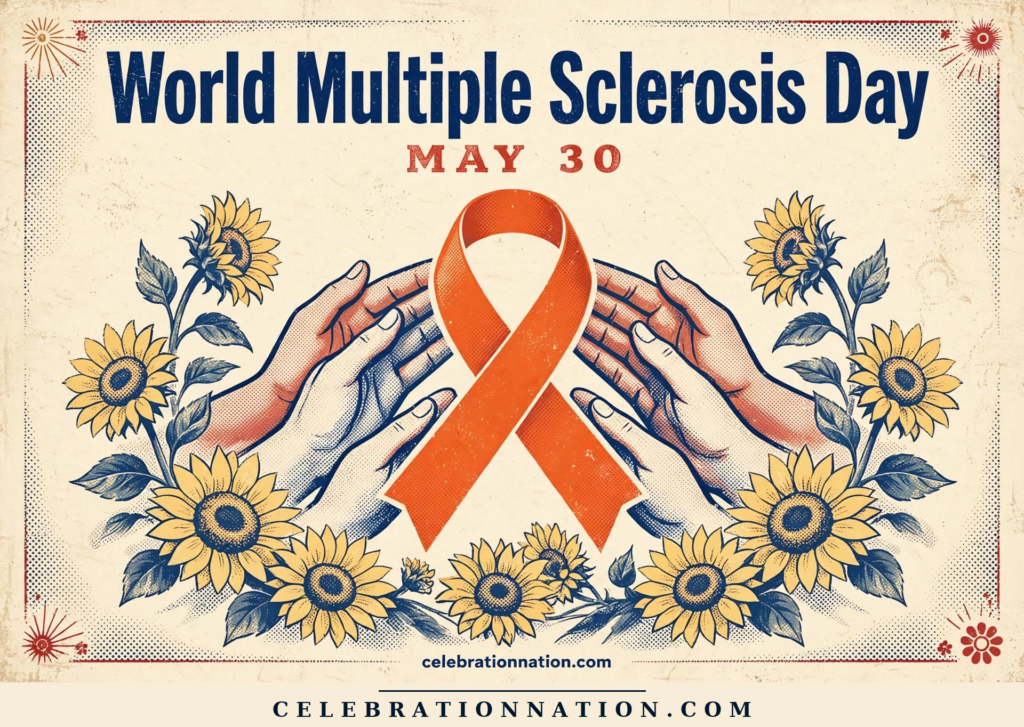
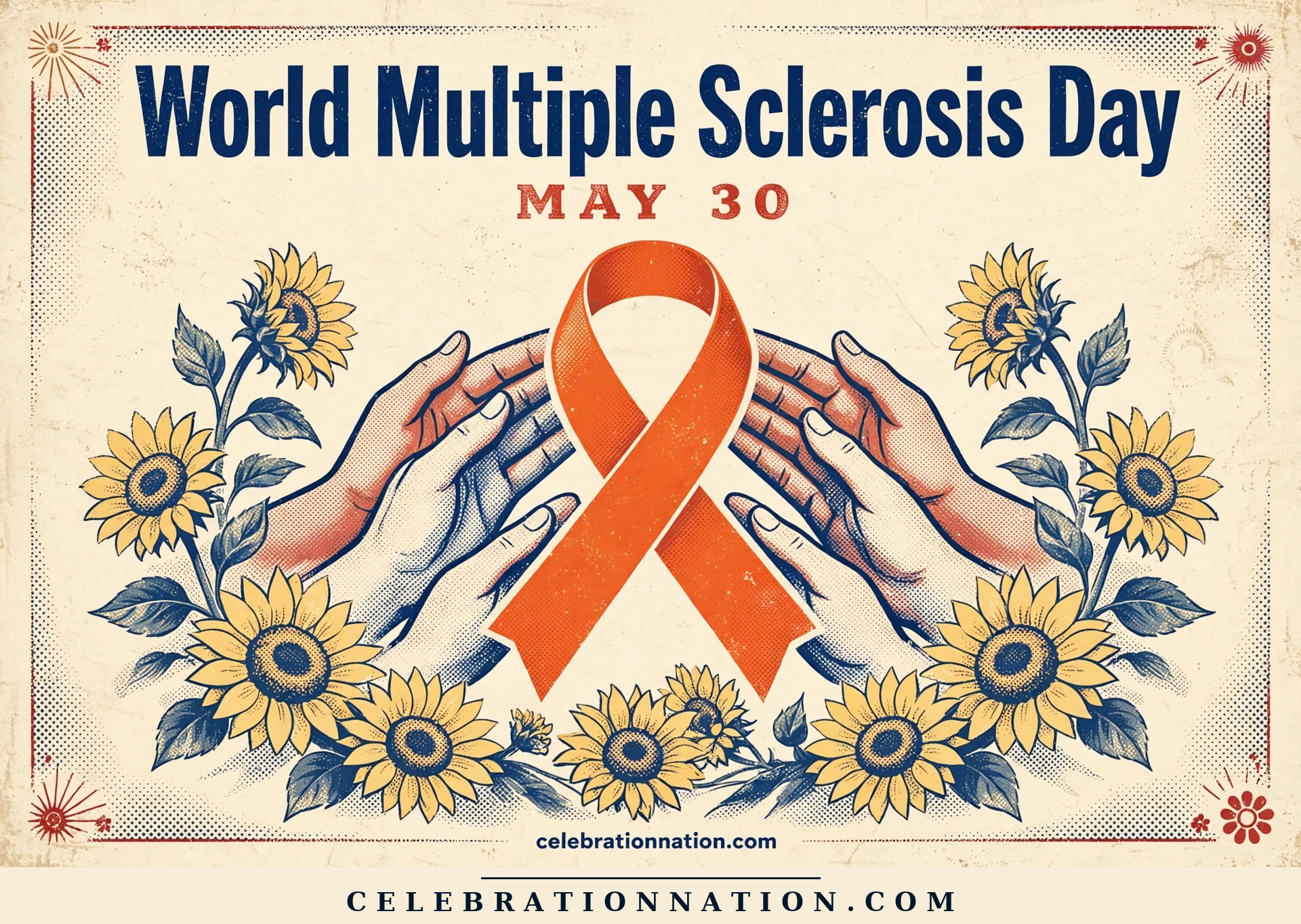
World Multiple Sclerosis Day
World Multiple Sclerosis Day is a hand extended — to the patients, caregivers, researchers, and families living with multiple sclerosis.
- Roots
- Established in 2009 by MS International Federation
- Vibe
- Supportive and community-focused
- Also on May 30
- Loomis Day · Creativity Day · Hole in My Bucket Day
- Hashtag
- #WorldMultipleSclerosisDay
Ways to celebrate
Small, doable ways to celebrate World Multiple Sclerosis Day.
- Share one reputable resource with your network.
- Donate to a patient-led organization working on multiple sclerosis.
- Check in on someone you know who's living with it.
- Book the screening or appointment you've been putting off.
- Listen more than you speak.
Make it your kind of celebration
Family
Have the real conversation at the table — stigma-free, no lecture.
Kids
Answer questions honestly and age-appropriately.
Couples
Check in with each other's appointments, screenings, and follow-ups.
Office
Share vetted resources and encourage people to use their benefits.
School
Bring in an expert, survivor, or advocate to speak for a class period.
Community
Run a donation drive, a walk, or a listening session for those affected.
Just me
Reach out to someone you know is living with it. Ask how they're doing for real.
Plan ahead
World Multiple Sclerosis Day is observed on May 30 every year. Here is where it lands for the next ten years, handy for planners, marketers and party people.
Fast facts
The story
Multiple sclerosis (MS) is a chronic condition affecting the central nervous system, leading to a wide range of symptoms that can vary significantly from one person to another. On May 30, World Multiple Sclerosis Day seeks to not only raise awareness about the challenges faced by those living with MS but also to foster a supportive community that advocates for better treatment and understanding of the disease.
Read the full story
The observance began in 2009, initiated by the Multiple Sclerosis International Federation, to create a global platform for education and advocacy. Each year, the day features various events, from local awareness walks to virtual seminars, designed to engage communities and encourage dialogue surrounding MS. The theme often focuses on a specific aspect of the condition, highlighting the importance of ongoing research and support.
In the United States, MS affects approximately 1 million people, with symptoms ranging from fatigue and difficulty walking to more severe neurological impairments. While there is currently no cure for MS, advancements in treatment options have improved the quality of life for many. Furthermore, research continues to explore potential therapies and preventive measures, making awareness days like this critical in driving funding and interest in the field.
As we come together on this day, individuals are encouraged to wear orange or purple, colors symbolizing MS, to show solidarity. Social media campaigns and local events allow everyone to participate, whether through fundraising or simply sharing personal stories. By uniting on World Multiple Sclerosis Day, we can foster a deeper understanding of MS, support those affected, and advocate for better healthcare solutions.
Did you know?
What is MS?
Multiple sclerosis is an autoimmune disease that affects the brain and spinal cord.
Symptoms vary widely
Symptoms can include fatigue, mobility issues, and cognitive challenges.
More women affected
Women are diagnosed with MS two to three times more than men.
Age of onset
Most people are diagnosed between ages 20 and 50.
Global impact
MS affects millions worldwide, with varying prevalence.
No known cause
The exact cause of MS remains unknown, but genetics and environment are factors.
Ongoing research
Scientists are continually researching MS to find better treatments and a potential cure.
Around the world
Every culture celebrates a little differently.
- USUnited StatesHome to over 1 million individuals with MS.
- GBUnited KingdomOne of the highest rates of MS globally.
- AUAustraliaHosts numerous MS support and research initiatives.
- CACanadaHas one of the highest prevalence rates of MS.
- DEGermanyActive in MS research and community support.
- NLNetherlandsFocuses on innovative MS treatment options.
Keep the party going
See the calendar



Celebrate every day, all year
Official gear from the people who track 1,700+ celebrations.
Browse the shop 2027 National Day Wall CalendarGet the 2026 edition free. 1,700+ observances.
Never miss a reason to celebrate.
One quick morning email with today's celebrations, ideas and posters. Free, unsubscribe anytime.
🎉 You're on the list! Watch your inbox for The Daily Confetti.