





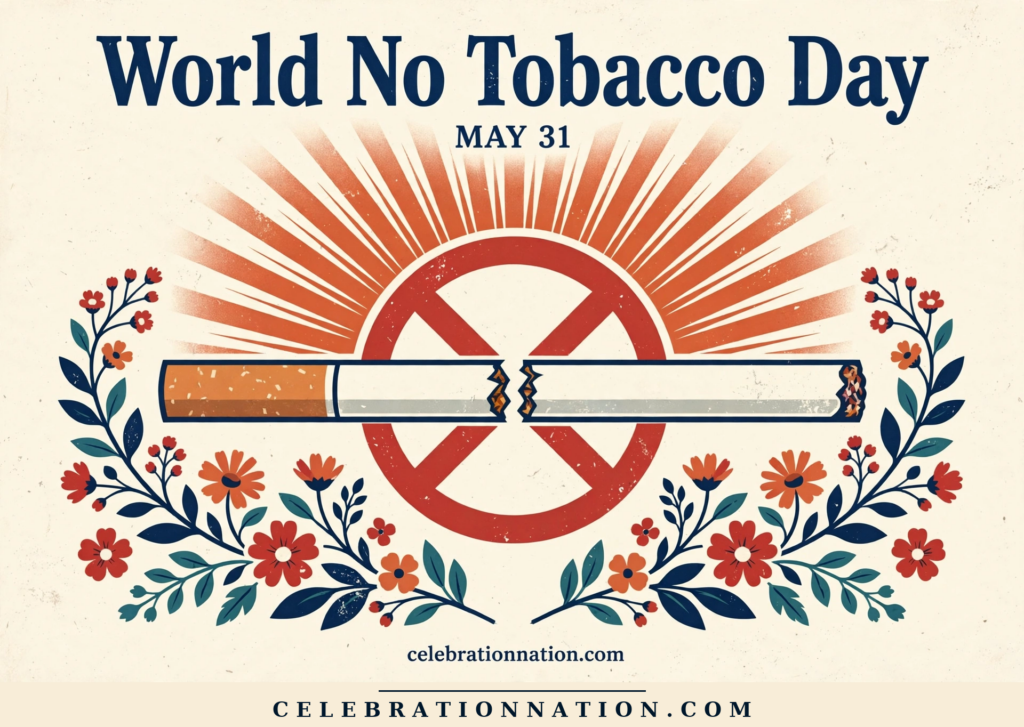
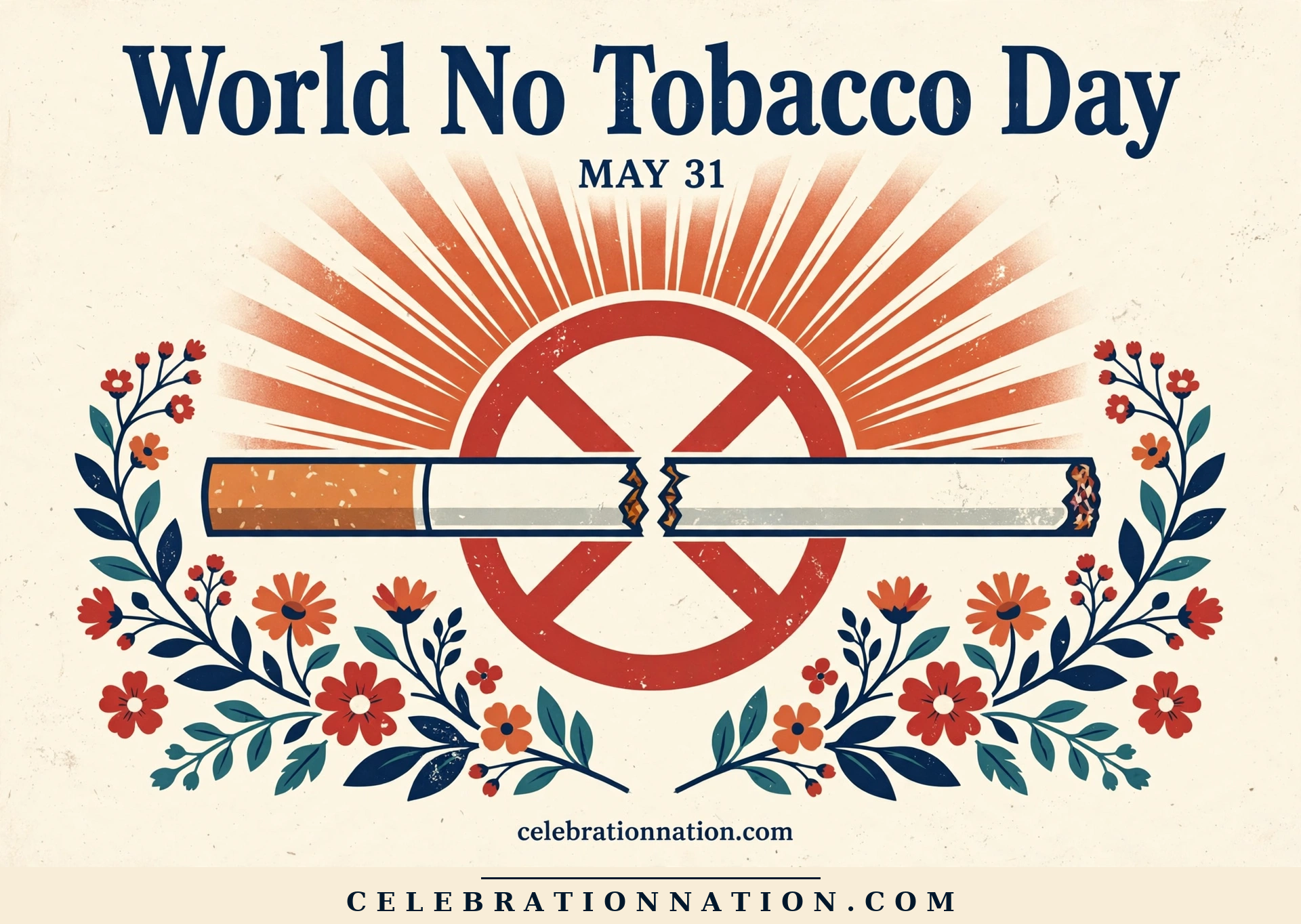
World No Tobacco Day
On World No Tobacco Day, we listen louder, learn more, and make sure no one feels invisible.
- Roots
- Established by the World Health Organization in 1987
- Vibe
- Promoting health and awareness globally
- Also on May 31
- International Flight Attendant Day · Autonomous Vehicle Day · Macaroon Day
- Hashtag
- #WorldNoTobaccoDay
Ways to celebrate
Small, doable ways to celebrate World No Tobacco Day.
- Share one reputable resource with your network.
- Donate to a patient-led organization working on no tobacco.
- Check in on someone you know who's living with it.
- Book the screening or appointment you've been putting off.
- Listen more than you speak.
Make it your kind of celebration
Family
Have the real conversation at the table — stigma-free, no lecture.
Kids
Answer questions honestly and age-appropriately.
Couples
Check in with each other's appointments, screenings, and follow-ups.
Office
Share vetted resources and encourage people to use their benefits.
School
Bring in an expert, survivor, or advocate to speak for a class period.
Community
Run a donation drive, a walk, or a listening session for those affected.
Just me
Reach out to someone you know is living with it. Ask how they're doing for real.
Plan ahead
World No Tobacco Day is observed on May 31 every year. Here is where it lands for the next ten years, handy for planners, marketers and party people.
Fast facts
The story
World No Tobacco Day is an annual event recognized on May 31, initiated by the World Health Organization (WHO) in 1987. This observance aims to illuminate the global tobacco epidemic and its health consequences, urging nations to implement effective policies to reduce tobacco consumption. Each year, the WHO selects a specific theme to draw attention to various aspects of tobacco use, ranging from its environmental impact to the benefits of quitting.
Read the full story
In the United States, tobacco use remains a significant public health concern. According to the Centers for Disease Control and Prevention (CDC), around 28.8 million adults smoked cigarettes in 2022, contributing to various health issues such as lung cancer and heart disease. Programs aimed at cessation, like the CDC's Tips From Former Smokers, have proven effective in motivating individuals to quit. These initiatives are critical, as the economic burden of smoking-related illnesses is substantial, costing the U.S. over $300 billion annually in healthcare and lost productivity.
Internationally, the tobacco epidemic does not discriminate; it affects people from all walks of life. In low- and middle-income countries, tobacco consumption is rising as companies target new markets. World No Tobacco Day provides an opportunity for countries to unite in their efforts to combat this issue. WHO's Framework Convention on Tobacco Control (FCTC) aims to curb tobacco use globally, and many nations have adopted stricter regulations around advertising and smoking in public places.
As we observe World No Tobacco Day, it is essential to foster conversations about the dangers of tobacco use and the benefits of cessation. Communities can organize events, engage in social media campaigns, and create supportive environments for those trying to quit. Collectively, we can pave the way for a healthier future, free from the burdens of tobacco.
Did you know?
First No Tobacco Day
World No Tobacco Day was first celebrated in 1988.
Tobacco and Cancer
Tobacco use is a leading cause of cancer globally.
Youth Smoking
Nearly 4.6 million U.S. middle and high school students smoke.
Tobacco Revenue
The tobacco industry generates over $800 billion in revenue worldwide.
Cessation Success
Quitting tobacco can add up to 10 years to your life.
Secondhand Smoke
Secondhand smoke causes about 41,000 deaths per year in the U.S.
Global Smoking Ban
Over 150 countries have implemented smoking bans in public places.
Around the world
Every culture celebrates a little differently.
- USUnited StatesTobacco use remains a leading cause of preventable death.
- CACanadaStrong anti-tobacco laws have reduced smoking rates.
- GBUnited KingdomSmoking rates have declined significantly over the years.
- AUAustraliaAustralia is a leader in tobacco control policies.
- INIndiaTobacco use continues to pose health challenges.
- BRBrazilBrazil has implemented successful anti-smoking campaigns.
Keep the party going
See the calendar


Celebrate every day, all year
Official gear from the people who track 1,700+ celebrations.
Browse the shop 2027 National Day Desk CalendarA new celebration every morning. Daily tear-off.
Never miss a reason to celebrate.
One quick morning email with today's celebrations, ideas and posters. Free, unsubscribe anytime.
🎉 You're on the list! Watch your inbox for The Daily Confetti.