






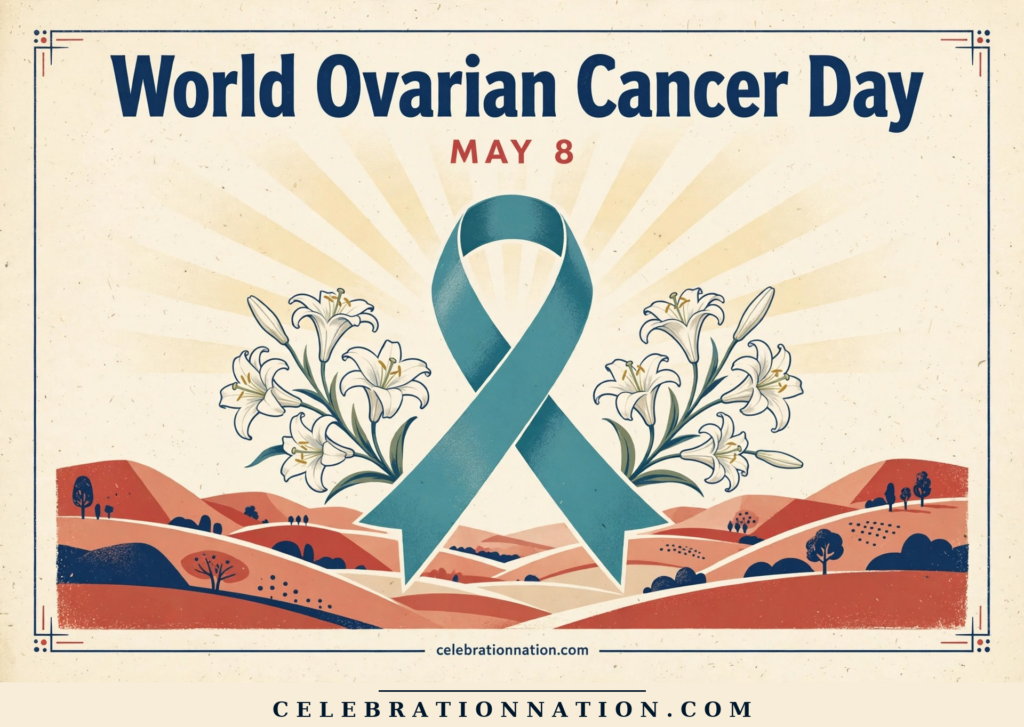
World Ovarian Cancer Day
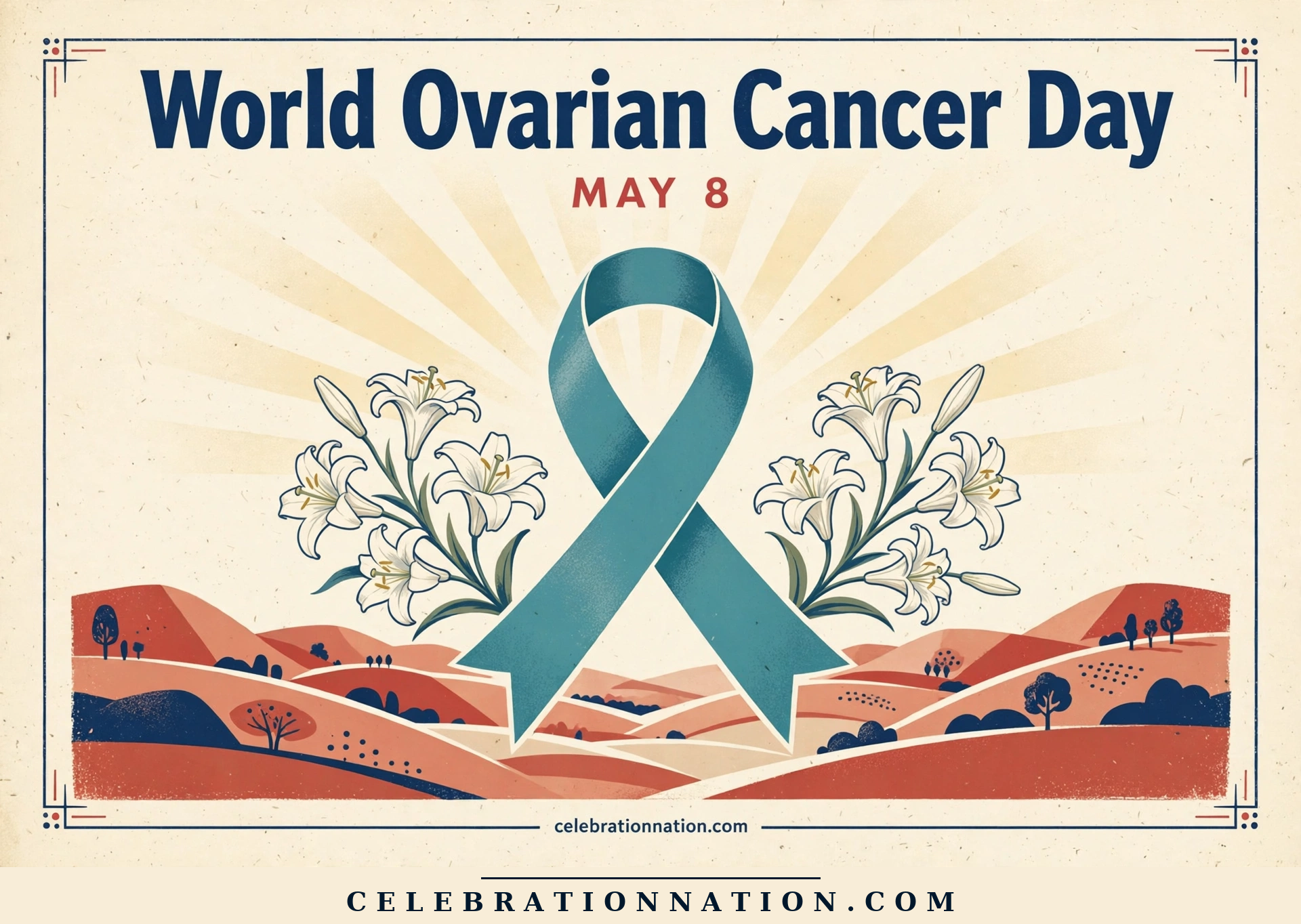
World Ovarian Cancer Day is a hand extended — to the patients, caregivers, researchers, and families living with ovarian cancer.
- Roots
- Launched in 2013 by leaders from ovarian cancer advocacy organizations
- Vibe
- A global movement for awareness and support.
- Also on May 8
- Military Spouse Appreciation Day · Provider Appreciation Day · International Thalassaemia Day
- Hashtag
- #WorldOvarianCancerDay
Ways to celebrate
Small, doable ways to celebrate World Ovarian Cancer Day.
- Share one reputable resource with your network.
- Donate to a patient-led organization working on ovarian cancer.
- Check in on someone you know who's living with it.
- Book the screening or appointment you've been putting off.
- Listen more than you speak.
Make it your kind of celebration
Family
Have the real conversation at the table — stigma-free, no lecture.
Kids
Answer questions honestly and age-appropriately.
Couples
Check in with each other's appointments, screenings, and follow-ups.
Office
Share vetted resources and encourage people to use their benefits.
School
Bring in an expert, survivor, or advocate to speak for a class period.
Community
Run a donation drive, a walk, or a listening session for those affected.
Just me
Reach out to someone you know is living with it. Ask how they're doing for real.
Plan ahead
World Ovarian Cancer Day is observed on May 8 every year. Here is where it lands for the next ten years, handy for planners, marketers and party people.
Fast facts
The story
Ovarian cancer remains a critical health issue affecting women worldwide. In the United States alone, about 21,000 women receive an ovarian cancer diagnosis each year. The disease often goes undetected until it has reached advanced stages, making awareness and education vital for early detection. World Ovarian Cancer Day on May 8 emphasizes the importance of recognizing symptoms and understanding risk factors.
Read the full story
The day was established in 2013 by the Ovarian Cancer Alliance, with the goal of uniting individuals and organizations to spread awareness. Events are held globally, from educational seminars to fundraising walks, all aimed at igniting conversations about ovarian cancer. By sharing resources and personal stories, advocates hope to demystify the disease and encourage proactive health measures among women.
One of the key focuses of World Ovarian Cancer Day is to inform women about the potential symptoms, which may include bloating, pelvic pain, and changes in bowel habits. Unfortunately, many women mistake these symptoms for other conditions, leading to delayed diagnosis. Education is crucial, healthcare providers and families play an essential role in ensuring that women understand these signs and seek medical advice promptly.
As we celebrate this day, let us also remember those who have faced this disease and honor their strength. Support networks are vital, and community involvement can lead to greater awareness and research funding. By coming together, we can create a world where ovarian cancer is detected early and treated effectively, ultimately saving lives and empowering women.
Did you know?
Ovarian Cancer Symptoms
Common symptoms include bloating, pelvic or abdominal pain, and urinary urgency.
Risk Factors
Age, family history, and genetic mutations can increase risk.
Survival Rates
The five-year survival rate is about 93% when the cancer is found at a localized stage.
Awareness Colors
Teal is the official color for ovarian cancer awareness.
Global Participation
World Ovarian Cancer Day is recognized around the world.
Research Funding
Funding for ovarian cancer research is crucial for developing new treatments.
Advocacy Groups
Many advocacy groups work tirelessly to support affected women and families.
Around the world
Every culture celebrates a little differently.
- USUnited StatesNumerous events are organized across the country to raise awareness.
- CACanadaCanadian organizations focus on education and support initiatives.
- GBUnited KingdomUK advocates participate in walks and seminars for awareness.
- AUAustraliaAustralia hosts community events to promote ovarian cancer awareness.
- DEGermanyGerman organizations work to educate women about ovarian cancer.
- INIndiaIn India, awareness campaigns focus on early detection and education.
Keep the party going
See the calendar


Celebrate every day, all year
Official gear from the people who track 1,700+ celebrations.
Browse the shop National Day Celebration Card GameA party in a box, any day of the year.
Never miss a reason to celebrate.
One quick morning email with today's celebrations, ideas and posters. Free, unsubscribe anytime.
🎉 You're on the list! Watch your inbox for The Daily Confetti.