





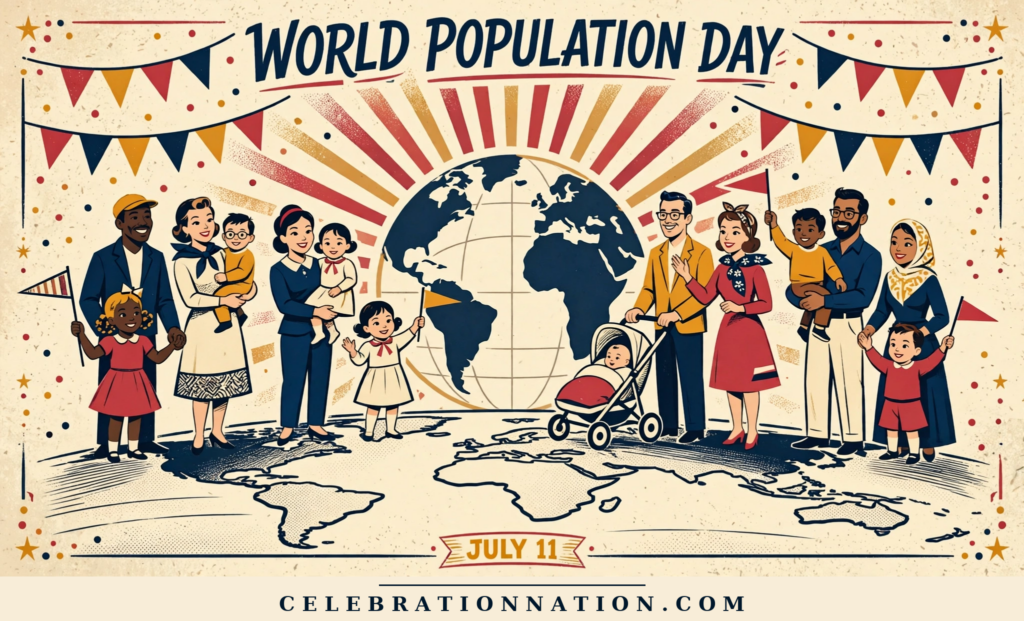
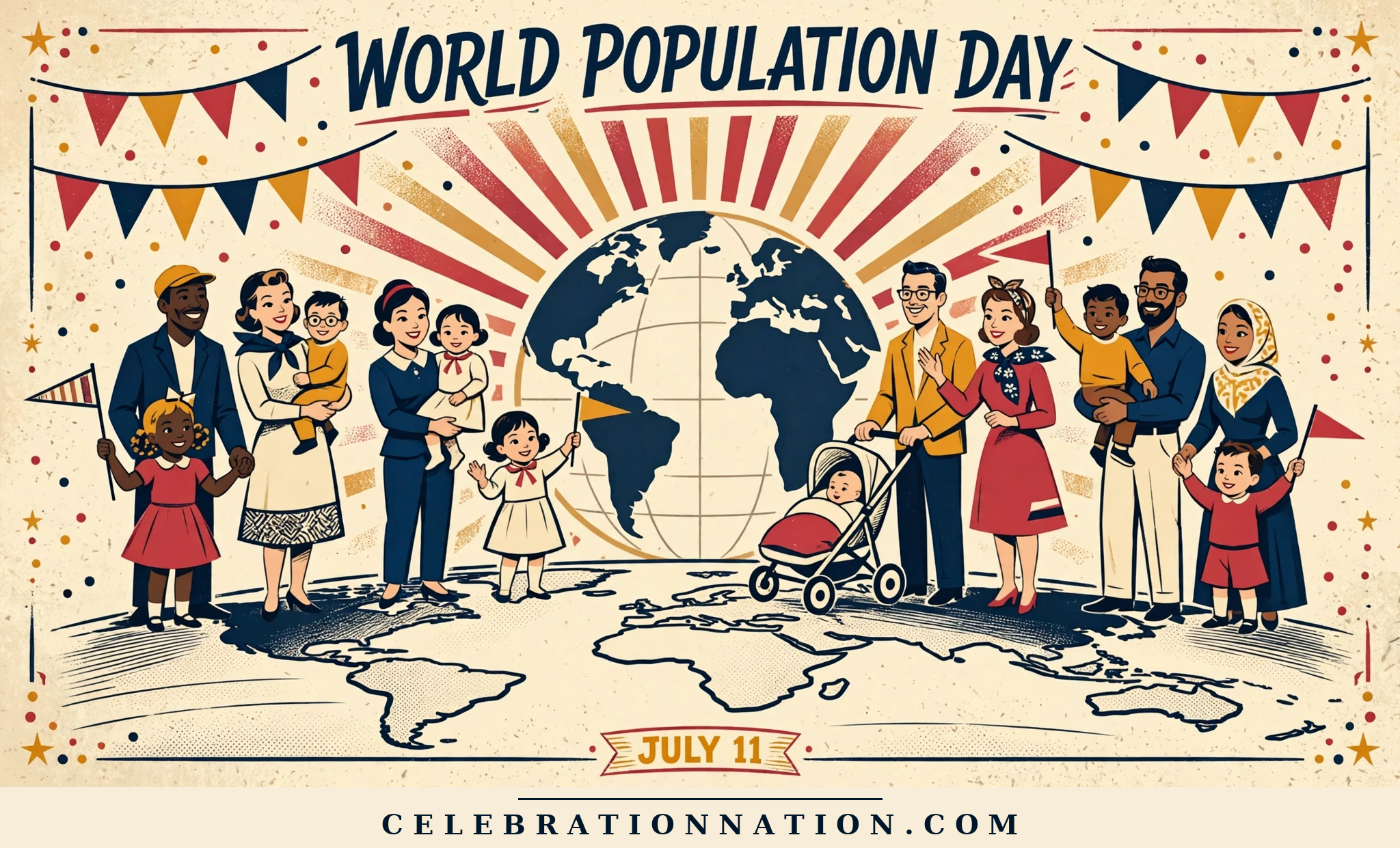
World Population Day
This day highlights the need for responsible population management and sustainable practices worldwide.
- Roots
- Established by the United Nations in 1989
- Vibe
- Focus on sustainability and human rights
- Also on Jul 11
- All American Pet Photo Day · International Skinny Dip Day · 7-Eleven Day
- Hashtag
- #WorldPopulationDay
3 ways to celebrate
Explore the topic
Read about population trends and what they mean.
Host a discussion
Talk over dinner about sustainable futures for everyone.
Share an article
Pass along a thoughtful read on global population issues.
Plan ahead
World Population Day is observed on July 11 every year. Here is where it lands for the next ten years, handy for planners, marketers and party people.
Fast facts
The story
World Population Day was established by the United Nations in 1989 as a means to raise awareness about the growing global population and its implications. The observance seeks to promote understanding of the challenges that population growth imposes on the environment, economy, and society. Each year, various themes are introduced, focusing on issues such as family planning, reproductive health, and sustainable development.
Read the full story
Today, the global population exceeds 8 billion, a significant milestone that brings both challenges and opportunities. The growth rate has slowed in recent years, but projections indicate that we will reach approximately 9.7 billion by 2050. This growth requires a concerted effort to address issues like resource distribution, urbanization, and climate change, which are increasingly impacted by population dynamics.
In the United States, discussions surrounding population growth often intersect with issues of immigration, economic stability, and public health. Various organizations work to promote education and resources related to family planning and reproductive health. By engaging in these conversations, Americans contribute to a broader understanding of how population affects not just local communities but also global dynamics.
World Population Day serves as a reminder that sustainable practices are crucial for the future of our planet. By fostering conversations around responsible population management, we can work towards creating a world where every individual has access to essential resources and opportunities. Celebrating this day calls for global cooperation and commitment to ensuring a balanced and sustainable future.
Did you know?
The First Celebration
World Population Day was first observed on July 11, 1990.
UN Involvement
The UN promotes awareness through various initiatives.
Diverse Challenges
Population growth impacts healthcare, education, and resources.
Youthful Populations
Many developing countries have a high percentage of youth.
Urbanization Trend
More than half the world's population lives in urban areas.
Gender Equality
Empowering women is essential for sustainable development.
Global Awareness
Countries worldwide participate in discussions on this day.
Around the world
Every culture celebrates a little differently.
- USNorth AmericaThe U.S. population is approximately 340 million.
- EUEuropePopulation growth is slowing in many European countries.
- AUAustraliaAustralia's population has been steadily increasing.
- MXLatin AmericaRapid urbanization is a key issue in this region.
- INAsiaAsia is home to over 4.6 billion people.
- ZAAfricaAfrica's population is projected to double by 2050.
Keep the party going
See the calendar



Celebrate every day, all year
Official gear from the people who track 1,700+ celebrations.
Browse the shop National Day Celebration Card GameA party in a box, any day of the year.
Never miss a reason to celebrate.
One quick morning email with today's celebrations, ideas and posters. Free, unsubscribe anytime.
🎉 You're on the list! Watch your inbox for The Daily Confetti.