




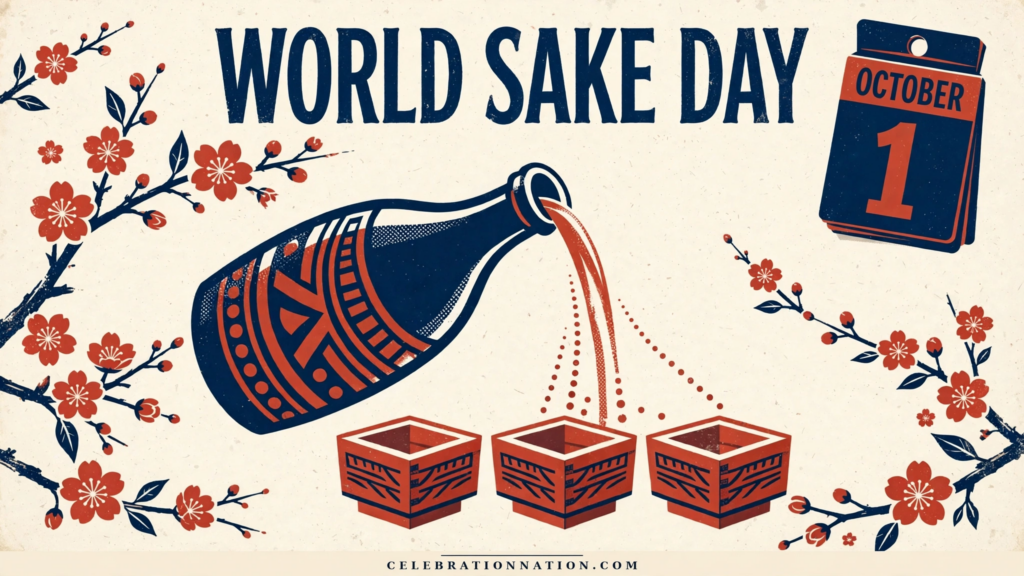
World Sake Day
Celebrate the artistry of sake brewing with a worldwide toast to its rich heritage.
- Roots
- Designated in 1978 by the Japan Sake and Shochu Makers Association.
- Vibe
- A blend of tradition, flavor exploration, and communal enjoyment.
- Also on Oct 1
- International Coffee Day · World Vegetarian Day · International Raccoon Appreciation Day
- Hashtag
- #WorldSakeDay
3 ways to celebrate
Taste sake properly
Chill a bottle of sake and sip it slowly with a Japanese-inspired dinner.
Pair sake and sushi
Order sushi with friends and taste how different sakes match each roll.
Plan an after-work tasting
Organize a small sake tasting for coworkers at a local sushi spot.
Plan ahead
World Sake Day is observed on October 1 every year. Here is where it lands for the next ten years, handy for planners, marketers and party people.
Fast facts
The story
World Sake Day, also known as 'Nihonshu no Hi' in Japanese, marks the start of the sake brewing season in Japan. Established in 1978, this annual observance is a celebration of one of Japan's most iconic beverages, which has been crafted for over a millennium. On this day, sake aficionados and curious newcomers alike gather to appreciate the complex flavors and rich history of this traditional drink, connecting with both the past and present of Japanese culture.
Read the full story
Sake is not merely a drink; it is a symbol of hospitality and community in Japan. Traditionally, sake is served at various ceremonies and celebrations, from weddings to festivals. The brewing process itself is an art form, involving meticulous attention to detail, from the quality of the rice used to the fermentation process. Each bottle of sake tells a story, reflecting the unique characteristics of its region and the craftsmanship of its brewers.
In the United States, the appreciation for sake has grown significantly over the past few decades. With the rise of Japanese restaurants and food culture, many Americans are discovering the diverse range of sake available. From rich and umami-forward Junmai to light and fruity Junmai Ginjo, there is a sake for every palate. As October 1 approaches, enthusiasts are encouraged to explore local breweries, attend tastings, and even experiment with food pairings that elevate the sake experience.
To fully enjoy World Sake Day, consider creating your own sake tasting at home. Pair different types of sake with traditional Japanese dishes, such as sushi, sashimi, or even fried foods like tempura. As you sip and savor, take a moment to reflect on the craftsmanship and cultural significance behind each glass. Whether you're celebrating with family, friends, or on your own, World Sake Day is an opportunity to immerse yourself in the rich tapestry of Japanese tradition.
Did you know?
Sake and Rice
Sake is made from four main ingredients: rice, water, yeast, and koji mold.
Serving Temperature
Sake can be enjoyed chilled, at room temperature, or warmed.
Cultural Significance
Sake is often used in Shinto rituals and celebrations.
Varieties of Sake
There are over 100 different styles of sake, each with unique flavors.
Sake and Food
Sake pairs well with a variety of dishes beyond Japanese cuisine.
Sake Awards
Japan has held the Annual Japan Sake Awards to recognize quality brews since 1911.
Sake in History
Sake was regarded as a divine gift in ancient Japan.
Around the world
Every culture celebrates a little differently.
- JPJapanThe birthplace of sake, renowned for its quality and variety.
- USUnited StatesHome to a growing number of sake breweries, especially in California.
- CACanadaEmerging sake producers are crafting unique blends.
- AUAustraliaInnovative sake makers are exploring local ingredients.
- GBUnited KingdomSake bars and breweries are gaining popularity in urban areas.
- DEGermanyCraft beer culture intersects with sake brewing.
Keep the party going
See the calendar


Celebrate every day, all year
Official gear from the people who track 1,700+ celebrations.
Browse the shop 2027 Wall Calendar, signed by Marlo AndersonSigned by the founder of National Day Calendar.
Never miss a reason to celebrate.
One quick morning email with today's celebrations, ideas and posters. Free, unsubscribe anytime.
🎉 You're on the list! Watch your inbox for The Daily Confetti.