





World Schizophrenia Day
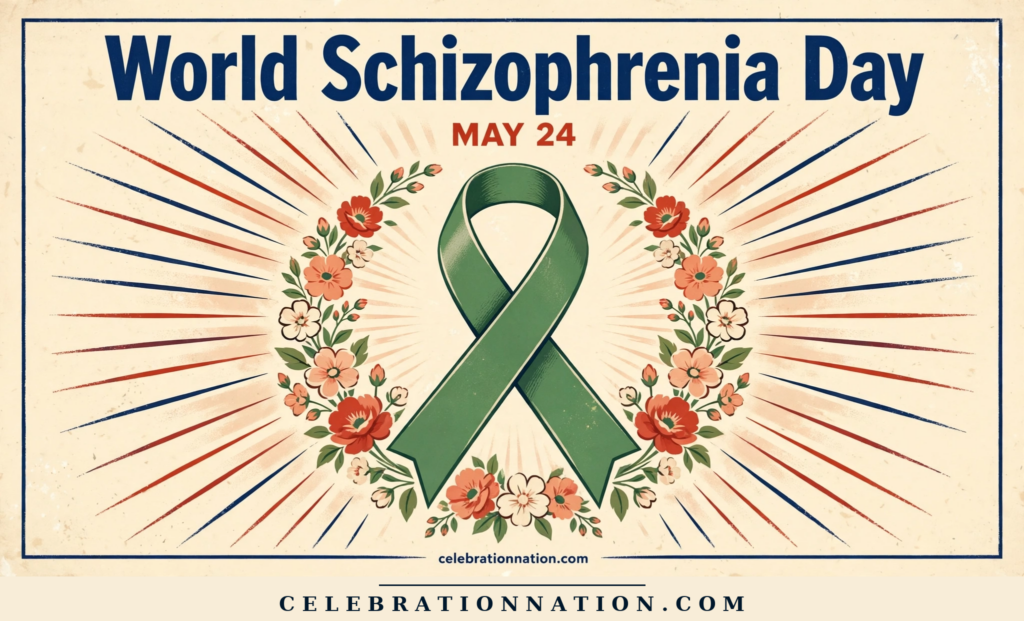
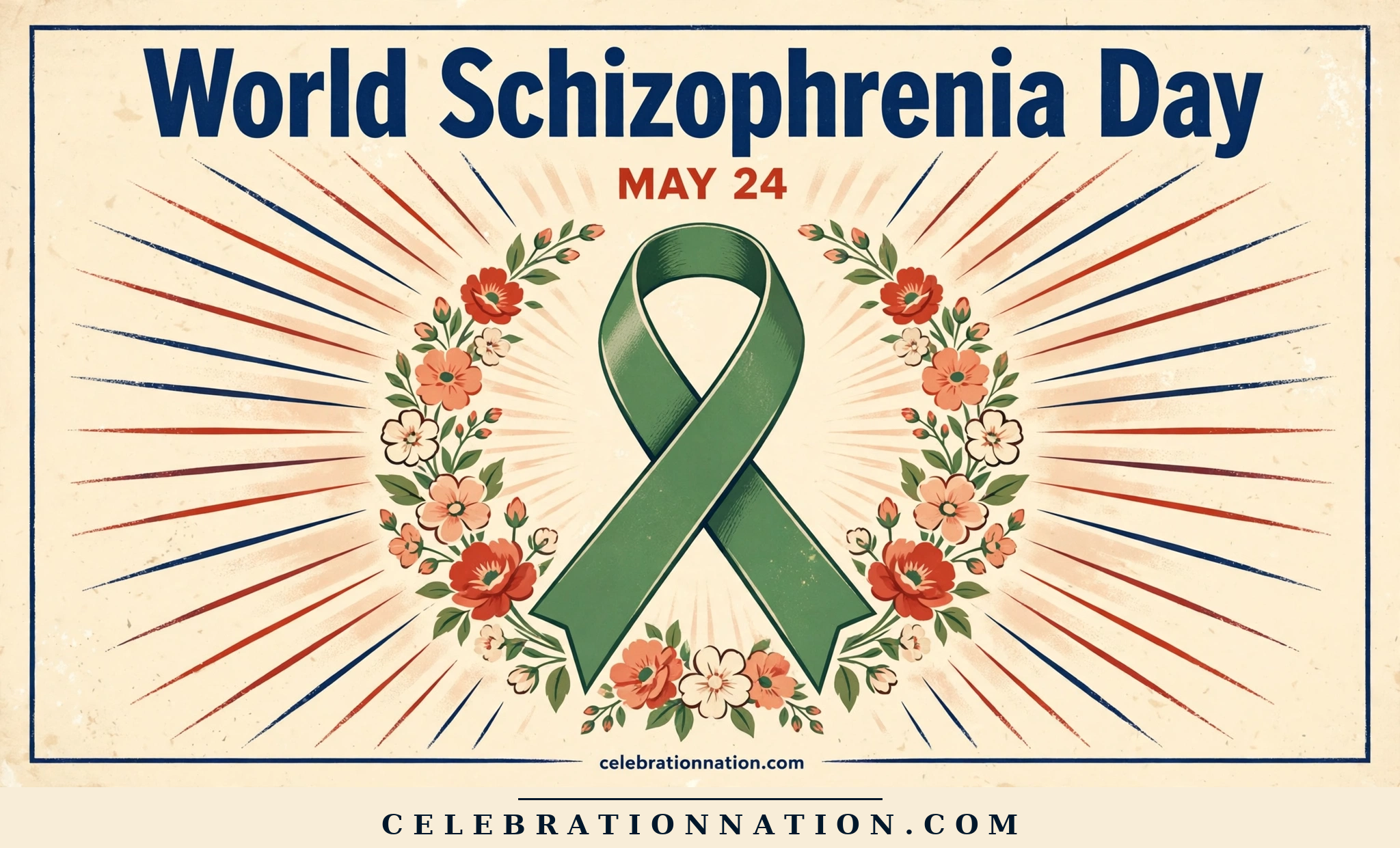
World Schizophrenia Day is a hand extended — to the patients, caregivers, researchers, and families living with schizophrenia.
- Roots
- Established by the National Schizophrenia Foundation in honor of Philippe Pinel
- Vibe
- A call for compassion and understanding
- Also on May 24
- Scavenger Hunt Day · Wyoming Day · Yucatan Shrimp Day
- Hashtag
- #WorldSchizophreniaDay
Ways to celebrate
Small, doable ways to celebrate World Schizophrenia Day.
- Share one reputable resource with your network.
- Donate to a patient-led organization working on schizophrenia.
- Check in on someone you know who's living with it.
- Book the screening or appointment you've been putting off.
- Listen more than you speak.
Make it your kind of celebration
Family
Have the real conversation at the table — stigma-free, no lecture.
Kids
Answer questions honestly and age-appropriately.
Couples
Check in with each other's appointments, screenings, and follow-ups.
Office
Share vetted resources and encourage people to use their benefits.
School
Bring in an expert, survivor, or advocate to speak for a class period.
Community
Run a donation drive, a walk, or a listening session for those affected.
Just me
Reach out to someone you know is living with it. Ask how they're doing for real.
Plan ahead
World Schizophrenia Day is observed on May 24 every year. Here is where it lands for the next ten years, handy for planners, marketers and party people.
Fast facts
The story
World Schizophrenia Day was established on May 24 to raise awareness about schizophrenia, a severe mental disorder that can affect thoughts, feelings, and behaviors. This day encourages open discussions, education, and support for those impacted by the illness. The complexity of schizophrenia often leads to misunderstandings and stigma, making awareness efforts crucial for improving the lives of millions.
Read the full story
In the United States, schizophrenia affects well under 1 percent of adults, a condition characterized by delusions, hallucinations, and cognitive challenges. The symptoms can vary significantly from person to person, complicating diagnosis and treatment. Early intervention and ongoing support are essential for managing the condition, yet many individuals face barriers in receiving adequate care.
Globally, mental health organizations emphasize the need for community involvement in addressing mental health issues. Various organizations are working diligently to provide resources, advocate for policy changes, and promote mental health education. On World Schizophrenia Day, people are encouraged to engage with local and online communities to foster understanding and break down the stigma surrounding mental health.
As we observe World Schizophrenia Day, it is vital to remember that mental health is an integral part of overall well-being. By educating ourselves, listening to those affected, and supporting mental health initiatives, we can create a more compassionate society. Together, we can help illuminate the path towards understanding and acceptance.
Did you know?
First recorded case
The first documented case of schizophrenia dates back to the 19th century.
Famous individuals
Notable figures like John Nash lived with schizophrenia.
Stigma impact
Stigma often prevents individuals from seeking help.
Treatment options
Various therapies and medications help manage symptoms.
Global impact
Schizophrenia affects approximately 24 million people worldwide, according to the World Health Organization.
Awareness events
Numerous events occur globally to raise awareness.
Research advancements
Ongoing research aims to improve treatment and understanding.
Around the world
Every culture celebrates a little differently.
- USUnited StatesMental health awareness is crucial for supportive communities.
- GBUnited KingdomOrganizations are working tirelessly to improve mental health services.
- CACanadaCanada promotes mental health awareness through various campaigns.
- AUAustraliaA focus on mental health education is growing in schools.
- DEGermanyGermany engages in public discussions about mental health.
- INIndiaIndia is breaking stigma through community support programs.
Keep the party going
See the calendar



Celebrate every day, all year
Official gear from the people who track 1,700+ celebrations.
Browse the shop 2027 Wall Calendar, signed by Marlo AndersonSigned by the founder of National Day Calendar.
Never miss a reason to celebrate.
One quick morning email with today's celebrations, ideas and posters. Free, unsubscribe anytime.
🎉 You're on the list! Watch your inbox for The Daily Confetti.