



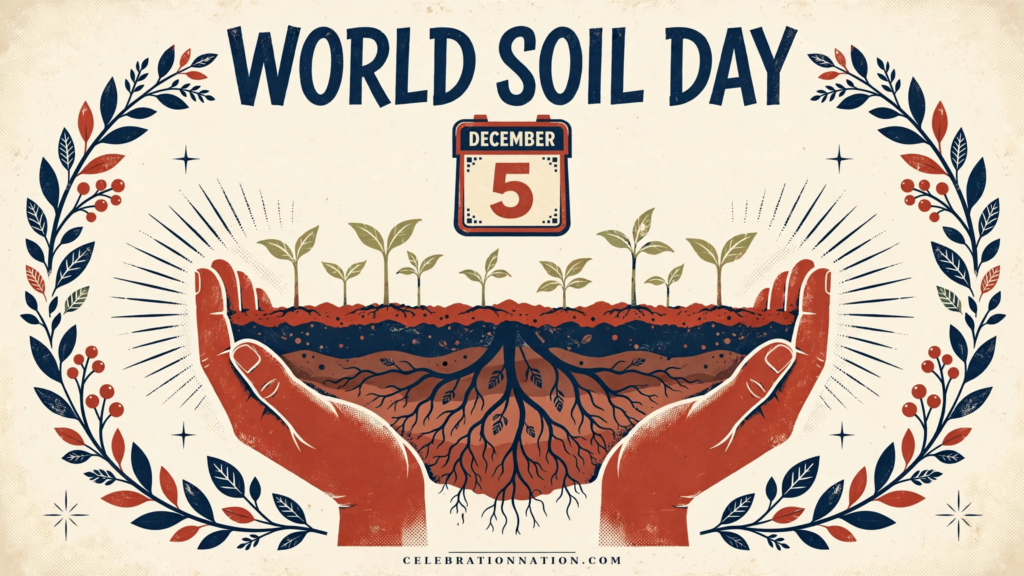
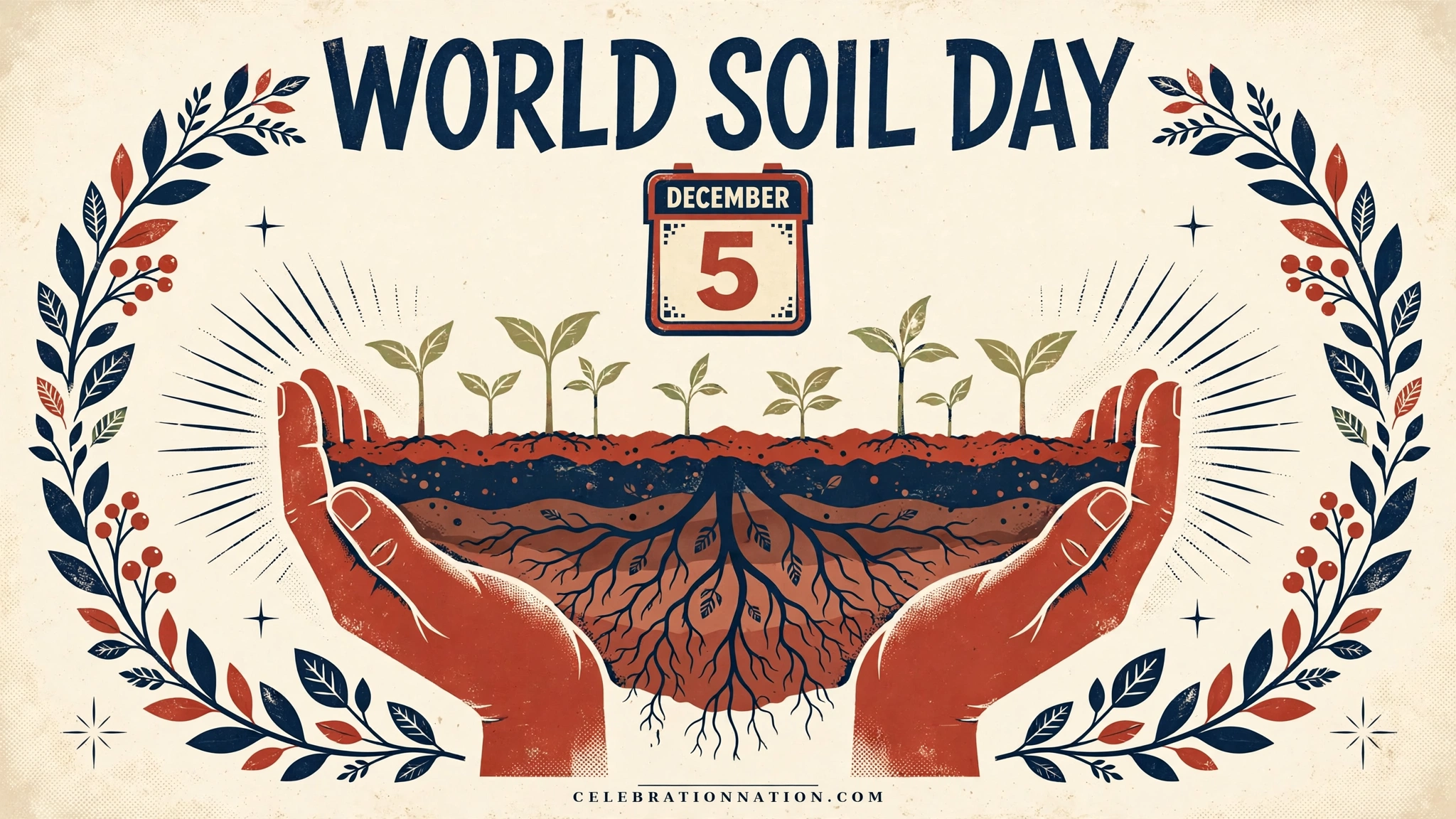
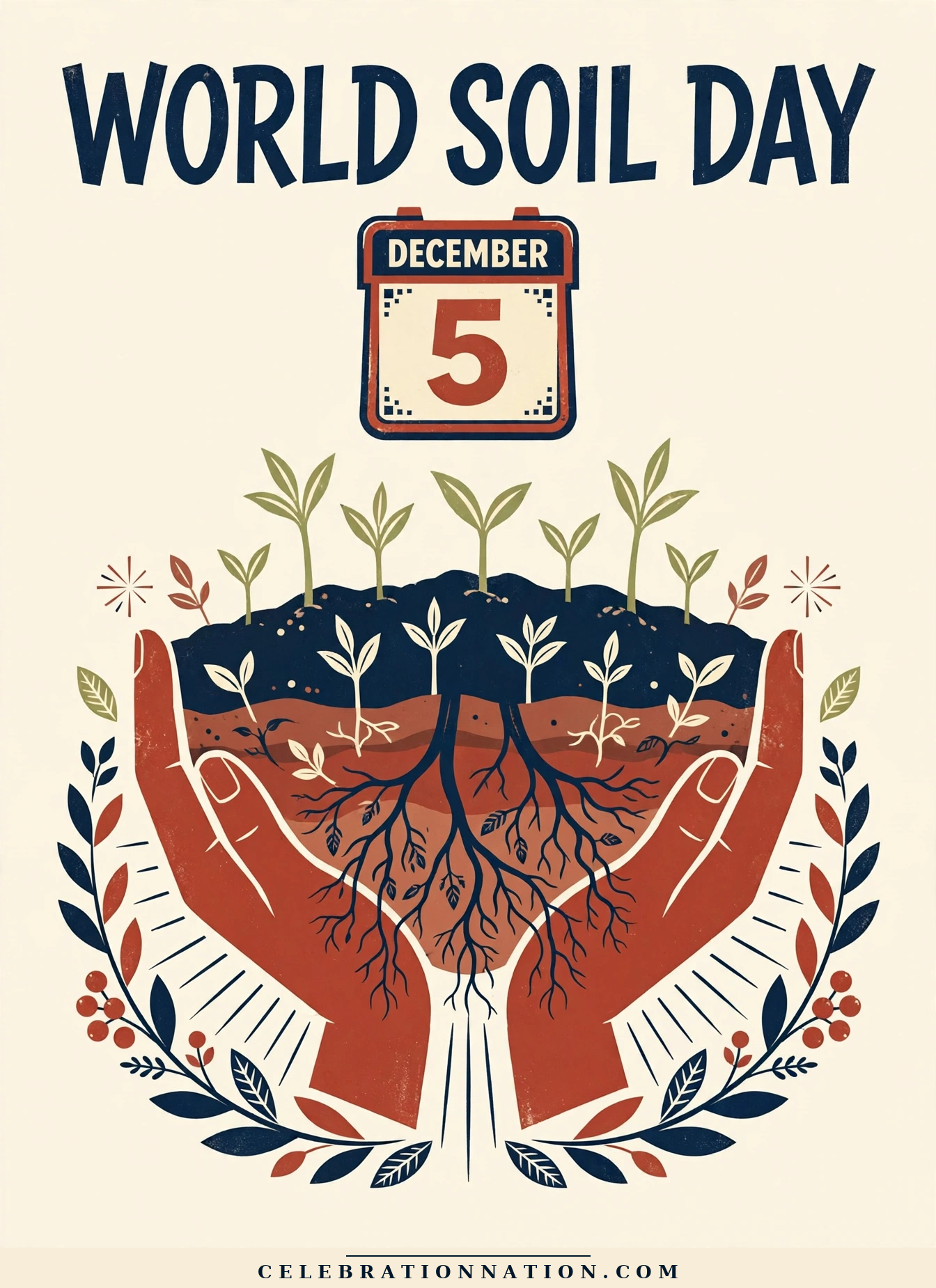
World Soil Day
On December 5, we honor the significance of healthy soil in our ecosystem, highlighting its essential role in food security and biodiversity.
- Roots
- Established in 2013 by the UN
- Vibe
- Community-driven soil awareness
- Also on Dec 5
- International Spirit of the Game Day · Global Fat Bike Day · Repeal Day
- Hashtag
- #WorldSoilDay
3 ways to celebrate
Start composting
Begin a compost bin at home and feed your garden next season.
Plant together
Gather friends to plant a community garden bed or a tree.
Share soil tips
Swap composting and gardening tips with coworkers at lunch.
Plan ahead
World Soil Day is observed on December 5 every year. Here is where it lands for the next ten years, handy for planners, marketers and party people.
Fast facts
The story
Soil is often called the skin of the Earth, and rightly so, it is a living ecosystem that supports life. From the food we eat to the water we drink, healthy soil is critical for sustaining human life and biodiversity. As the United Nations recognizes World Soil Day on December 5, it emphasizes the urgent need for action to preserve this invaluable resource. With global populations expected to reach nearly 10 billion by 2050, the challenge of maintaining soil health becomes even more pressing.
Read the full story
In the United States, agricultural practices have long been intertwined with soil management. The Natural Resources Conservation Service (NRCS) has initiated programs aimed at improving soil health through cover cropping, conservation tillage, and crop rotation. These methods not only enhance soil structure and fertility but also promote biodiversity, benefiting both farmers and the environment.
Globally, soil degradation is a growing concern, impacting food security and the livelihoods of millions. According to the Food and Agriculture Organization (FAO), 95% of our food comes from soils, and the degradation of soil can lead to reduced crop yields and increased poverty. World Soil Day serves as a reminder that sustainable practices are essential for the future of our planet.
As we celebrate World Soil Day, individuals, communities, and governments are encouraged to engage in initiatives that protect soil health. From educational workshops to community gardens, the day inspires action and awareness, fostering a collective commitment to nurturing the soil that nurtures us all.
Did you know?
Soil Composition
Soil is made up of minerals, organic matter, air, and water.
Soil Types
Soil types vary widely from place to place, shaped by climate, rock, and living organisms.
Earthworm Benefits
Earthworms aerate soil and enhance its fertility.
Soil pH
Most plants thrive in soil with a pH between 6.0 and 7.5.
Soil Microbes
One teaspoon of healthy soil can contain billions of microorganisms.
Urban Soil
Urban areas can also contribute to soil degradation if not managed properly.
Soil Erosion
It can take up to 1,000 years to produce just 2-3 cm of soil, so erosion losses are hard to replace.
Around the world
Every culture celebrates a little differently.
- USUnited StatesHome to diverse ecosystems, the U.S. emphasizes sustainable agriculture practices.
- CACanadaCanada's vast farmlands focus on soil conservation and health.
- AUAustraliaAustralia faces unique soil challenges, emphasizing research and innovation.
- EUEuropean UnionMany EU countries implement strict soil protection laws.
- BRBrazilBrazil's farming practices are evolving to preserve the Amazon's soil.
- INIndiaIndian farmers are adopting sustainable practices to improve soil health.
Keep the party going
See the calendar
Celebrate every day, all year
Official gear from the people who track 1,700+ celebrations.
Browse the shop National Day Celebration Card GameA party in a box, any day of the year.
Never miss a reason to celebrate.
One quick morning email with today's celebrations, ideas and posters. Free, unsubscribe anytime.
🎉 You're on the list! Watch your inbox for The Daily Confetti.