
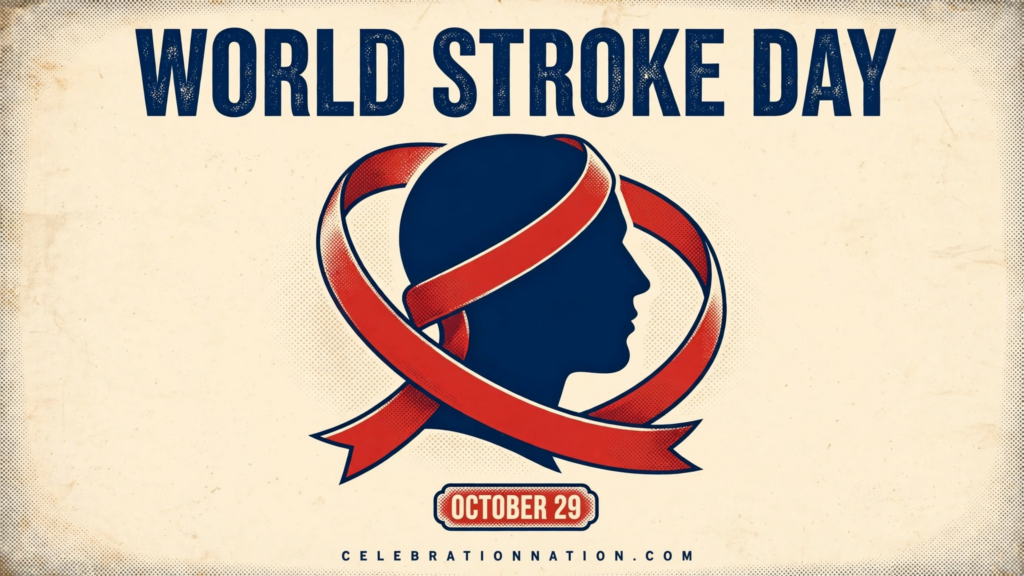
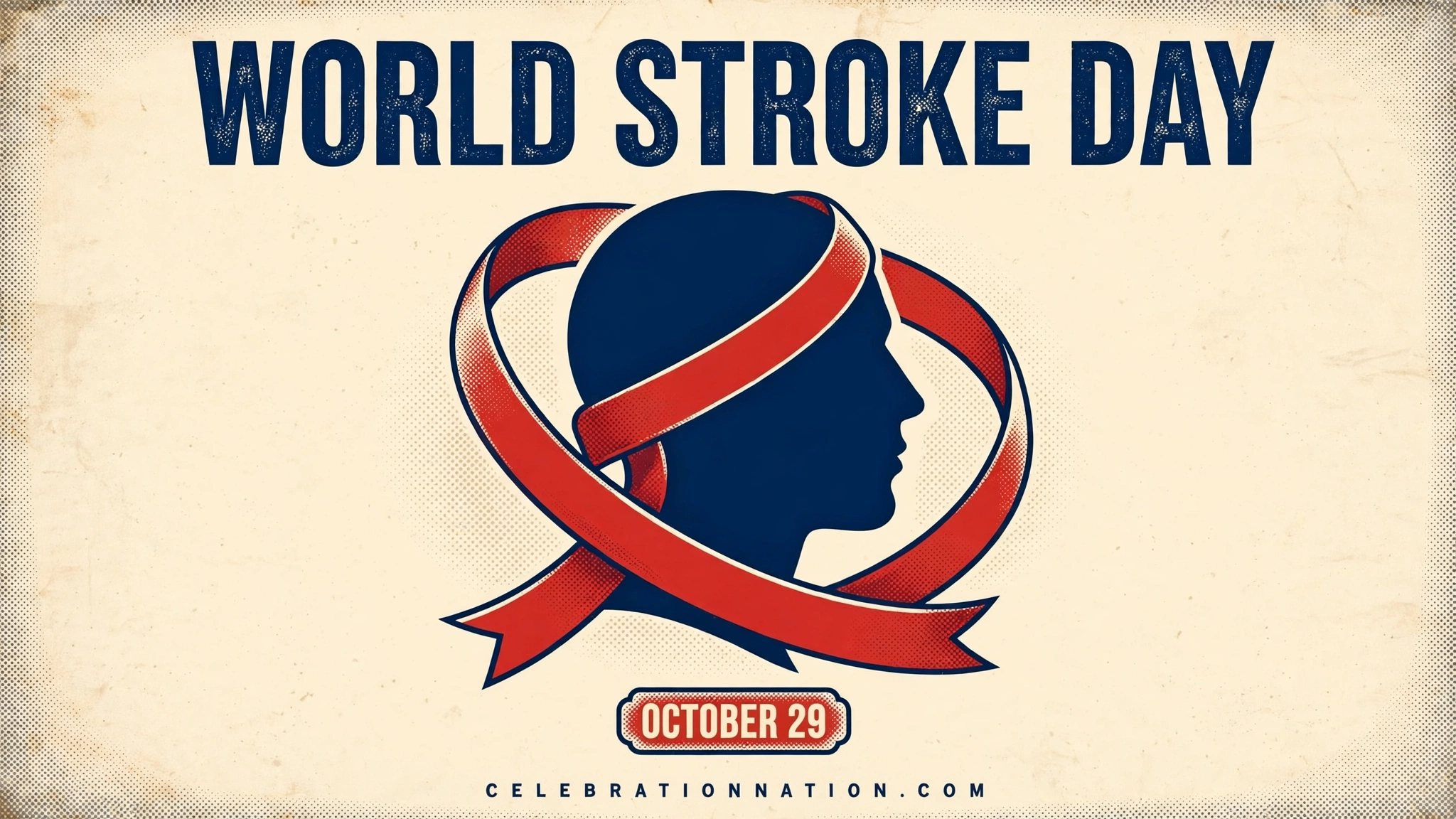
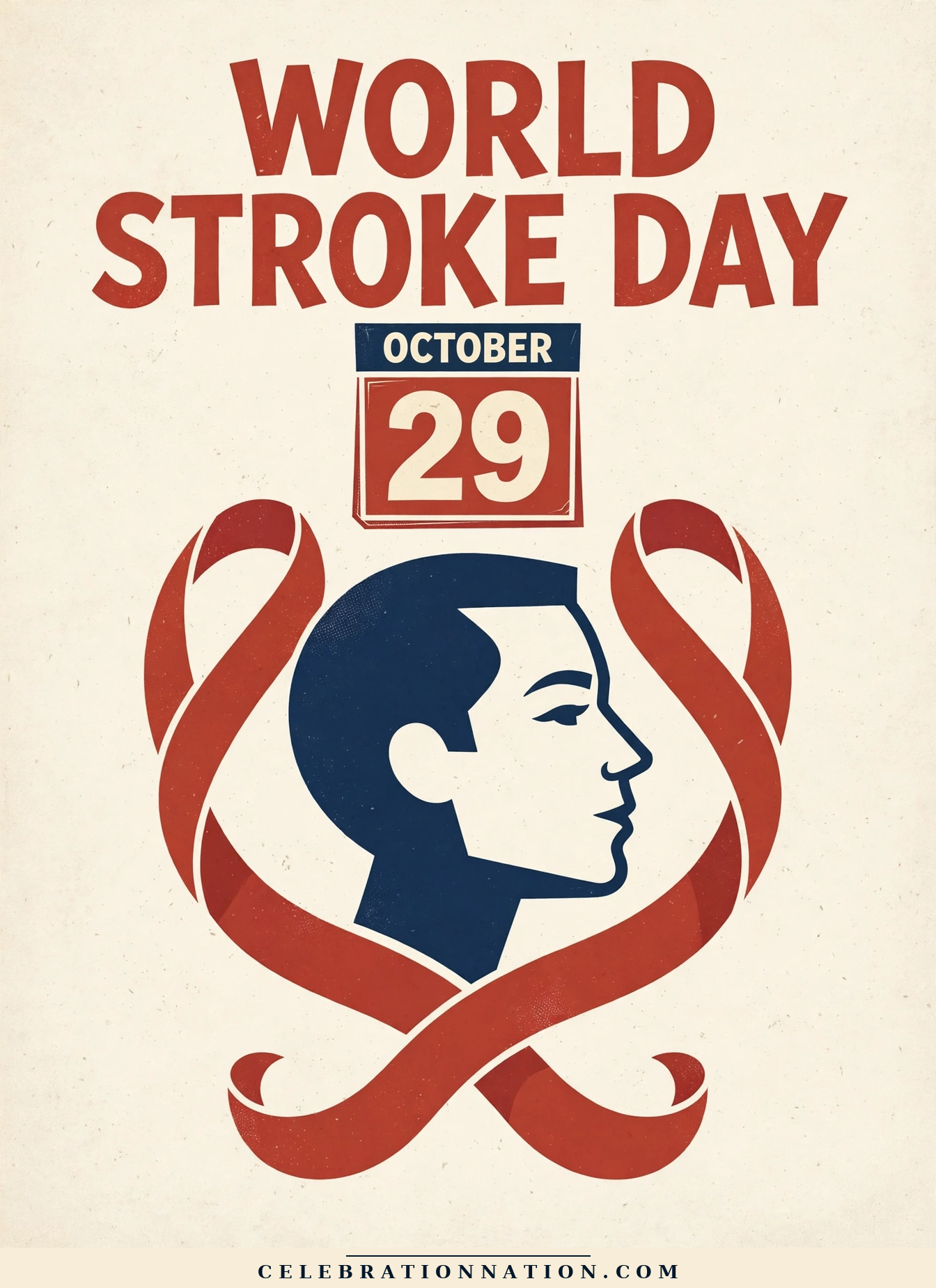
World Stroke Day
World Stroke Day focuses on the importance of education and prevention.
- Roots
- Established in 2006
- Vibe
- A community-driven awareness movement.
- Also on Oct 29
- World Psoriasis Day · International Internet Day · Cat Day
- Hashtag
- #WorldStrokeDay
3 ways to celebrate
Learn the warning signs
Read trusted health guidance so you can act fast if needed.
Walk for the cause
Join friends for a charity walk supporting stroke research.
Share awareness info
Post a trusted resource link so coworkers can learn too.
Plan ahead
World Stroke Day is observed on October 29 every year. Here is where it lands for the next ten years, handy for planners, marketers and party people.
Fast facts
The story
October 29 marks World Stroke Day, a day dedicated to raising awareness about the importance of recognizing stroke symptoms and understanding preventive measures. The observance was established in 2006 by the World Stroke Organization, emphasizing the need for education and intervention. Strokes can impact individuals of all ages, making awareness critical to reducing their incidence and improving outcomes for those affected.
Read the full story
Stroke is often described using the acronym FAST, Face drooping, Arm weakness, Speech difficulties, and Time to call emergency services. Recognizing these signs can be vital for timely treatment, which significantly improves recovery chances. In the United States, someone has a stroke every 40 seconds, underscoring the urgency of public education efforts on this day.
In addition to immediate recognition, World Stroke Day emphasizes the importance of long-term prevention strategies. These include maintaining a healthy lifestyle, regular exercise, a balanced diet, and managing risk factors like hypertension and diabetes. Communities across the globe are encouraged to participate in local events to foster discussion and spread vital health information.
As we observe World Stroke Day, let us remember that together we can make a difference. From sharing resources online to participating in local events, every action counts. By raising awareness, we not only educate ourselves but also empower others to take charge of their health, ultimately saving lives and reducing the global burden of stroke.
Did you know?
What is a stroke?
A stroke occurs when blood flow to the brain is interrupted.
Common risk factors
High blood pressure, diabetes, and smoking increase stroke risk.
Global impact
Stroke is a leading cause of disability worldwide.
FAST method
Face drooping, Arm weakness, Speech difficulties, Time to call.
Age factor
Risk increases with age, especially over 55.
Stroke types
Ischemic and hemorrhagic are the two main types.
Recovery can take time
Every stroke survivor's recovery journey is unique.
Around the world
Every culture celebrates a little differently.
- USUnited StatesThe U.S. sees around 795,000 strokes annually.
- GBUnited KingdomStroke is a leading cause of death in the UK.
- AUAustraliaStroke awareness campaigns are vital here.
- CACanadaPublic education promotes fast stroke recognition.
- INIndiaStroke incidence is rising in urban areas.
- BRBrazilPublic health efforts focus on prevention and education.
Keep the party going
See the calendar
Celebrate every day, all year
Official gear from the people who track 1,700+ celebrations.
Browse the shop 2027 Wall + Desk Calendar BundleCelebrate every day at home and at work.
Never miss a reason to celebrate.
One quick morning email with today's celebrations, ideas and posters. Free, unsubscribe anytime.
🎉 You're on the list! Watch your inbox for The Daily Confetti.