





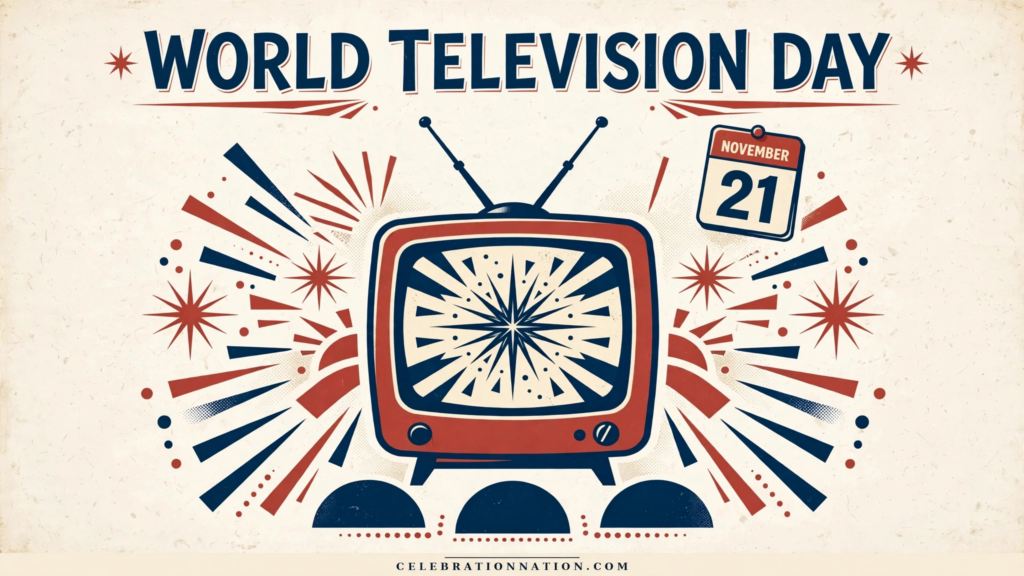
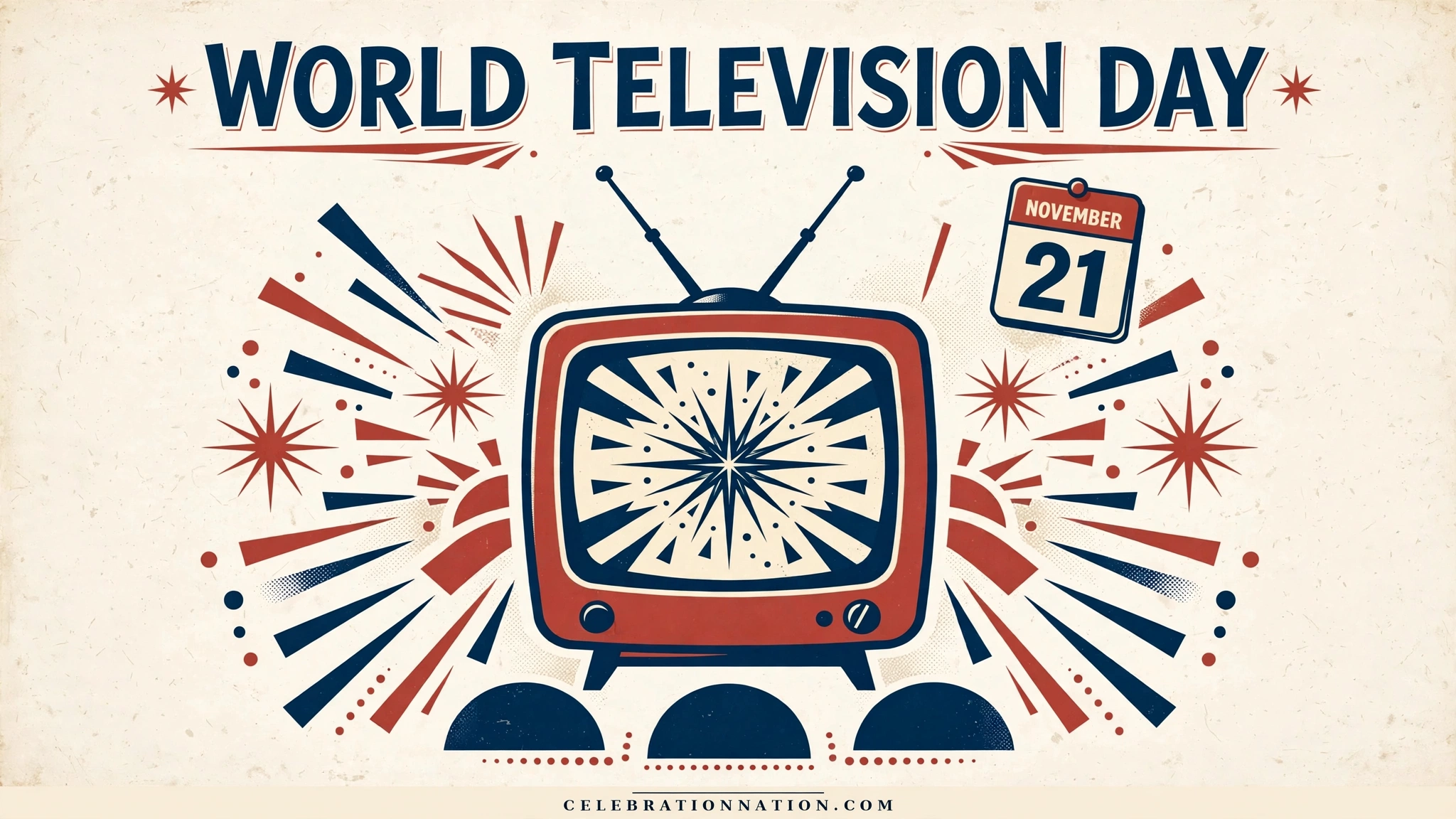
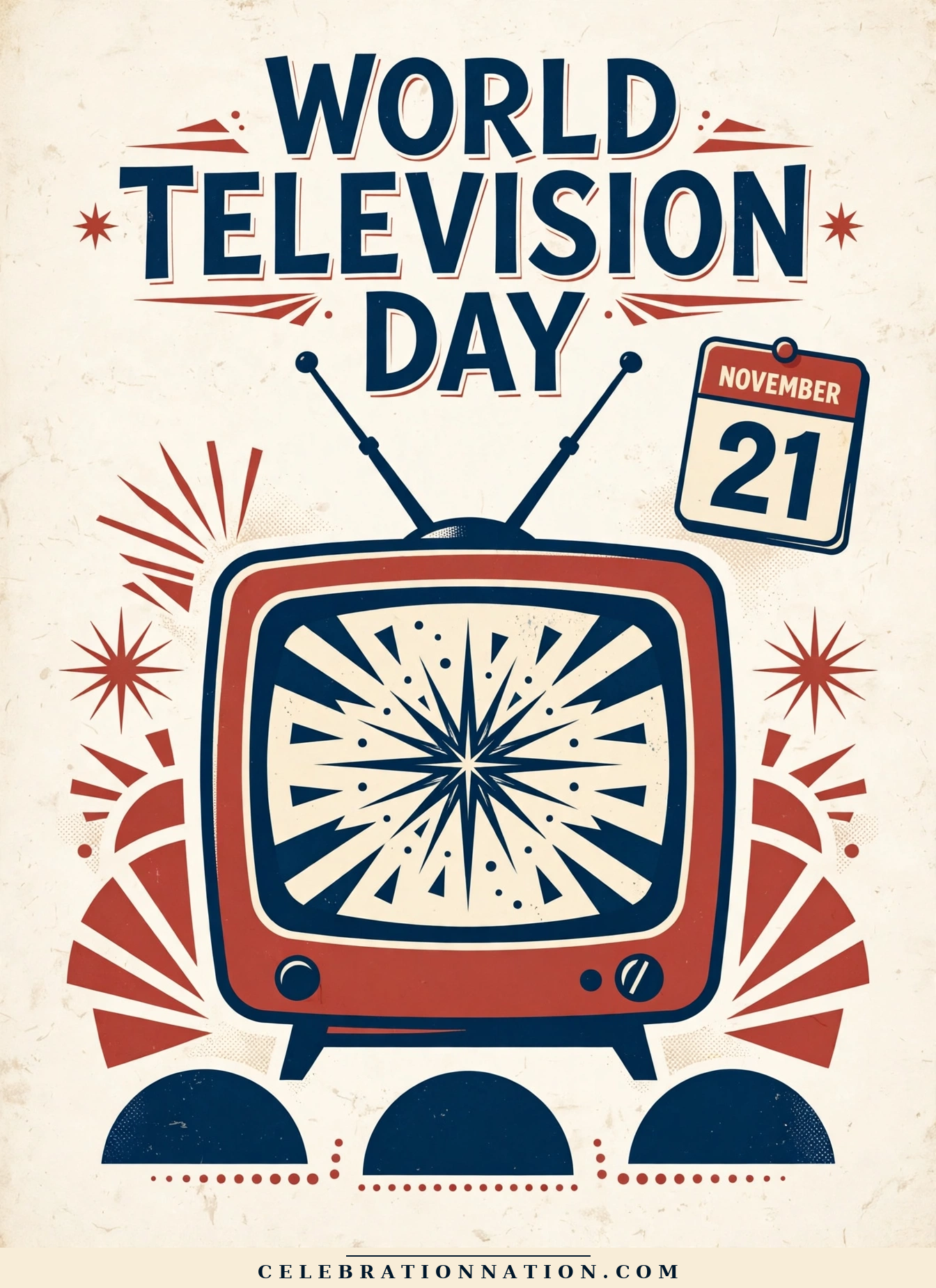
World Television Day
On this day, we acknowledge the transformative power of television.
- Roots
- Established by the UN in 1996
- Vibe
- Nostalgic, reflective, celebratory
- Also on Nov 21
- International Survivors of Suicide Loss Day · Guinness World Records Day · Adoption Day
- Hashtag
- #WorldTelevisionDay
3 ways to celebrate
Rewatch a classic
Pick a beloved episode and enjoy it like it is brand new.
Host TV trivia night
Quiz friends on theme songs, catchphrases and famous finales.
Vote for favorites
Run a quick poll for the office's all-time favorite show.
Plan ahead
World Television Day is observed on November 21 every year. Here is where it lands for the next ten years, handy for planners, marketers and party people.
Fast facts
The story
World Television Day, designated by the United Nations in 1996, is a day dedicated to the power of television as a medium of communication. It recognizes the profound influence that television has on global culture and society, shaping public opinion and providing a platform for important social issues. The day encourages us to reflect on the role television plays in our daily lives and in shaping our understanding of the world around us.
Read the full story
Television first emerged in the 1920s, but it wasn't until the 1950s that it became a household staple in the United States. Iconic shows such as "I Love Lucy" and "The Ed Sullivan Show" not only entertained but also impacted social norms and values, paving the way for modern television that continues to evolve. Today, platforms like Netflix and Hulu are changing the way we consume content, moving away from traditional broadcasting.
Globally, television remains a vital source of information and entertainment. Worldwide, about 1.63 billion people have televisions in their homes, and nearly 96% of U.S. households have at least one set. This highlights the cultural importance of television as a medium that transcends borders and connects diverse audiences through shared stories and experiences.
In celebrating World Television Day, we honor not only the technology behind the screen but also the storytellers who create the narratives that resonate with us. From news to reality shows, television reflects societal changes and challenges us to think critically about the world. It is a reminder of our shared humanity, bridging gaps and fostering understanding across cultures.
Did you know?
Television's Inception
The first working television was created by Philo Farnsworth in 1927.
TV's Golden Age
The 1950s are often referred to as the Golden Age of Television.
Revolutionary Formats
The introduction of remote controls in the 1950s changed viewing habits.
Streaming Era
Streaming services have dramatically reshaped how we watch TV.
TV Awards
The Emmy Awards celebrate excellence in the television industry annually.
Cultural Reflection
Television often reflects societal changes and cultural shifts.
International Viewing
India is home to one of the world's largest television audiences.
Around the world
Every culture celebrates a little differently.
- USNorth AmericaTelevision has been a staple of American homes since the 1950s.
- GBEuropeThe UK and France were pioneers in television broadcasting.
- JPAsiaJapan was among the first to develop color television technology.
- AUOceaniaAustralia's television industry has produced globally recognized shows.
- BRSouth AmericaBrazilian telenovelas are famous for their dramatic storytelling.
- ZAAfricaSouth Africa has a vibrant television landscape with diverse programming.
Keep the party going
See the calendar
Celebrate every day, all year
Official gear from the people who track 1,700+ celebrations.
Browse the shop 2027 National Day Desk CalendarA new celebration every morning. Daily tear-off.
Never miss a reason to celebrate.
One quick morning email with today's celebrations, ideas and posters. Free, unsubscribe anytime.
🎉 You're on the list! Watch your inbox for The Daily Confetti.