

Fashion Revolution Day
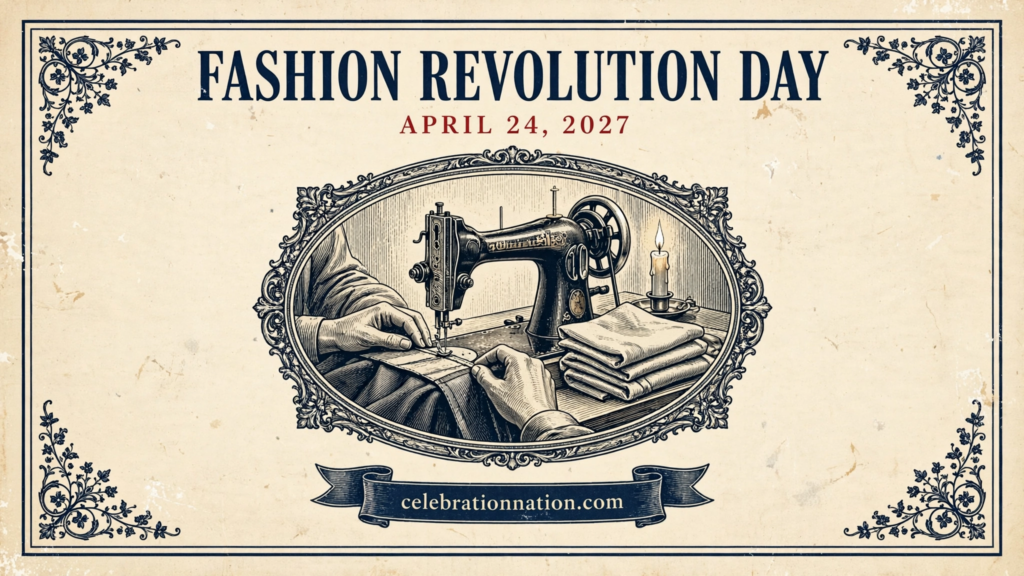
Every year on April 24, we remember the people behind our clothes. Fashion Revolution Day marks the anniversary of the 2013 collapse of the Rana Plaza factory complex in Dhaka, Bangladesh, where 1,133 garment workers lost their lives and more than 2,500 were injured. It is a day of remembrance first, and a day of resolve second, asking a question that honors the dead: who made my clothes? We wear their work every day; once a year, we answer with our actions. Their names deserve more than a statistic; they deserve a changed industry.
- Also on Apr 24
- International Sculpture Day · Arbor Day · Bucket List Day
- Hashtag
- #FashionRevolutionDay
FASHION REVOLUTION DAY
Every year on April 24, we remember the people behind our clothes. Fashion Revolution Day marks the anniversary of the 2013 collapse of the Rana Plaza factory complex in Dhaka, Bangladesh, where 1,133 garment workers lost their lives and more than 2,500 were injured. It is a day of remembrance first, and a day of resolve second, asking a question that honors the dead: who made my clothes? We wear their work every day; once a year, we answer with our actions. Their names deserve more than a statistic; they deserve a changed industry.
On the morning of April 24, 2013, the eight-story Rana Plaza building in Savar, outside Dhaka, collapsed while thousands of garment workers were inside beginning their shift. It remains the deadliest accident in the history of garment manufacturing. The factories housed in the building produced clothing for major international brands, including Benetton, Primark, and Mango, and the disaster exposed, in the starkest possible terms, the human cost hidden inside the global fashion supply chain. The building had shown cracks the day before, yet the workers were ordered back inside that morning. The world could no longer pretend it did not know. Rescue efforts stretched for weeks as the world watched in horror. Donations poured in, but money alone could not answer the deeper question of how this had been allowed to happen.
Out of that grief came a movement. Fashion designers Carry Somers and Orsola de Castro, veterans of the industry who understood exactly how the system worked, founded Fashion Revolution with a conviction that the tragedy could become a catalyst for lasting change. The first Fashion Revolution Day was held on April 24, 2014, exactly one year after the collapse. Their call was simple and enduring: wear your clothes inside out, photograph the label, and ask brands one direct question, “Who made my clothes?” The gesture, shared with the hashtag #WhoMadeMyClothes, asks each of us to trace the thread from our closet back through the machinist who sewed it, the dyer who colored it, and the farmer who grew the cotton. The hashtag gave grief a shape and outrage a direction, turning private closets into public statements. Grief, given a hashtag, became one of fashion’s most persistent accountability campaigns.
The question has traveled astonishingly far. Within a few years, Fashion Revolution’s campaigns were reaching more than 100 countries, drawing in consumers, brands, and policymakers alike. The movement’s Fashion Transparency Index, first published in 2016, ranks the world’s largest fashion brands on how openly they disclose their supply chains, keeping public pressure exactly where it belongs. And every April, people in dozens of countries still perform the founding gesture: turn a garment inside out, show the label, and ask who made it, a small act of remembrance that doubles as a demand. Each index release makes headlines, and each headline nudges another brand toward the light. Sunlight, as the movement likes to say, remains the best disinfectant. What gets measured gets changed, and the index measures what the industry once hid.
The work is far from finished. Campaigners continue to press for safer factories, fair wages, and basic dignity for the roughly 75 million people employed in the fashion industry worldwide, most of them women, many of them still working in conditions the Rana Plaza dead would recognize. Remembrance is the starting point, not the end. On April 24, we honor the 1,133 lives lost at Rana Plaza by insisting that the people who make our clothes are seen, valued, and kept safe, and by remembering that every purchase is a quiet vote for the kind of industry we want. The dead cannot be brought back, but the industry that failed them can still be rebuilt. That rebuilding is the work of every April 24, and every day between.
THE STORY BEHIND FASHION REVOLUTION DAY
🕯 April 24, 2013
The Rana Plaza complex in Dhaka, Bangladesh, collapsed, killing 1,133 garment workers and injuring more than 2,500 others. It was the deadliest disaster in garment industry history. The building’s factories made clothing for major international brands, and the catastrophe forced the world to confront the true cost of cheap fashion. Rescue efforts stretched for weeks, and the final toll made it the deadliest garment factory disaster ever recorded. The images from Savar seared the true cost of fast fashion into the public mind.
👚 Two Designers, One Call
Ethical fashion pioneers Carry Somers and Orsola de Castro founded Fashion Revolution in the disaster’s aftermath. Somers later said the idea came to her in the bath: the heightened awareness around Rana Plaza was a window, and it had to become a movement, not just a moment. Both founders had spent decades inside the fashion system, which is why their critique carried such weight. Their demand was for a global fashion industry that values people over profit. They knew the system from the inside, which made their demand impossible to dismiss. They have spent the years since turning a day of mourning into a year-round accountability movement.
❓ Who Made My Clothes?
The movement’s defining question invites everyone to wear garments inside out and share the label with #WhoMadeMyClothes. One small gesture connects a closet to the machinist, the dyer, and the cotton farmer, making the invisible workforce behind our clothes suddenly, unavoidably visible. The question is deliberately personal: not an abstract policy debate, but the name of a human being. Answering it honestly is the first act of respect.
📊 The Transparency Index
Fashion Revolution publishes the Fashion Transparency Index, ranking major fashion brands and retailers on how much they disclose about their supply chains. Transparency is the first step toward accountability: you cannot fix what companies refuse to reveal, and the index keeps the spotlight on. The scores are public, comparable, and updated, giving shoppers and journalists a yardstick that simply did not exist before. Brands now compete on disclosure, a sentence that would have been unthinkable in 2013.
WAYS TO CELEBRATE
👚 Wear It Inside Out
At home: Turn a favorite garment inside out, photograph the label, and share it with #WhoMadeMyClothes, asking the brand who made it. Tag the brand directly, because public questions are much harder to ignore than private ones. It is a quiet act of remembrance with a loud message, and it takes less than a minute to join millions doing the same. Grief shared publicly becomes pressure, and pressure becomes policy.
📋 Read Your Labels
With friends: Go through your closets together and read where each item was made. Count how many countries your wardrobe represents, and let the number sink in. Talk honestly about what you find, then choose one habit to change: buying less, mending more, washing colder, or choosing makers you can actually name. Small shifts, kept up, reshape an industry. Start with one drawer, then let the habit spread.
🤝 Support the Makers
In the community: Seek out local tailors, repair shops, resale stores, and ethical brands in your area. When you can trace a garment to a person, honor that connection by caring for the piece for years instead of seasons. Learn to sew a button or patch a knee: repair is a quiet rebellion against disposability, and the most sustainable garment is the one already in your closet. Every repaired seam is a small vote for the world you want. Host a clothing swap with friends and give good garments a second life.
Celebrate Fashion Revolution Day
On April 24, pause for the lives behind the labels, then wear your answer with care. Remembrance becomes change when we refuse to look away, and every one of us is wearing the proof. They made our clothes; the least we can do is remember their names. Say it with your closet, and mean it.
Plan ahead
Fashion Revolution Day is observed on April 24 every year. Here is where it lands for the next ten years, handy for planners, marketers and party people.
Keep the party going
See the calendar

Celebrate every day, all year
Official gear from the people who track 1,700+ celebrations.
Browse the shop 2027 Wall + Desk Calendar BundleCelebrate every day at home and at work.
Never miss a reason to celebrate.
One quick morning email with today's celebrations, ideas and posters. Free, unsubscribe anytime.
🎉 You're on the list! Watch your inbox for The Daily Confetti.