





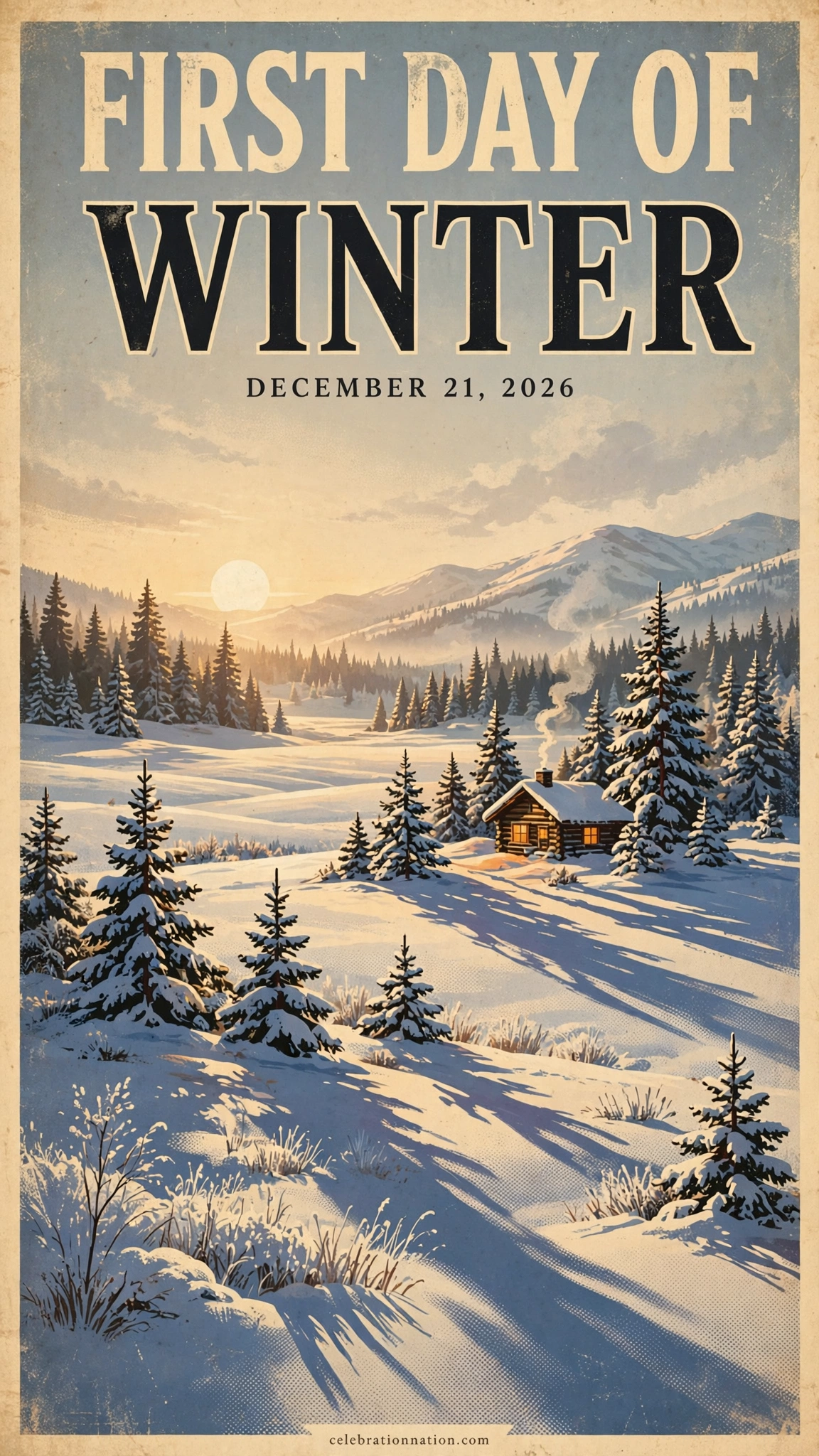
First Day of Winter
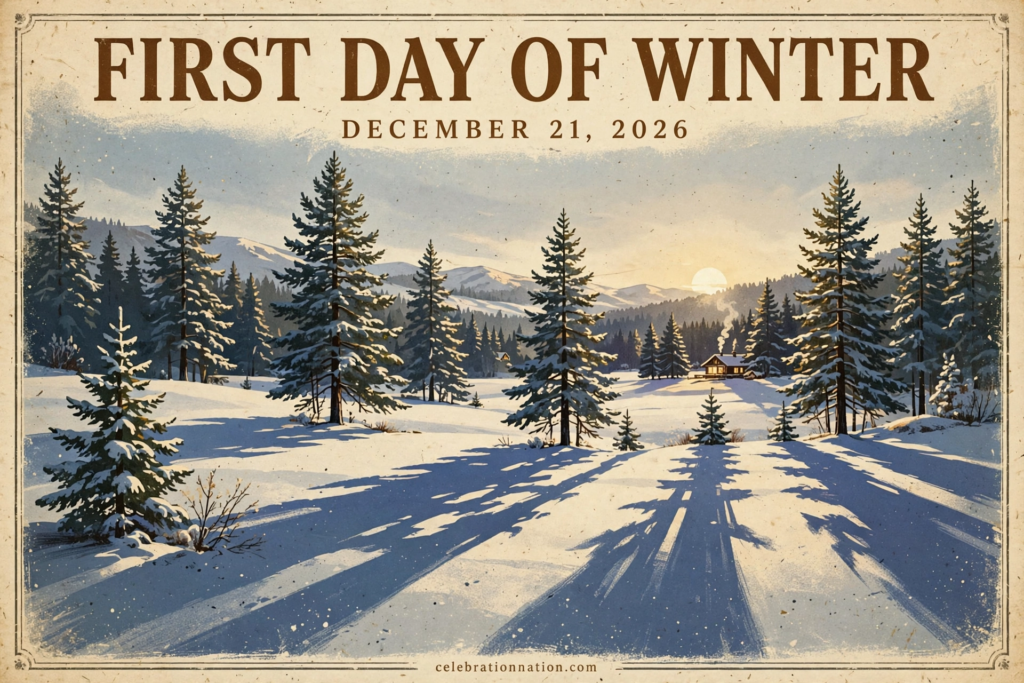
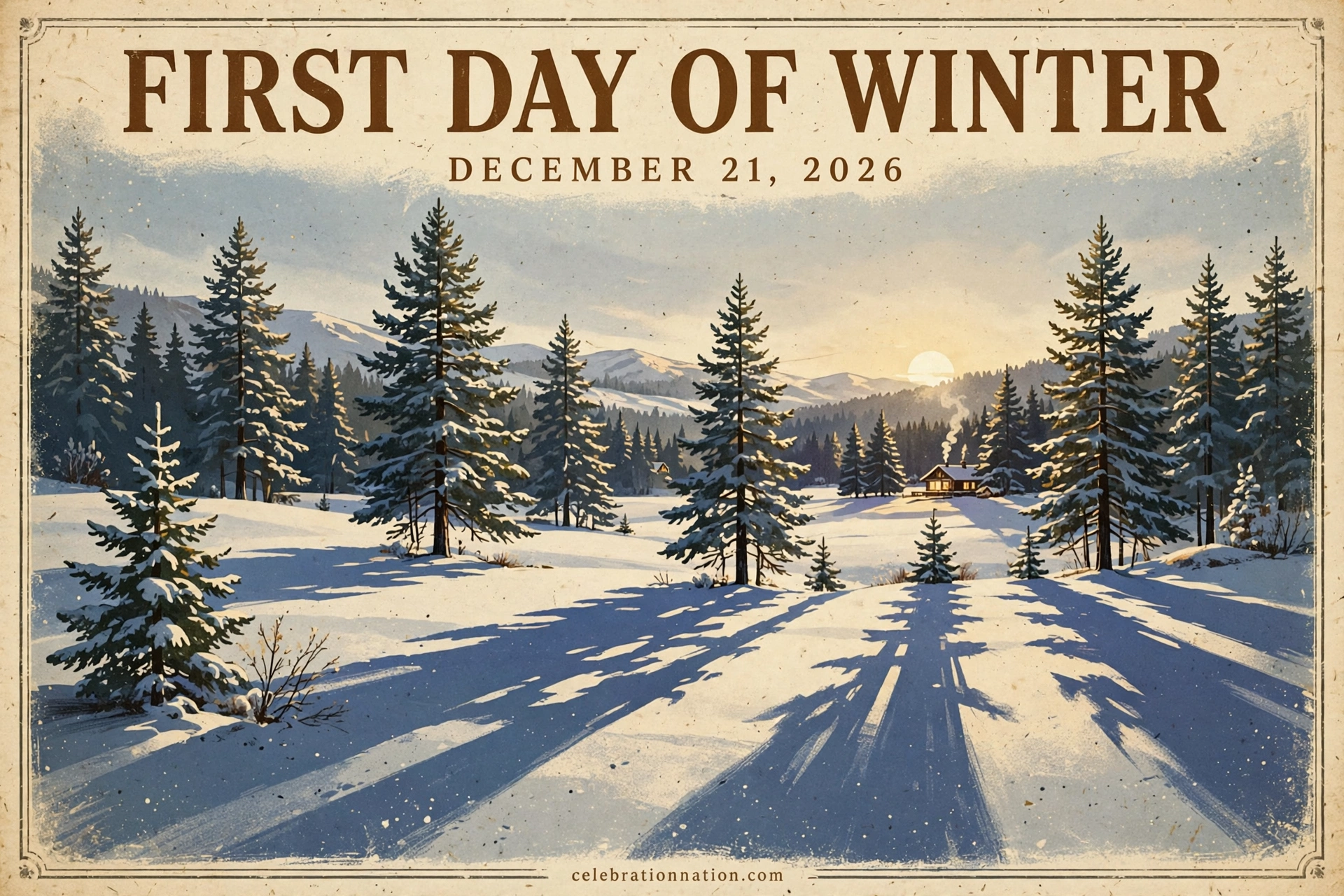
This year on December 21, winter officially arrives in the Northern Hemisphere at the December solstice, the moment the Sun reaches its southernmost point in the sky. It is the shortest day and the longest night of the year, and from here the light begins its slow return.
- Roots
- The word solstice comes from the Latin sol, meaning Sun, and sistere, meaning to stand still, because the Sun's path seems to stall at its southernmost point before turning back north.
- Also on Dec 21
- Flashlight Day · Winter Begins/Winter Solstice · Yule
- Hashtag
- #FirstDayOfWinter
3 ways to celebrate
Watch the Southernmost Sunset
On December 21 the Sun sets farthest south of west, its southernmost sunset of the year. Catch it and note the spot: from now on, the sunset point creeps northward again.
Light Up the Longest Night
The solstice brings the longest night of the year in the Northern Hemisphere. Fill it with candles, a fire in the fireplace, and the people you like most.
Honor an Old Tradition
Ancient sites such as Stonehenge are famously aligned to the solstice sunrise, and thousands gather there each December to watch the midwinter Sun rise. Mark the moment your own way, wherever you are.
Plan ahead
First Day of Winter is observed on December 21 every year. Here is where it lands for the next ten years, handy for planners, marketers and party people.
Fast facts
The story
The December solstice in 2026 falls on Monday, December 21 at 20:50 UTC, 2:50 pm Central Time, marking the official start of astronomical winter in the Northern Hemisphere. On that day the Sun shines directly above the Tropic of Capricorn and the Northern Hemisphere receives its most indirect sunlight of the year, bringing the shortest day and the longest night.
Read the full story
Watch the horizon and you can see the turning point with your own eyes. On the solstice the Sun rises farthest south of east and sets farthest south of west, the southernmost sunrise and sunset of the year. From that day on, the sunset point creeps northward again and the days slowly lengthen.
The word solstice comes from the Latin sol, meaning Sun, and sistere, meaning to stand still. It is a fitting name: at its southernmost point, the Sun's daily path seems to stall before it turns back north and starts the long climb toward spring.
The solstice even comes with a calendar quirk. The earliest sunset of the year actually arrives about two weeks before the solstice, and the latest sunrise about two weeks after it, in early January, because of the equation of time. The shortest day sits quietly between the two.
Keep the party going
See the calendar


Celebrate every day, all year
Official gear from the people who track 1,700+ celebrations.
Browse the shop 2027 National Day Desk CalendarA new celebration every morning. Daily tear-off.
Never miss a reason to celebrate.
One quick morning email with today's celebrations, ideas and posters. Free, unsubscribe anytime.
🎉 You're on the list! Watch your inbox for The Daily Confetti.