






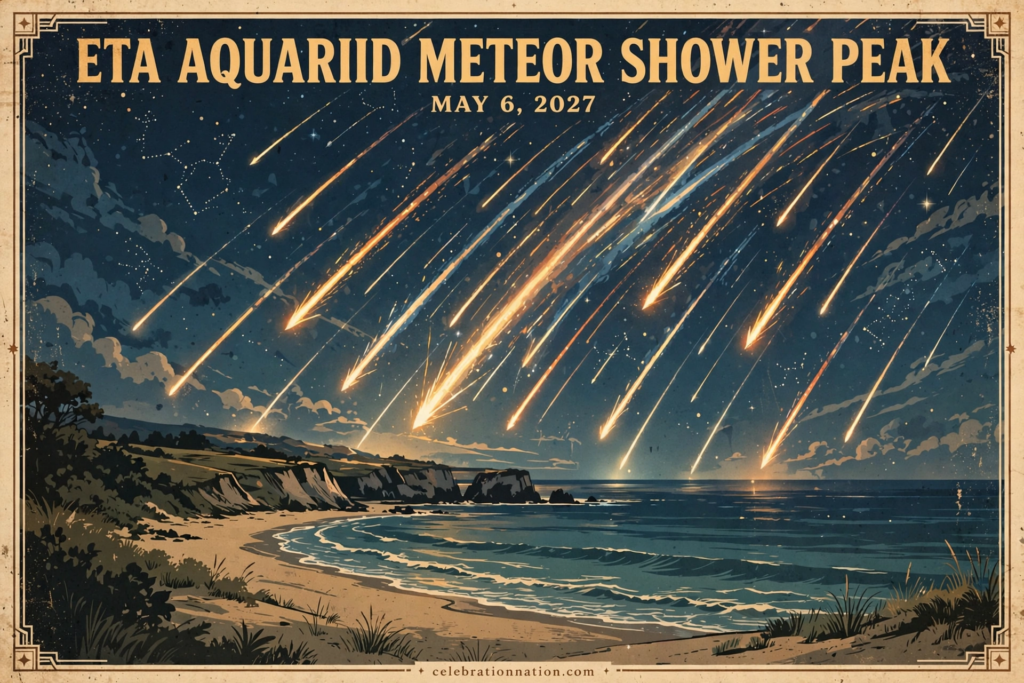
Eta Aquariid Meteor Shower Peak
This year on May 6, the Eta Aquariid meteor shower reaches its peak in the hours before dawn, bringing fast, glowing streaks from the most famous comet of all. The Eta Aquariids are debris from Halley's Comet, the second shower it gives us each year.
- Roots
- The Eta Aquariids are debris from Halley's Comet (1P/Halley), one of two showers the comet produces each year, the other being the Orionids in October.
- Hashtag
- #EtaAquariidMeteorShowerPeak
3 ways to celebrate
Set a Pre-Dawn Alarm
The Eta Aquariids are a before-dawn show, with the predicted peak at about 09:00 GMT on May 6. Watch in the pre-dawn hours around the peak, looking east.
Enjoy the Dark Moon
The 2027 peak falls near new Moon, so no moonlight interferes with the view. Take advantage of one of the friendlier meteor setups of the year.
Follow the Trains
Fast Eta Aquariid meteors often leave glowing trains that last for several seconds to minutes. Keep watching each meteor's path after the streak itself fades.
Plan ahead
Eta Aquariid Meteor Shower Peak is observed on May 6 every year. Here is where it lands for the next ten years, handy for planners, marketers and party people.
Fast facts
The story
The Eta Aquariids are debris from Halley's Comet, one of two showers the comet produces each year; the other is the Orionids in October. Halley's Comet takes about 76 years to circle the Sun; it was last visible in 1986 and will next be visible from Earth in 2061, but its dust puts on a show twice a year in the meantime.
Read the full story
In 2027 the shower is active from April 19 to May 28, with the peak night on May 5-6 and a predicted peak at about 09:00 GMT on May 6, so the pre-dawn hours are the time to watch. The shower takes its name from the star Eta Aquarii in the constellation Aquarius, near its radiant point, and it was officially identified in 1870 by Lieutenant-Colonel G. L. Tupman, who plotted meteors while sailing the Mediterranean Sea.
About 50 meteors per hour can be seen at peak under ideal conditions, with the highest rates in the Southern Hemisphere. Northern observers typically see about 10 to 30 per hour because the radiant in Aquarius stays low before dawn, but the meteors themselves are very fast, entering the atmosphere at about 40.7 miles (65.4 kilometers) per second, and they often leave glowing trains that last for several seconds to minutes.
Conditions in 2027 are favorable: the peak falls near new Moon, so no moonlight interferes. Watch in the pre-dawn hours from about May 3 to 10, looking east.
Keep the party going
See the calendar



Celebrate every day, all year
Official gear from the people who track 1,700+ celebrations.
Browse the shop 2027 National Day Wall CalendarGet the 2026 edition free. 1,700+ observances.
Never miss a reason to celebrate.
One quick morning email with today's celebrations, ideas and posters. Free, unsubscribe anytime.
🎉 You're on the list! Watch your inbox for The Daily Confetti.