




African Heritage and Health Week
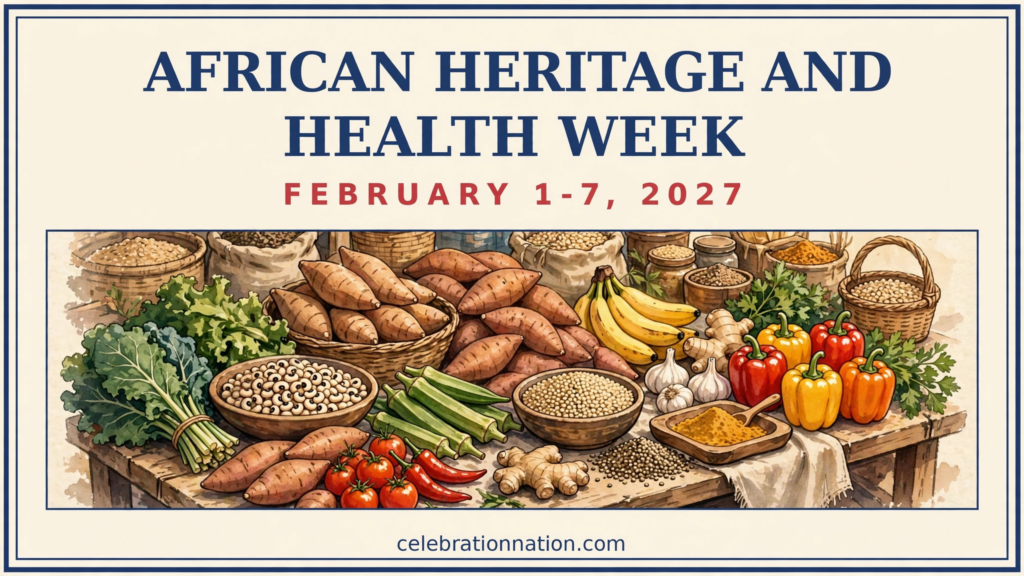
The first week of February is a celebration of heritage you can taste. African Heritage and Health Week, February 1-7, 2027, honors the traditional foods and foodways of the African diaspora and their power to nourish good health. Founded by Oldways, a nonprofit food and nutrition education organization, the week invites everyone to a seven-day exploration of traditional African foodways, from leafy greens and yams to beans, grains, and vibrant spices. Health, it turns out, has deep and delicious roots.
- Also on Feb 1
- Women’s Heart Week · Snack Food Month
- Hashtag
- #AfricanHeritageAndHealthWeek
AFRICAN HERITAGE AND HEALTH WEEK
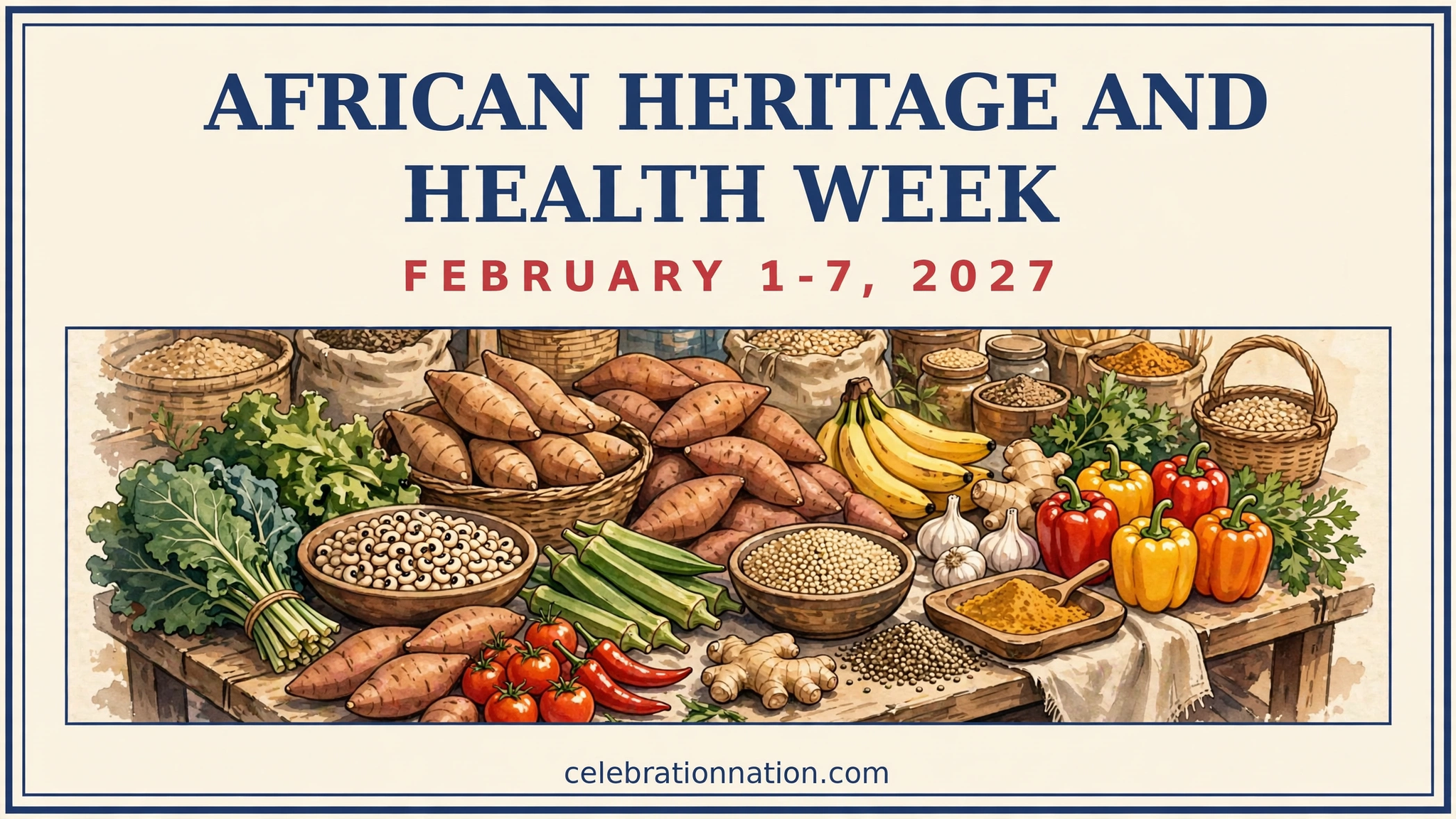
The first week of February is a celebration of heritage you can taste. African Heritage and Health Week, February 1-7, 2027, honors the traditional foods and foodways of the African diaspora and their power to nourish good health. Founded by Oldways, a nonprofit food and nutrition education organization, the week invites everyone to a seven-day exploration of traditional African foodways, from leafy greens and yams to beans, grains, and vibrant spices. Health, it turns out, has deep and delicious roots.
The week was founded by Oldways on December 28, 2012, and has been observed annually for seven days starting February 1 since 2013. Its timing is intentional: it unfolds during Black History Month, pairing cultural celebration with a practical focus on well-being. Each year, families, schools, clinics, and community groups use the week to cook, taste, learn, and share, turning kitchens and classrooms into places of delicious discovery.
At the heart of the observance is the African Heritage Diet, a way of eating based on the traditional diets of Africa and the diaspora. Oldways developed the African Heritage Diet Pyramid in 2011, working with historians, dietitians, and culinary experts to map a pattern rich in leafy greens, yams and sweet potatoes, beans and peas, nuts and peanuts, rice, flatbreads, whole grains, and colorful fruits and vegetables. It is plant-forward, flavorful, and built for everyday life rather than special occasions.
The foods themselves tell a story of resilience and ingenuity. Black-eyed peas, okra, collard greens, sorghum, millet, and an array of spices traveled with African peoples and took root in new soils, shaping the cuisines of the American South, the Caribbean, and Latin America. To cook these foods is to keep a living history, one that connects the kitchen to centuries of knowledge about making wholesome, satisfying food from what the land provides.
The health case is straightforward. Traditional African heritage eating patterns emphasize vegetables, legumes, whole grains, and tubers, with modest portions of meat and plenty of herbs and spices for flavor. According to Oldways, the ancestral pattern is rich in the colorful plant foods that nutrition science keeps validating, which makes the week less about giving things up and more about reclaiming something valuable. Nutrition educators point to these patterns as a delicious route to balanced eating, one that does not ask people to abandon their food culture but to embrace its healthiest traditions.
Communities celebrate in hands-on ways: cooking demonstrations, heritage recipe swaps, community meals, and school lessons that connect food with history. Restaurants get into the spirit with special menus built around heritage ingredients, grocery stores create displays of traditional produce and spices, and health clinics and wellness centers host seminars on nutrition and traditional cooking methods. The message lands differently when it comes with a taste of home, and the week is designed to be savored, not lectured.
Oldways, the nonprofit behind the week, has spent decades championing traditional diets from around the world as models for healthy eating. Its African Heritage program offers resources for the observance, including recipes and the diet pyramid itself, giving organizers a foundation grounded in both scholarship and flavor. Because the week is about heritage as much as health, its materials celebrate the cooks, farmers, and grandmothers who carried these foodways across generations.
Cooking the heritage way is part of the lesson. Traditional African heritage cooking leans on methods that build deep flavor without excess: slow-simmered greens, beans cooked from scratch, grains toasted and steamed, and generous use of herbs, spices, peppers, and aromatics. It is resourceful cooking, born of making the most of the harvest, and it happens to align beautifully with what nutrition science recommends. The week encourages cooks to trust those old methods and taste how good restraint can be.
Sharing is the other half of the observance. Recipes are heirlooms, and the week is an invitation to write them down, cook them alongside children and grandchildren, and pass them across backyard fences and church fellowship halls. Community meals and cooking demonstrations give the recipes a stage, but the real preservation happens at home, one pot at a time. Every heritage dish cooked this week keeps a story alive for the next generation to taste.
The week’s timing carries its own meaning. Landing in the first seven days of Black History Month, it insists that the story of Black America includes the kitchen, the farm, and the table, not just the history books. Health and heritage are not separate projects here. They are the same project, seasoned the same way, and served to the people you love.
If you want a place to start, build the plate the pyramid describes. Fill half of it with colorful vegetables, think slow-cooked collard greens, roasted sweet potatoes, and okra simmered with tomatoes. Add a scoop of black-eyed peas or lentils for plant protein, a serving of a whole grain like brown rice, millet, or sorghum, and finish with fresh fruit. Season boldly with garlic, ginger, peppers, and herbs. It is a delicious template, not a rigid rule, and it works for weeknight dinners as well as celebration feasts.
Markets and gardens are natural headquarters for the week. A trip to a farmers market becomes a treasure hunt for heritage ingredients, yams with unfamiliar names, bundles of bitter greens, dried beans in every color, and spice blends that tell you exactly where they came from. Gardeners can plan a heritage bed for spring, sowing okra, black-eyed peas, and hot peppers. Buying from growers who cultivate these crops keeps the foodways economically alive, not just culturally remembered.
From February 1 to 7, 2027, try a heritage recipe, visit a market for ingredients you have never cooked with, or gather friends for a shared meal. Write down a family recipe before it fades, and teach it to someone young. Food is memory, identity, and nourishment all at once, and this week celebrates all three.
THE STORY BEHIND AFRICAN HERITAGE AND HEALTH WEEK
📆 Founded in 2012
Oldways founded African Heritage and Health Week on December 28, 2012. It has been observed every year since 2013.
🏫 The 2011 Pyramid
Oldways launched the African Heritage Diet Pyramid in 2011, designed with historians and dietitians.
❤️ Heritage on the Plate
Leafy greens, yams, black-eyed peas, okra, whole grains, and colorful produce anchor the traditional pattern.
👥 A Nonprofit Mission
Oldways is a nonprofit food and nutrition education organization championing traditional diets worldwide.
📢 Seven Days in February
The week runs February 1-7 each year, during Black History Month.
WAYS TO CELEBRATE
🏫 Cook a Heritage Dish
Pick one traditional recipe, like collard greens or black-eyed peas, and cook it from scratch with your family.
👣 Share a Family Recipe
Write down a beloved family recipe and trade it with a friend, so both tables gain a new tradition.
💬 Join a Community Meal
Look for a heritage cooking demo or community meal near you, and bring someone new to these flavors.
Celebrate African Heritage and Health Week
From February 1 to 7, 2027, celebrate health through heritage. Cook a traditional dish, share a family recipe, and gather around a table that honors where you come from. Post your plate with #AfricanHeritageAndHealthWeek. The foods of the African diaspora have nourished generations. This week, let them nourish yours. Cook boldly, share generously, and keep the heritage simmering long after the week ends, because the best traditions are the ones you can taste.
Keep the party going
See the calendar



Celebrate every day, all year
Official gear from the people who track 1,700+ celebrations.
Browse the shop National Day Celebration Card GameA party in a box, any day of the year.
Never miss a reason to celebrate.
One quick morning email with today's celebrations, ideas and posters. Free, unsubscribe anytime.
🎉 You're on the list! Watch your inbox for The Daily Confetti.