






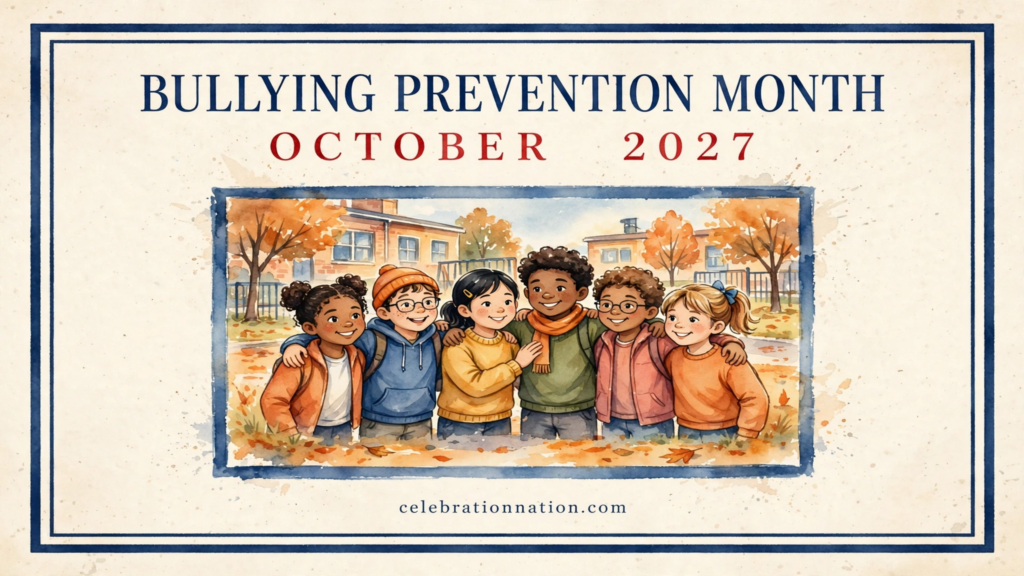
Bullying Prevention Month
Every October, schools and families across the country unite for Bullying Prevention Month, a time to stand up for kindness, acceptance, and inclusion. PACER’s National Bullying Prevention Center founded the observance in 2006, beginning as a single week and expanding to the full month of October in 2010. This month reminds us that every child deserves to feel safe, respected, and included.
- Hashtag
- #BullyingPreventionMonth
BULLYING PREVENTION MONTH
Every October, schools and families across the country unite for Bullying Prevention Month, a time to stand up for kindness, acceptance, and inclusion. PACER’s National Bullying Prevention Center founded the observance in 2006, beginning as a single week and expanding to the full month of October in 2010. This month reminds us that every child deserves to feel safe, respected, and included.
Bullying Prevention Month is observed every October, uniting schools, families, and communities around a simple conviction: every child deserves to feel safe, respected, and included. The observance was founded in 2006 by PACER’s National Bullying Prevention Center, a national parent center in Minnesota that has championed children with disabilities and their families since 1977. It began as National Bullying Prevention and Awareness Week, held during the first week of October, and expanded to the entire month in 2010 as schools and families asked for more. It is often called National Bullying Prevention Month, and the shorter name carries the same meaning. National partners in the first year included the National Education Association, the National PTA, and the American Federation of Teachers, reflecting broad support for the cause from the very beginning. PACER’s executive director later reflected that the effort had grown beyond expectations into a major nationally recognized event.
The month grew out of a hard-won change in how America thinks about bullying. Not long ago, bullying was widely considered a normal part of childhood, even a rite of passage that made kids tougher. Modern research has overturned that view: bullying can cause severe side effects that last throughout adulthood. What was once dismissed as kids being kids is now recognized as a serious problem with lasting consequences for victims, witnesses, and even those who bully. Historically, bullying was considered a normal part of childhood. Some people even believed that bullying had a positive effect on children by making them tougher or serving as a coming-of-age ritual. Modern research shows that bullying can cause severe side effects that last throughout adulthood.
The numbers show why the work continues. About one in five U.S. students ages 12 to 18 still report being bullied during the school year, according to federal data compiled by StopBullying.gov. In 2014, the Centers for Disease Control and the Department of Education released the first federal definition of bullying, built on three core elements: unwanted aggressive behavior, an observed or perceived power imbalance, and repetition or a high likelihood of repetition. A shared definition helps schools, parents, and researchers respond with a common understanding. The figure has fallen over the past decade, but it has not gone away, and every October the campaign asks for something specific and unglamorous: not a celebration, but attention.
The signature event of the month is Unity Day, introduced by PACER in 2011 and held each year on the third or fourth Wednesday of October. The call to action is simple: wear and share the color orange. Orange was chosen deliberately, a color associated with the autumn season and with safety and visibility. The message it carries is unmistakable: kindness, acceptance, and inclusion, and a visible stand against bullying. Schools in all 50 states take part, and public figures including Ellen DeGeneres have worn orange to bring the message to a wider audience. In 2022, the observance added the Stop Bullying Video Challenge, inviting students to submit short videos showing how they promote a culture of kindness and respect.
One of the month’s most important lessons is the power of the bystander. Research shows that bullied students report interventions from their peers as more helpful than self-defense or even help from educators, and in 57 percent of cases, the bullying stops within 10 seconds when a bystander gets involved. Yet very few people intervene. Teaching young people to notice, to speak up, and to stand with someone who is being targeted turns passive witnesses into active allies, and it changes the culture of a school more than any poster can. Only about 20 to 30 percent of students who are bullied notify adults about the bullying, so the true numbers are likely higher than reported. The damaging effects of bullying can last a lifetime, which is why peer support matters so much. Schools can help by teaching clear ways to ask for help, so no student has to figure out a frightening moment alone.
Schools and families use October to put these lessons into practice. Classrooms explore what bullying looks like, including cyberbullying, and plan activities around kindness and respect. PACER offers a four-week Student Activity Kit for K-12 learners that walks classrooms through exploring, planning, celebrating Unity Day, and reflecting on year-round prevention. Families can help by talking with children about treating others with kindness and empathy, encouraging them to speak up when they witness cruelty, and reminding them that seeking help from a trusted adult is always the right choice. Numerous schools and organizations across the country hold events during the month. Some regions hold community walks to draw attention to bullying, while others celebrate Unity Day by wearing orange as a show of support for bullied children.
Bullying Prevention Month closes each October with a truth that carries into the rest of the year: prevention does not end when the calendar turns. The conversations, the orange shirts, and the classroom pledges matter most when they become habits: noticing, including, and standing up. This October, join the work that never really ends, and help build the kind of school, neighborhood, and online world where no child has to face cruelty alone. When students, parents, and educators stay united in prevention, the message of October becomes a year-round promise: no child should ever experience bullying. And it starts with each of us, this October.
THE STORY BEHIND BULLYING PREVENTION MONTH
📅 2006: A Week
PACER’s National Bullying Prevention Center founded the observance in 2006 as National Bullying Prevention and Awareness Week. National partners in the first year included the National Education Association, the National PTA, and the American Federation of Teachers.
📅 2010: A Month
As more schools and communities took part, PACER expanded the week into the full month of October in 2010.
🪐 Unity Day
The signature event, introduced in 2011: wear and share orange on the third or fourth Wednesday of October for kindness, acceptance, and inclusion.
👥 One in Five
About one in five U.S. students ages 12 to 18 report being bullied during the school year, according to federal data. The figure has fallen over the past decade, but it has not gone away.
📢 A Federal Definition
In 2014, the CDC and the Department of Education released the first federal definition of bullying, centered on aggression, power imbalance, and repetition.
WAYS TO CELEBRATE
🪐 Wear and Share Orange
Join Unity Day by wearing orange and sharing a message of kindness, acceptance, and inclusion for every student.
🤝 Be an Upstander
Practice what to say and do when you see someone being bullied, since peer intervention helps stop bullying in its tracks.
💬 Start the Conversation
Talk as a family about what bullying looks like, including online, and agree that everyone deserves to be treated with kindness.
Celebrate Bullying Prevention Month
All through October 2027, stand up for kindness, acceptance, and inclusion. Wear orange on Unity Day, be an upstander when you see cruelty, and keep the conversation going at home. Every child deserves to feel safe and to belong. This October, make that promise visible.
Coming up next
See the calendar



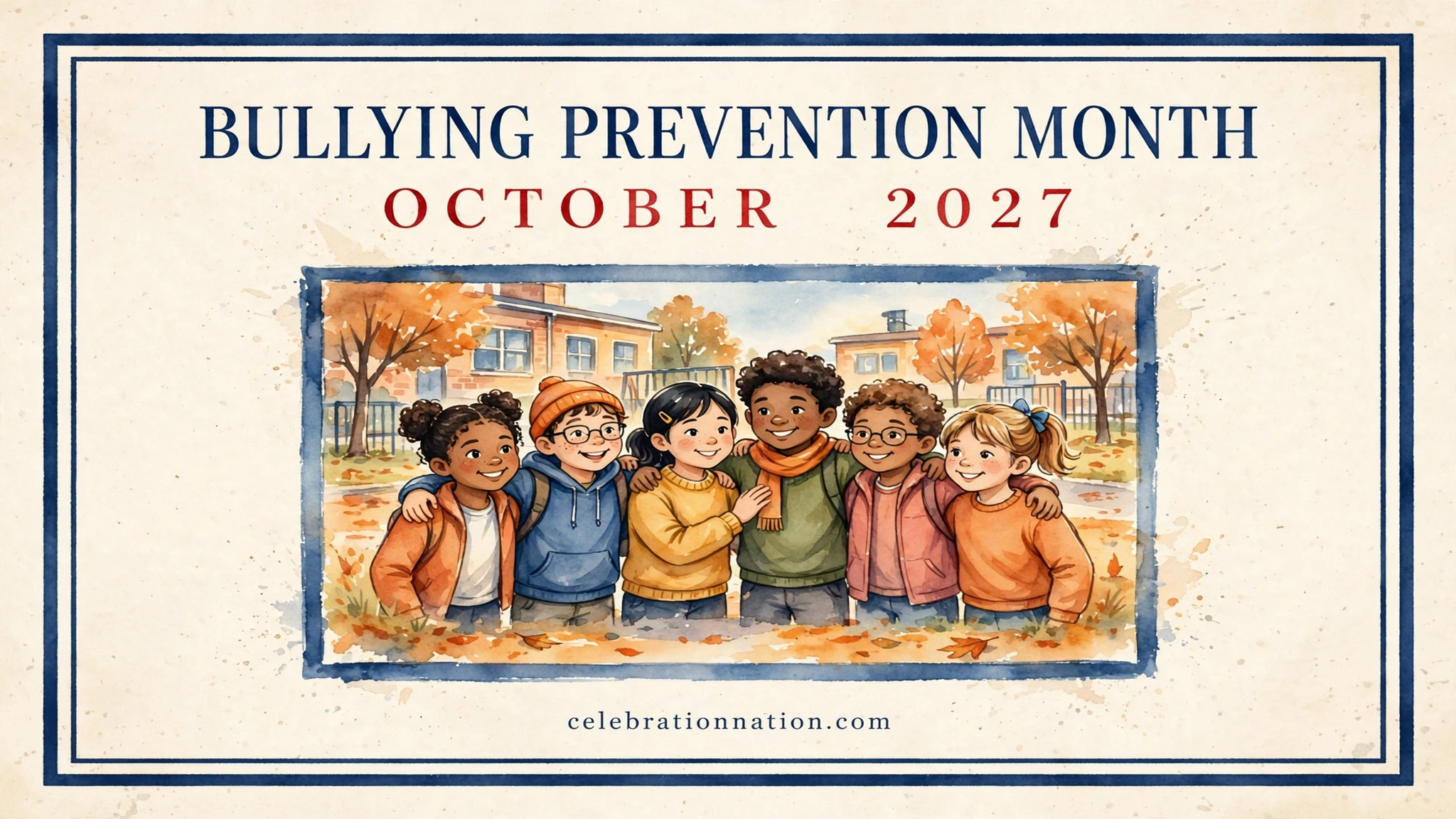
Celebrate every day, all year
Official gear from the people who track 1,700+ celebrations.
Browse the shop 2027 Wall + Desk Calendar BundleCelebrate every day at home and at work.
Never miss a reason to celebrate.
One quick morning email with today's celebrations, ideas and posters. Free, unsubscribe anytime.
🎉 You're on the list! Watch your inbox for The Daily Confetti.