
Celebrating the Bilingual Child Month
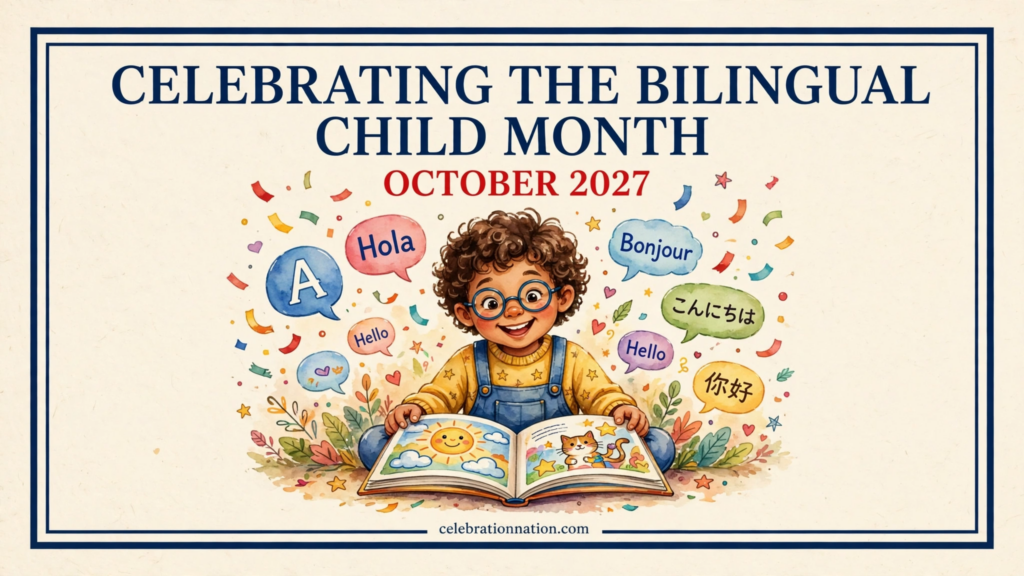
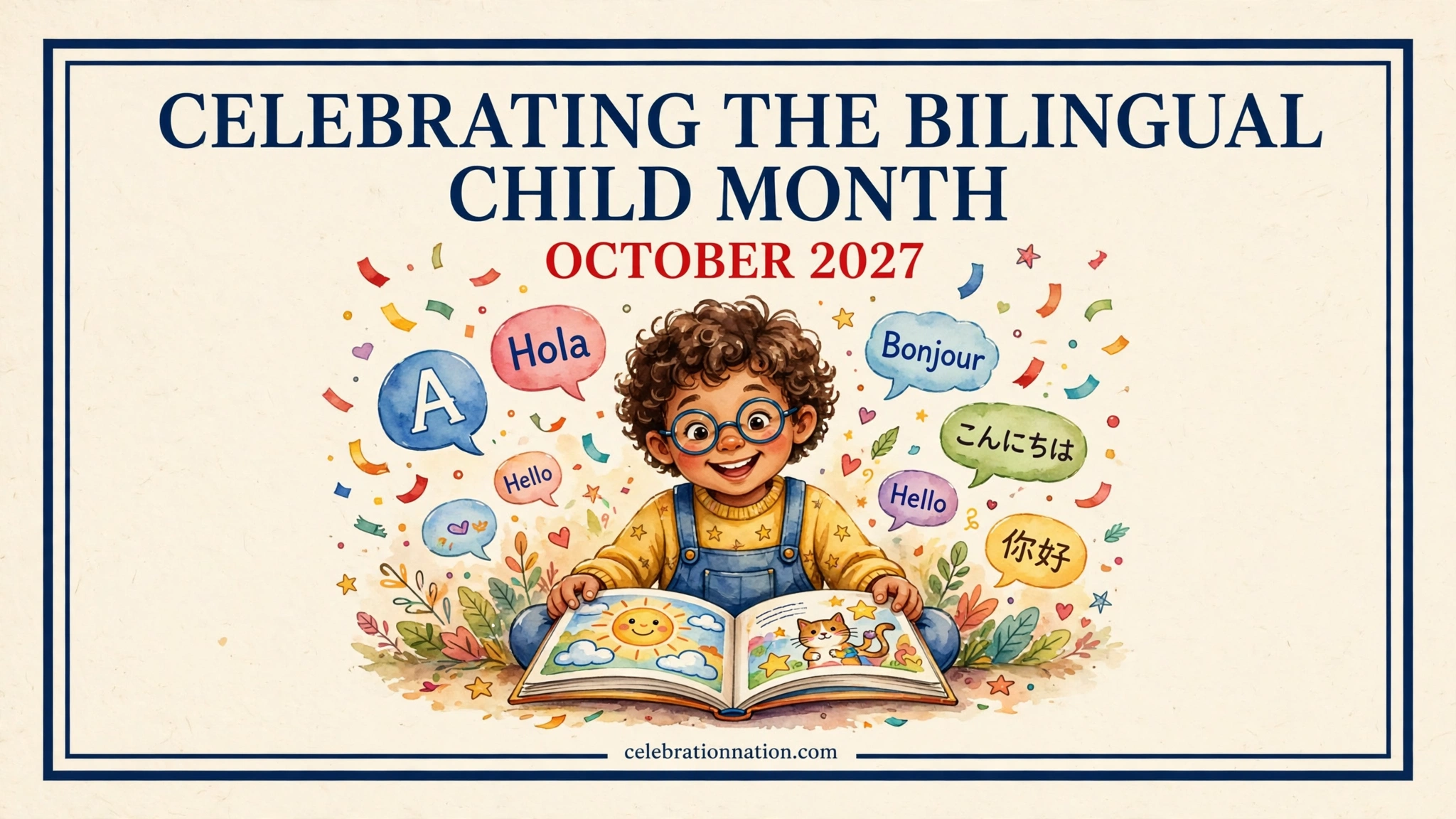
Every October, Celebrating the Bilingual Child Month throws a joyful spotlight on kids who think, dream, and joke in more than one language. Linguist David Crystal estimated that two-thirds of the world's children grow up in a bilingual environment. This October 2027, let us cheer for every child who says "hello" and "hola" before breakfast, because their two languages are not a party trick, they are a superpower.
- Hashtag
- #CelebratingTheBilingualChildMonth
CELEBRATING THE BILINGUAL CHILD MONTH
Every October, Celebrating the Bilingual Child Month throws a joyful spotlight on kids who think, dream, and joke in more than one language. Linguist David Crystal estimated that two-thirds of the world’s children grow up in a bilingual environment. This October 2027, let us cheer for every child who says “hello” and “hola” before breakfast, because their two languages are not a party trick, they are a superpower.
There is something magical about a child who can switch languages the way other kids switch sneakers. One minute they are chatting with grandma in Spanish, the next they are cracking jokes with classmates in English, and somehow both versions of the world fit inside one small head. Celebrating the Bilingual Child Month exists to recognize these remarkable young people, to honor the gifts they bring to their classrooms and families, and to fill them with pride about the languages they carry.
The science behind the celebration is genuinely exciting. Researchers have found that bilingual kids enjoy cognitive, social, and emotional benefits that begin in infancy and continue through the school years into adulthood. Processing words and thoughts in multiple languages leads to beneficial brain changes that promote neuroplasticity and enhanced “executive function,” which means a greater ability to focus and to switch between tasks. In other words, the bilingual brain is getting a workout every single day, and it shows, from sharper attention in the classroom to greater creativity in solving everyday problems.
History has a fun surprise here: experts have known about these benefits for a very long time. Back in 1913, French psychologist Ronjat published a report showing that a bilingual upbringing has no adverse effects on a child’s cognitive development, pushing back against early skeptics who worried that two languages would confuse young minds. More than a century later, the research keeps confirming what bilingual families have always known: kids are not confused by two languages. They are enriched by them.
Beyond the brain benefits, bilingual children act as bridges between cultures. They promote understanding and empathy simply by being themselves, bringing a unique perspective to classroom discussions and challenging everyone around them to think in new ways, which makes every bilingual child a small ambassador for a kinder world. A child who translates for a grandparent at the grocery store, or who explains a family tradition to a curious friend, is doing quiet diplomacy every day. That is worth celebrating with confetti, truly.
Teachers love this month, and for good reason. Classrooms celebrate with interactive activities designed for all ages, from spot-the-difference art games using bilingual picture books to the famous Laundry Challenge, where kids recreate famous artworks using household objects. Music sessions, art projects, and story time in multiple languages turn ordinary school days into mini festivals. It is also a wonderful opportunity to celebrate the parents who promote bilingualism at home, because raising a bilingual child is a team sport.
The celebration stretches well beyond the classroom walls. Families honor the month by reading bilingual books together, cooking recipes from their heritage, and sharing stories about where their languages come from. Libraries and schools often join in with multilingual story hours that welcome every tongue in the neighborhood. Communities host cultural exchange events and spotlight dual-language programs in local schools. Bookstores create dedicated displays of bilingual children’s books, and restaurants sometimes offer menus in multiple languages. Every one of these moments tells a bilingual child the same message: your languages are a treasure.
There is also a deeper, warmer layer to all of this. Language is how we say “I love you” to the people who came before us. For many bilingual kids, their second language is the language of grandparents, of lullabies, of family recipes and holiday traditions. Keeping that language alive is an act of love across generations. When we celebrate bilingual children, we are really celebrating the families, the stories, and the stubborn, beautiful persistence of culture itself.
So this October, whether your household has one language or five, find a bilingual child and celebrate them. Ask them to teach you a word. Read a story in a language you are still learning. Try ordering food in their language and let them laugh, kindly, at your accent. Applaud the brain that juggles two grammars before lunch. These kids are growing up with a wider view of the world, and the rest of us are lucky to see it through their eyes.
Parents often wonder about the best way to raise bilingual kids, and the research offers a reassuring answer: just use the language. A well-known study by Portes and Hao in 1998 found that parental language input was the strongest indicator of whether children learned to speak a home language. You do not need special programs or perfect grammar. Reading bedtime stories, singing songs, video-calling grandparents, and simply chatting through the day all build the foundation. Consistency matters far more than perfection.
The gifts of bilingualism keep giving long after childhood ends. Adults who grew up bilingual often find doors opening in careers, travel, and friendships that monolingual peers never see. They can connect with clients, colleagues, and communities across language barriers, and they carry a flexibility of thinking that serves them in every field. Celebrating the bilingual child this October is also, quietly, a celebration of the capable, curious adults they are becoming.
THE STORY BEHIND CELEBRATING THE BILINGUAL CHILD MONTH
🌐️ A Month for Young Polyglots
October marks Celebrating the Bilingual Child Month, a designation recognized by educators, schools, and bilingual publishers to honor children growing up with more than one language.
🧠️ The 1913 Discovery
French psychologist Ronjat published a report in 1913 showing that bilingual upbringing has no adverse effects on a child’s cognitive development, one of the earliest scientific validations of bilingualism.
📊️ Two-Thirds of the World’s Children
In 1997, linguist David Crystal estimated that two-thirds of the world’s children grow up in a bilingual environment, making multilingualism the global norm rather than the exception.
🏫️ Champions in the Classroom
Bilingual education advocates and publishers such as Language Lizard champion the month each October with classroom activities, teaching resources, and a celebrated annual bilingual book giveaway.
🤝️ Bridges Between Cultures
Bilingual children act as bridges between cultures, promoting understanding and empathy while bringing fresh perspectives to classrooms and communities everywhere.
WAYS TO CELEBRATE
📚️ Read a Bilingual Book Together
Pick up a bilingual picture book and read it aloud with a child, savoring both languages and talking about the stories and cultures behind the words.
🎧️ Learn a Word a Day
Challenge your family or classroom to learn one new word each day in another language, and celebrate how quickly the list grows by the end of October.
🎉️ Host a Language Celebration
Invite friends, neighbors, or classmates to share songs, snacks, and stories from their languages and cultures in a joyful neighborhood or classroom gathering.
Celebrate Celebrating the Bilingual Child Month
This October 2027, raise a cheer for every child who greets the world in two languages: their brains are stronger, their hearts are wider, and our future is brighter because of them.
Coming up next
See the calendar

Celebrate every day, all year
Official gear from the people who track 1,700+ celebrations.
Browse the shop "Can't Wait to Celebrate" children's bookA picture book for little celebrators.
Never miss a reason to celebrate.
One quick morning email with today's celebrations, ideas and posters. Free, unsubscribe anytime.
🎉 You're on the list! Watch your inbox for The Daily Confetti.