




Home Eye Safety Month
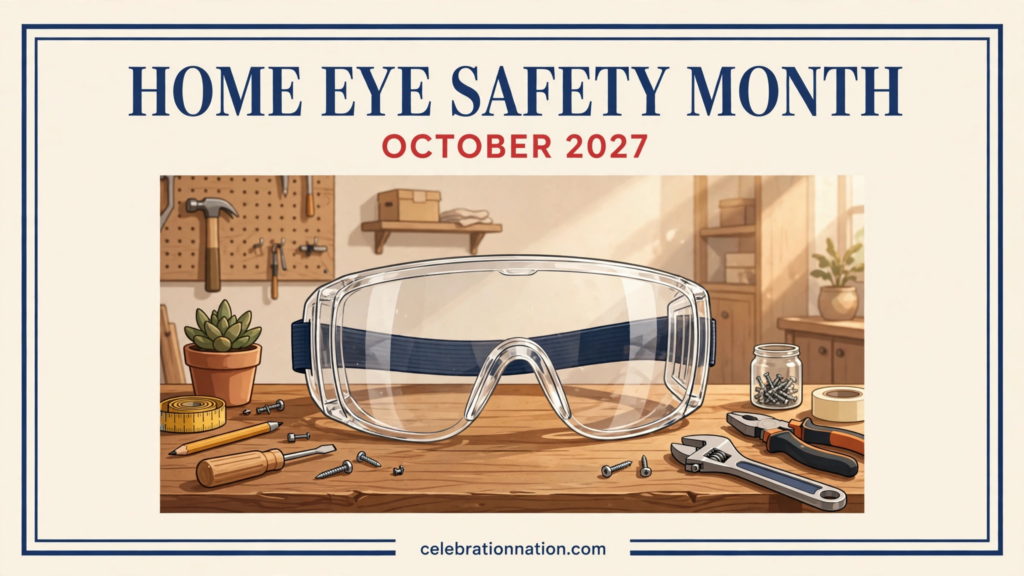
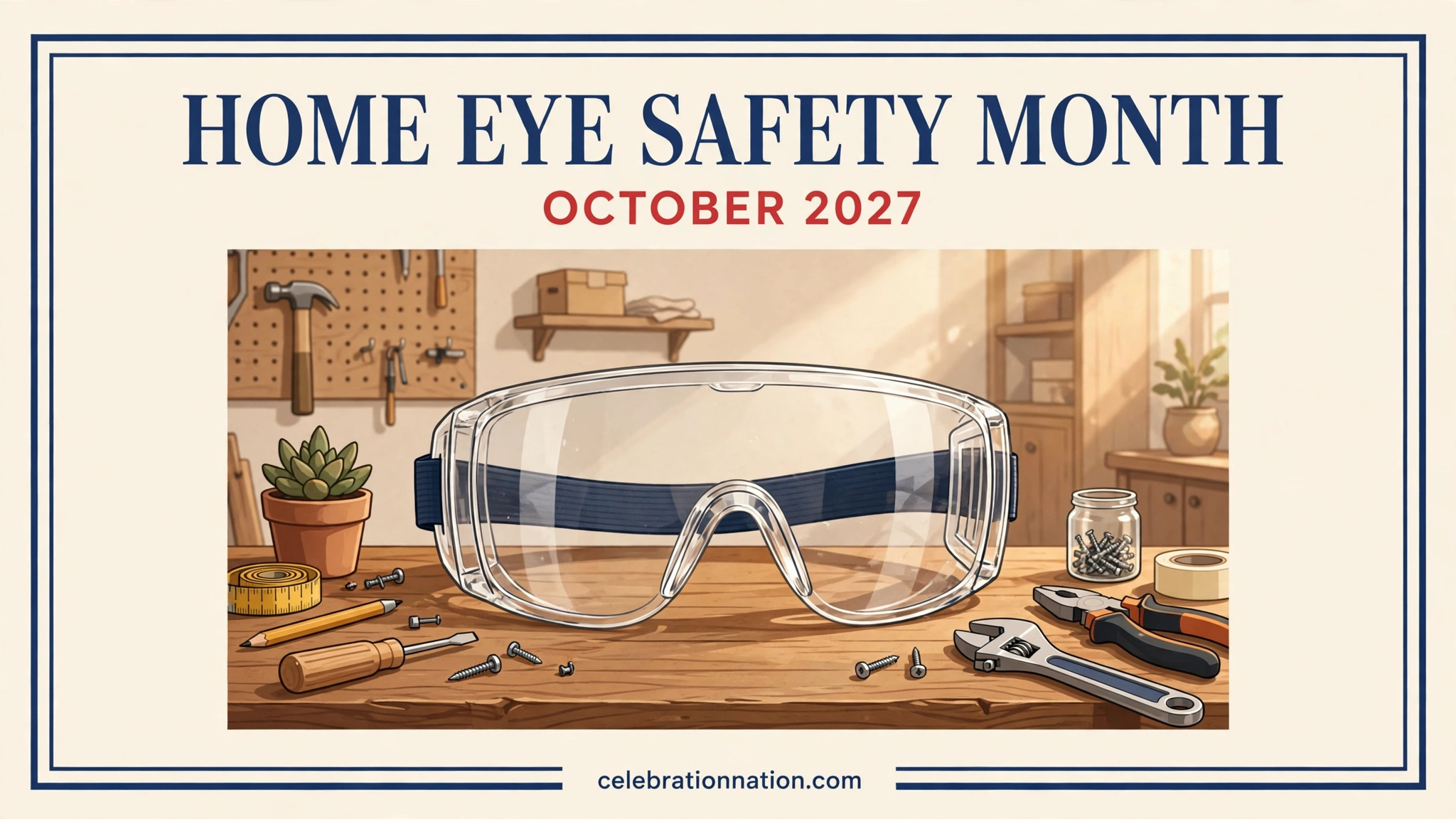
Every year in October, Home Eye Safety Month asks us to look around our own homes and notice what could hurt our eyes before it does. Organized by Prevent Blindness, a national eye health advocacy organization, the month shines a gentle light on the everyday chores and projects that put our vision at risk, from lawn mowing and home repairs to simple household cleaning. The message is a caring one: most eye injuries are preventable, and small habits can make a lifetime of difference. In 2027, Home Eye Safety Month begins on Friday, October 1, and it invites every household to give their eyes a little extra protection all month long.
- Hashtag
- #HomeEyeSafetyMonth
HOME EYE SAFETY MONTH
Every year in October, Home Eye Safety Month asks us to look around our own homes and notice what could hurt our eyes before it does. Organized by Prevent Blindness, a national eye health advocacy organization, the month shines a gentle light on the everyday chores and projects that put our vision at risk, from lawn mowing and home repairs to simple household cleaning. The message is a caring one: most eye injuries are preventable, and small habits can make a lifetime of difference. In 2027, Home Eye Safety Month begins on Friday, October 1, and it invites every household to give their eyes a little extra protection all month long.
Every year in the United States, more than 2.5 million eye injuries occur, and the numbers point to an unexpected place: home. According to figures shared by the American Academy of Ophthalmology and Prevent Blindness, nearly half of all eye injuries happen in or around the house. Home repairs, yard work, cleaning, and cooking account for more than 40 percent of these injuries, and another large share happens during sports and recreation. Household chemicals alone, including bleach and other common cleaners, cause an estimated 125,000 eye injuries a year. These are not rare accidents on distant job sites. They are ordinary moments: a twig kicked up by the mower, a splash of cleaner while scrubbing the tub, a nail that flies instead of sinking into wood. About 50,000 people permanently lose part or all of their vision each year, a sobering reminder that prevention matters.
The most hopeful number in this story is 90 percent. Research estimates that 90 percent of eye injuries could have been prevented with the right protective eyewear. Real safety glasses are tested for impact and marked with the ANSI Z87.1 standard from the American National Standards Institute, and many styles are made to fit right over regular prescription glasses. It is worth knowing that everyday eyeglasses are not safety glasses. Their frames and lenses are made to help us see, not to stop a flying chip of wood or a splash from the side. More than three in four people who were injured were wearing no eyewear at all when it happened. Keeping one ANSI-approved pair where the tools live is one of the simplest gifts a family can give itself.
Knowing what to do in an eye emergency matters just as much as prevention. For a chemical splash, immediately flush the eye with clean water or any drinkable liquid, hold the eye open as wide as possible, keep flushing for at least 15 minutes, and then see a doctor right away. For debris or specks in the eye, do not rub; let tears or a clean eyewash do the work, and if the speck does not wash out, keep the eye closed, bandage it lightly, and see a doctor. For a cut or puncture, do not wash the eye and do not try to remove anything stuck in it; cover the eye with a rigid shield without applying pressure, such as the bottom half of a paper cup, and get care at once. For a blow to the eye, apply a cold compress without pressure and seek care if vision changes or pain continues. Prevent Blindness even offers a free First Aid for Eye Emergencies sticker for the inside of a medicine cabinet, so the right steps are always within reach.
Prevention also lives in the small details of a well-kept home. Eye care organizations suggest wearing ANSI-approved safety glasses when using power tools such as nail guns and hedge trimmers, keeping paints, pesticides, and fertilizers locked away from children and pets, and making sure work and play areas are well lit. Loose rugs and shower mats should be slip-proof, since slips and falls account for about 11 percent of eye injuries. Sharp corners and edges of furniture can be cushioned for young children and older adults, and toys should be checked for sharp points or edges. Scissors, knives, pens, pencils, and coat hangers belong out of the reach of small hands. None of these steps is dramatic on its own, but together they quietly turn an ordinary house into a safer one.
THE STORY BEHIND HOME EYE SAFETY MONTH
🧥 A Month With a Mission
Prevent Blindness, a national eye health advocacy organization, designated October as Home Eye Safety Month to educate the public about preventing eye injuries at home, where the largest share of them happens. The American Academy of Ophthalmology has also named October Eye Injury Prevention Month, so the whole month carries one clear theme: protect your sight.
🔨 The Chores That Cause Most Injuries
More than 40 percent of eye injuries come from home repairs, yard work, cleaning, and cooking, and another 40 percent happen during sports or recreation. Over one-third of injuries take place in the living areas of the home: the kitchen, bathroom, bedroom, and family room. Safety is not only a workshop concern; it belongs in every room of the house.
🧮 125,000 Chemical Splashes a Year
An estimated 125,000 eye injuries a year involve household chemicals such as bleach, paints, solvents, pesticides, and fertilizers. Storing these products in secure locations, keeping them out of reach of children, and wearing goggles when using them keeps one of the most common dangers firmly in check.
👓 Ninety Percent Are Preventable
Wearing protective eyewear can prevent up to 90 percent of home eye injuries, yet most injured people were wearing nothing at all. Look for the ANSI Z87.1 mark stamped on the frames, which shows the eyewear meets the American National Standards Institute safety standard for impact protection.
🩹 Know First Aid Before You Need It
Quick, correct action after an injury can help save vision. Flush chemicals with water for 15 minutes, never rub a speck out of the eye, and shield cuts and punctures without pressure. A free first-aid sticker from Prevent Blindness, kept inside a medicine cabinet, puts these steps where the whole family can see them.
🏠 A Safer Home, Room by Room
Beyond eyewear, simple habits protect the whole household: secure loose rugs and railings, cushion sharp corners for young children and older adults, keep scissors, knives, and other sharp objects out of small hands, and make sure work and play areas are well lit. Safety grows one small fix at a time.
🎃 A Halloween Reminder
October brings costumes, and with them a special eye safety note. Decorative or costume contact lenses may look fun, but lenses that are not prescribed and fitted by an eye care professional can scratch the cornea and cause serious infections. If costume lenses are part of the plan, see an eye doctor first and never share lenses with friends.
💡 Light the Way
Good lighting prevents the trips and falls that cause about 11 percent of eye injuries. Keep hallways, stairways, and work areas well lit, add night lights along common paths, and make sure outdoor steps and walkways are easy to see after dark.
WAYS TO CELEBRATE
🏠 Give Your Home an Eye Safety Walk-Through
Move room to room and look for hazards with fresh eyes: unsecured rugs, dim hallways, sharp corners, and cleaners stored within reach of small children. Store chemicals up high and out of sight, add night lights where paths are dark, and secure anything wobbly.
👓 Stock the Tool Area With Real Safety Glasses
Pick up an ANSI Z87.1 pair of safety glasses or goggles for yourself and anyone who helps with yard work or repairs. Try them on over prescription glasses so they are comfortable and ready before the first project of the month begins.
💬 Share the First-Aid Basics With People You Love
Talk through what to do for chemical splashes, debris, and blows to the eye with family, neighbors, or coworkers. A calm two-minute conversation today can make a frightening moment much safer later, and it might protect someone’s sight for life.
Observe Home Eye Safety Month
Our eyes do so much for us every single day. This October, let us return the favor with a little extra care.
Coming up next
See the calendar


Celebrate every day, all year
Official gear from the people who track 1,700+ celebrations.
Browse the shop 2027 National Day Wall CalendarGet the 2026 edition free. 1,700+ observances.
Never miss a reason to celebrate.
One quick morning email with today's celebrations, ideas and posters. Free, unsubscribe anytime.
🎉 You're on the list! Watch your inbox for The Daily Confetti.