Kentucky Derby
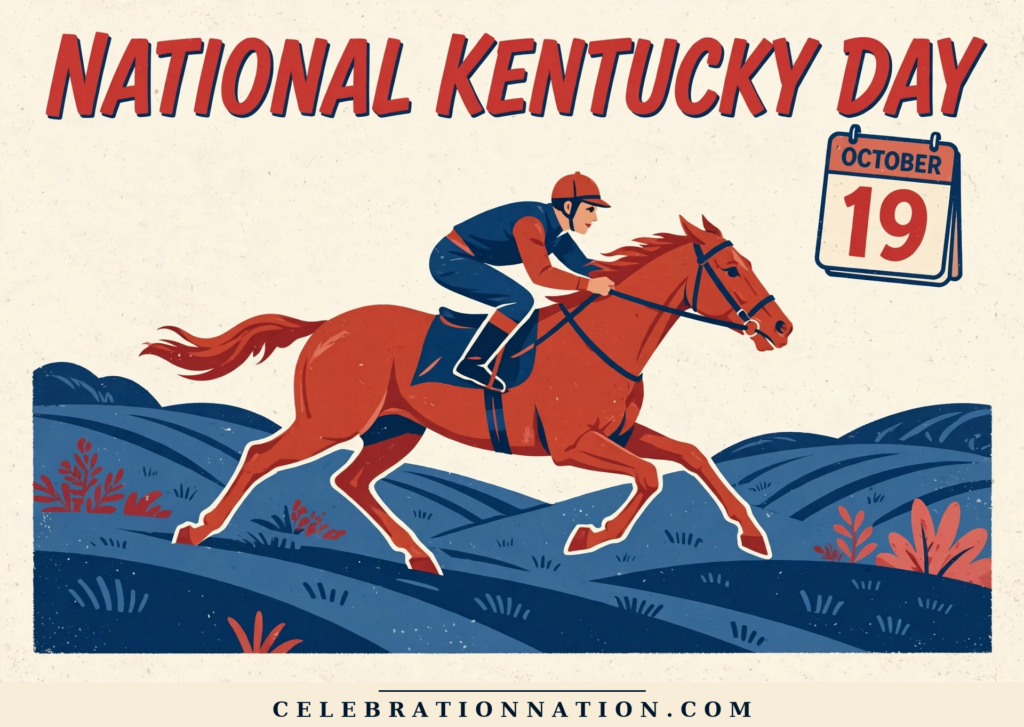
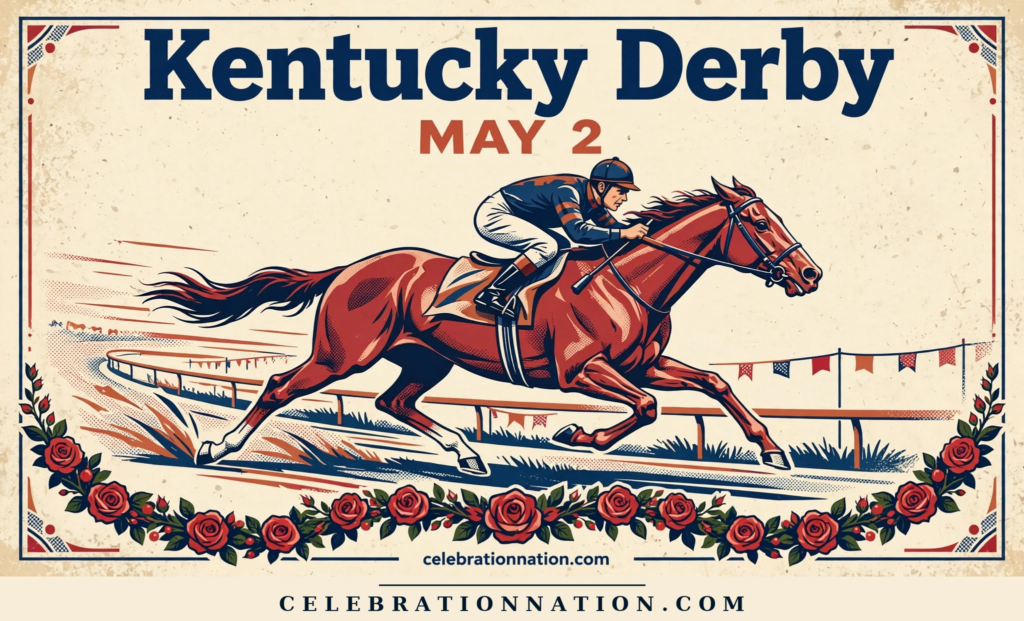
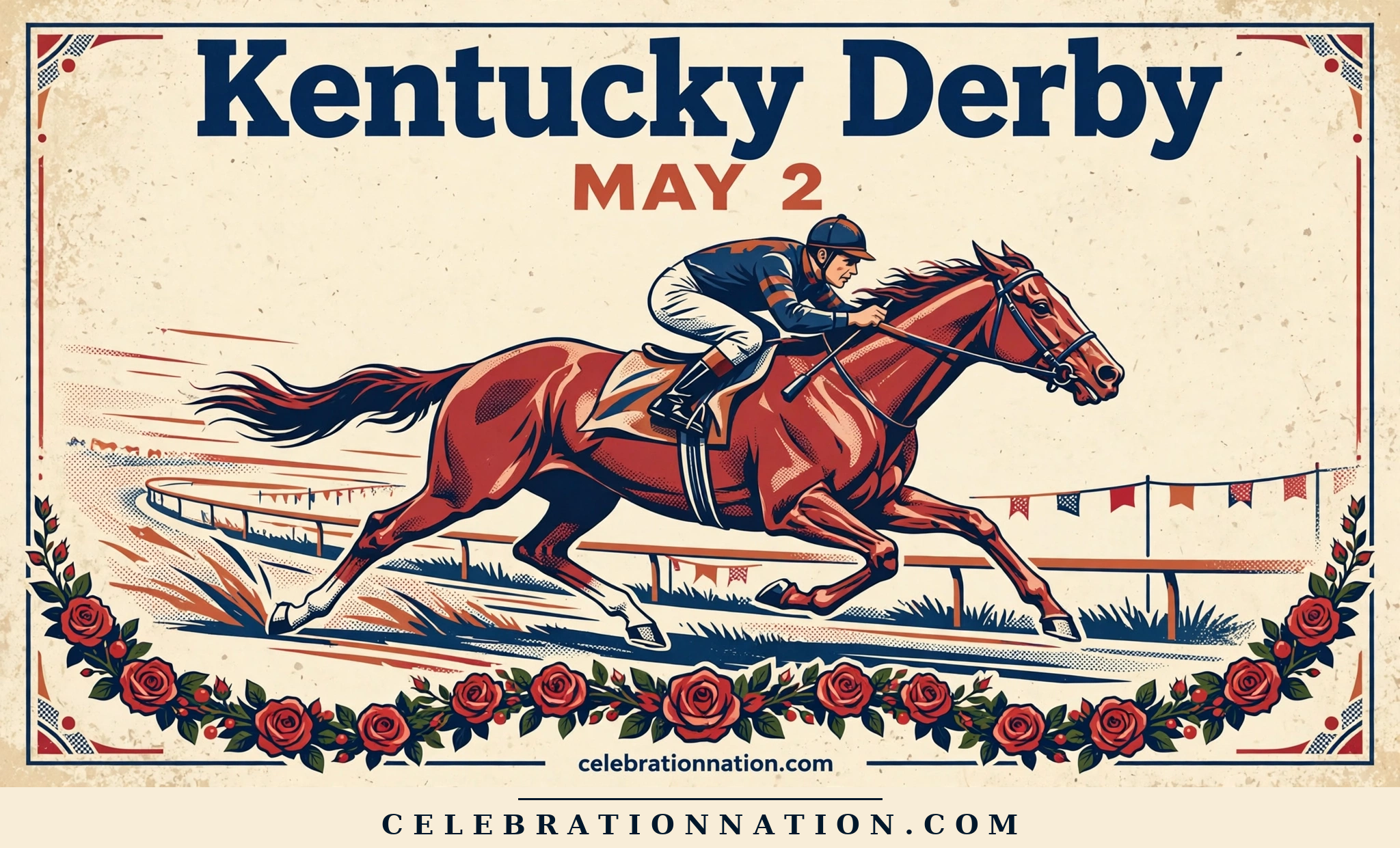
A one-lap, two-minute horse race that somehow became the most-watched social event of spring. The Kentucky Derby on the first Saturday in May is mint juleps, big hats, bluegrass, and two full days of pageantry leading up to the fastest 120 seconds in sports.
- Vibe
- Hats & Juleps
- Hashtag
- #KentuckyDerby
Ways to celebrate
You don't need to be in Louisville. Here's the at-home playbook:
- 🎩 Wear a hat. Derby hats are a tradition, not a joke. Ladies and gentlemen. The fancier the better.
- 🥃 Make mint juleps. Bourbon, mint, sugar, crushed ice. The official Derby drink since 1938.
- 🌹 Decorate in roses. The winner gets a blanket of 554 red roses — hence "The Run for the Roses."
- 💰 Place a $2 bet. The traditional minimum. Pick a horse by name, by number, by hat color of the jockey. Irrational strategies welcome.
- 🎵 Play "My Old Kentucky Home" sung by the crowd right before the race. Possibly the most moving pre-race tradition in any sport.
Make it your kind of celebration
Family
Kids-version Derby party: make paper roses and fascinators, toy horse race, ginger-ale "juleps" for the kids. Hats still mandatory.
Kids
Let them pick a horse. Let them draw the horse. Let them wear the biggest hat. This is more fun than any birthday party.
Couples
Hat-and-bowtie brunch. Juleps, Kentucky hot browns, bourbon-pecan pie. Start at 3pm; race goes live around 6:45 ET.
Office
Office Derby pool — everyone draws a horse from a hat for $5. Winner takes home the pot. 10 minutes of preparation, weeks of trash talk.
School
History lesson opportunity — horse racing, thoroughbred breeding, Kentucky culture. Tie it to economics, animal husbandry, or sports journalism.
Community
Derby party at a local distillery, country club, or bar. Most towns have one — shows up in the event listings the Monday before.
Just me
A julep. The race on TV. A hat (optional). Two minutes of TV perfection.
Plan ahead
Kentucky Derby is observed on the first Saturday in May. Here is where it lands for the next ten years, handy for planners, marketers and party people.
Fast facts
The story
The Kentucky Derby is the oldest continuously-held sporting event in America, 150+ years, including two world wars, the Great Depression, and a global pandemic.
Read the full story
The Derby was founded by Meriwether Lewis Clark Jr., grandson of William Clark (of Lewis and Clark), after a visit to the famous Epsom Derby in England and the Grand Prix de Paris. He wanted to create an American equivalent. The first Kentucky Derby was run on May 17, 1875, at the newly-built Churchill Downs track in Louisville. The winning horse was Aristides. The jockey, Oliver Lewis, was African American, as were 13 of the 15 jockeys in that first race.
For the next 50 years, the Derby was the most-watched horse race in America, but it wasn't yet the cultural juggernaut it would become. That shift happened in the 1920s, when Louisville Courier-Journal sports editor Paul Hershell Mathis coined the phrase "The Run for the Roses," the official Derby song "My Old Kentucky Home" was established as a tradition, and the mint julep was named the official drink in 1938. The pageantry crystallized.
The Derby has been run every year since 1875, through two World Wars, the Great Depression, and every recession in between. The only significant disruption was in 2020, when the pandemic forced the race to September and banned fans. It still happened. The streak continued.
Today, the Derby draws 150,000+ fans to Churchill Downs and 15 million+ TV viewers. The economic impact on Louisville is estimated at $400 million for the two weeks leading up to it. And the race itself is exactly what it's always been: 1¼ miles, roughly two minutes, 20 horses, one rose blanket. The pageantry has grown. The core has not.
Four traditions that make Derby Day, Derby Day:
Six horses that transcended the race, winners who became American icons:
Did you know?
African American jockeys dominated early Derbies.
13 of the first 28 Derby winners were ridden by Black jockeys. Jim Crow-era racing rules pushed them out of the sport entirely by 1921, a shameful chapter that's only recently been acknowledged.
Churchill Downs's spires are icons.
The twin spires were added in 1895. The grandstand has been rebuilt, expanded, and redesigned many times, but the spires are always preserved. They're the Derby's visual signature.
The mint julep is older than the Derby.
Mint juleps predate Churchill Downs by 75 years. Thomas Jefferson was known to serve them at Monticello. The Derby just formalized the association in 1938.
The Derby has a fashion code.
Officially called "Derby attire", women in hats and dresses, men in suits or seersucker. The Kentucky Derby Museum maintains a fashion archive dating back to the 1920s.
Keep the party going
See the calendar
Celebrate every day, all year
Official gear from the people who track 1,700+ celebrations.
Browse the shop 2027 Wall Calendar, signed by Marlo AndersonSigned by the founder of National Day Calendar.
Never miss a reason to celebrate.
One quick morning email with today's celebrations, ideas and posters. Free, unsubscribe anytime.
🎉 You're on the list! Watch your inbox for The Daily Confetti.