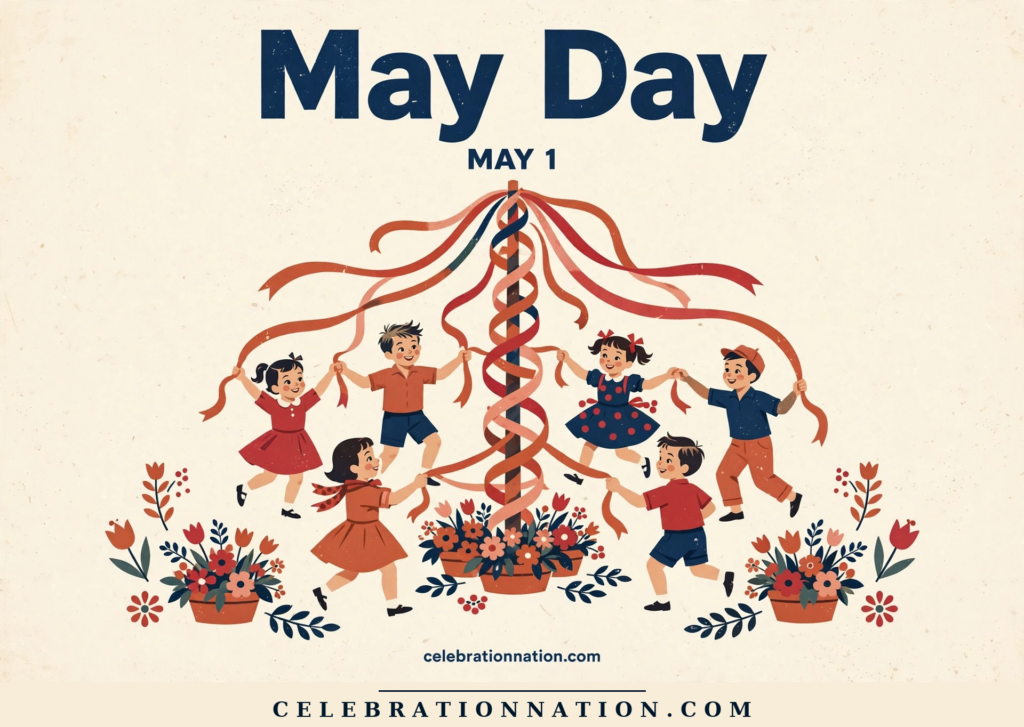
May Day
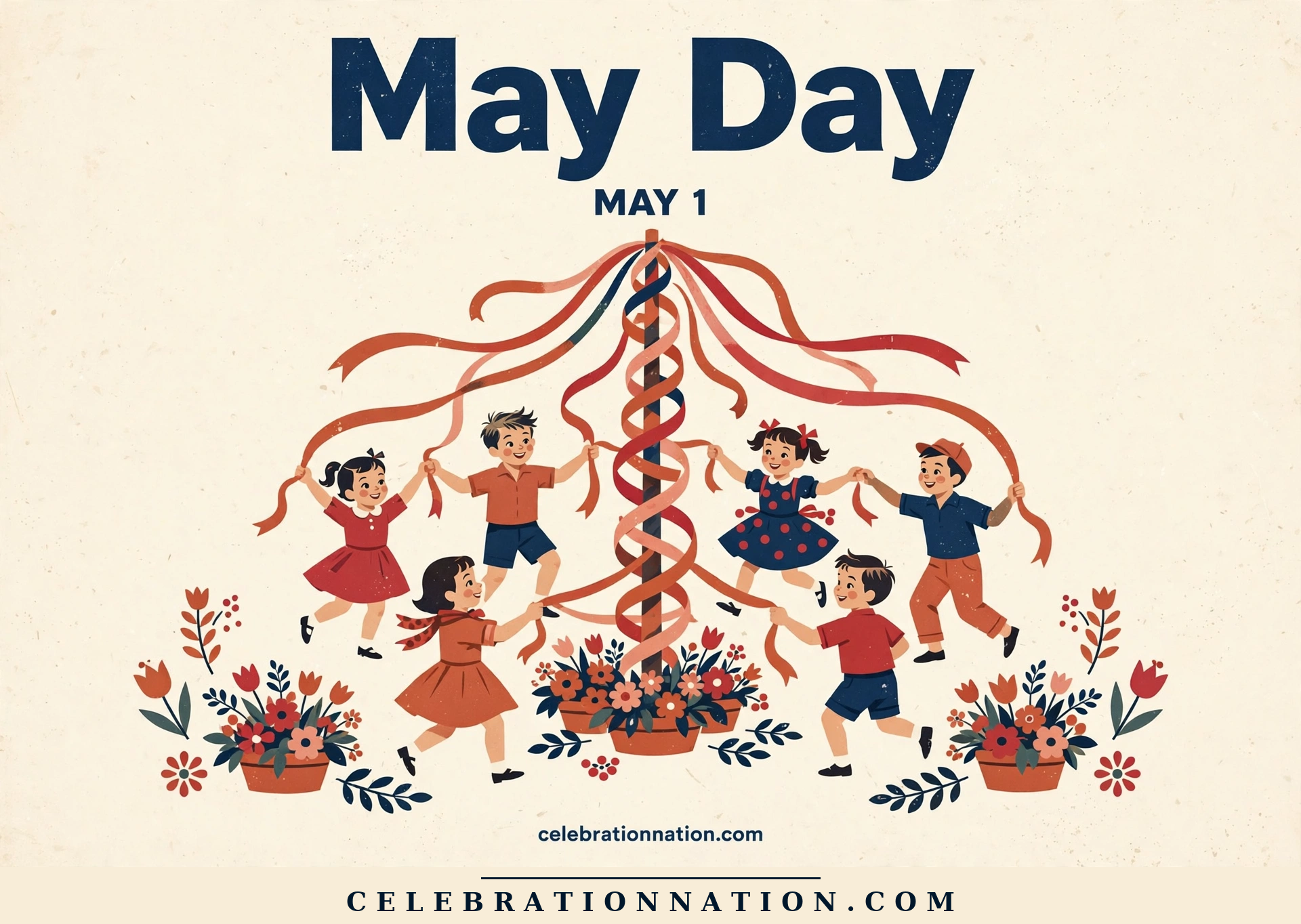
Maypoles, flower baskets, labor marches, and the first real day of summer for most of the Northern Hemisphere. May Day on May 1 is actually three holidays in one coat — and it's worth knowing all three.
- Vibe
- Flowers & Banners
- Also on May 1
- Global Love Day · International Workers’ Day · Law Day
- Hashtag
- #MayDay
Ways to celebrate
Three holidays, many traditions:
- 🌼 Make a May basket. Small bouquet + paper cone, hung on a neighbor's doorknob anonymously.
- 🎀 Find a maypole. Many parks, schools, and Waldorf communities still do them. Bring kids.
- ✊ Honor labor. Thank someone in a service industry today. Tip well. Say the thing out loud.
- 🌺 Spend time outside. May Day's ancient meaning is "summer is coming." Celebrate the sun.
- 🍰 Bake something. Lemon cake, strawberry shortcake, anything that tastes like May.
Make it your kind of celebration
Family
Make May baskets together. Leave them on three neighbors' doorsteps. Ring the bell. Run. It's the whole tradition.
Kids
Flower crowns and paper-cone baskets. Teach them the ring-the-bell-and-run tradition. They will be delighted.
Couples
A picnic with wine and strawberries. Spring date energy; low effort, high memorability.
Office
Employee appreciation nod. May Day is the original Labor Day — thank the people who do the work.
School
The Waldorf schools do maypoles right. Kids weave ribbons into patterns while dancing. Gorgeous tradition worth reviving.
Community
Community maypole or May Day flower exchange. Low-lift neighborhood tradition that costs $20 and makes people smile for weeks.
Just me
Buy yourself flowers. Put them on the table. Notice them for one minute. The season has changed.
Plan ahead
May Day is observed on May 1 every year. Here is where it lands for the next ten years, handy for planners, marketers and party people.
Fast facts
The story
Few holidays carry three different meanings as gracefully as May Day does. The trick is knowing which one you're celebrating.
Read the full story
The pagan origin. May 1 is the ancient Celtic festival of Beltane one of the four great cross-quarter days of the Celtic calendar. It marked the beginning of summer and the cattle moving to summer pastures. Bonfires were lit, cattle driven between them for blessing, and communities celebrated fertility, light, and warmth's return. The maypole, a tall tree stripped of branches, decorated with ribbons, danced around by paired ribbon-holders, descends from Germanic spring-tree traditions that fused with Beltane in medieval Britain.
The labor origin. On May 1, 1886, American labor unions launched the first major general strike for an 8-hour workday. Over 300,000 workers walked out nationwide, with tens of thousands in Chicago. Three days later came the Haymarket Affair, a peaceful rally that turned deadly when a bomb was thrown at police. Eight labor leaders were convicted; four hanged. In 1889, the international socialist movement declared May 1 International Workers' Day to honor the Haymarket martyrs. Every country adopted it, except, ironically, the United States, which moved its Labor Day to September to avoid association with socialism.
The American folk tradition. In the 19th and early 20th centuries, American children made "May baskets" small paper cones filled with wildflowers, and left them anonymously on neighbors' doorknobs. The rule: ring the bell, then run. If the recipient caught you, you owed them a kiss. The tradition peaked in the 1900s-1950s and survives quietly in small-town America, especially the Midwest.
All three traditions coexist on May 1, and Celebration Nation thinks that's the perfect way to celebrate. Spring is real. Workers deserve thanks. Flowers on a doorstep are still magic.
Three distinct May Day celebrations and how to engage with each:
Six countries, six very different ways of marking May 1:
Did you know?
"May Day" the distress call is unrelated.
The emergency radio call "Mayday Mayday Mayday" is from French "m'aidez", "help me." Adopted by aviation in 1923. Linguistic coincidence, not related to May 1.
The USSR's May Day parades were massive propaganda events.
Military hardware, thousands of marchers, Red Square reviewing stands. Intended to project Soviet power. Continued until 1991.
Puritans tried to ban the maypole.
Oliver Cromwell's government banned maypoles in England in 1644 as pagan and licentious. Restored with Charles II in 1660; London celebrated with a 134-foot maypole at the Strand.
The Communist May Day march was invented by an American.
Samuel Gompers, founder of the American Federation of Labor, proposed May 1 as an international labor day in 1888. It was adopted by the Second Internationale a year later, over Gompers's later objections.
Keep the party going
See the calendar
Celebrate every day, all year
Official gear from the people who track 1,700+ celebrations.
Browse the shop National Day Celebration Card GameA party in a box, any day of the year.
Never miss a reason to celebrate.
One quick morning email with today's celebrations, ideas and posters. Free, unsubscribe anytime.
🎉 You're on the list! Watch your inbox for The Daily Confetti.