






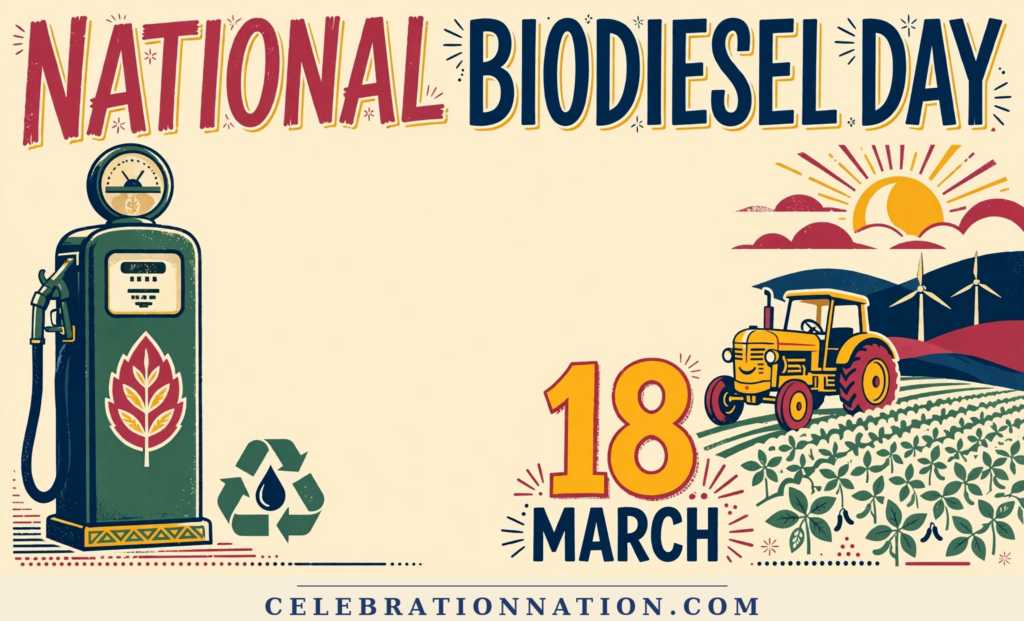
National Biodiesel Day
Today, we emphasize the importance of biodiesel as a sustainable alternative to fossil fuels.
- Roots
- Established in 1999 to honor Rudolf Diesel's birthday
- Vibe
- A celebration of innovation and sustainability
- Also on Mar 18
- Global Recycling Day · Awkward Moments Day · Lacy Oatmeal Cookie Day
- Hashtag
- #NationalBiodieselDay
3 ways to celebrate
Learn how it works
Research how biodiesel is made and where it is used today.
Talk greener fuel
Discuss simple ways to cut fuel use, like carpooling or combining trips.
Pitch greener commuting
Propose a carpool board or bike-to-work challenge for your team.
Plan ahead
National Biodiesel Day is observed on March 18 every year. Here is where it lands for the next ten years, handy for planners, marketers and party people.
Fast facts
The story
Biodiesel is a renewable energy source derived from vegetable oils, animal fats, and recycled cooking oil. It can be used in diesel engines without modifications, making it an accessible alternative for many drivers. National Biodiesel Day, observed on March 18, honors the legacy of Rudolf Diesel, who believed that his engine would run on vegetable oil, a vision that aligns with modern efforts to create sustainable energy solutions.
Read the full story
Launched in 1999, National Biodiesel Day serves as a reminder of the importance of renewable energy in combating climate change. As global temperatures rise and fossil fuel reserves dwindle, biodiesel presents an opportunity to reduce our carbon footprint. Awareness initiatives on this day encourage individuals, communities, and businesses to consider biodiesel in their energy choices.
The benefits of biodiesel extend beyond emissions reductions, it also supports local economies by creating jobs in the agricultural and energy sectors. This renewable fuel can be produced from a variety of resources, making it adaptable to different regions. In the U.S., biodiesel is primarily made from soybeans, but other feedstocks like algae and used cooking oil are gaining traction.
As we celebrate National Biodiesel Day, it's crucial to acknowledge the global context of this movement. Countries around the world are investing in biodiesel technology, aiming to create a more sustainable future. From Europe to Asia, various governments are implementing policies to promote biodiesel use, highlighting its potential as a key player in the transition to cleaner energy sources.
Did you know?
Rudolf Diesel's Vision
Rudolf Diesel originally designed the diesel engine to run on peanut oil, showcasing his commitment to sustainable energy.
First Commercial Production
Commercial biodiesel production in the U.S. began in the early 1990s.
Biodiesel Blends
Biodiesel can be blended with petroleum diesel in various ratios, with B20 (20% biodiesel, 80% diesel) being a common blend.
Environmental Benefits
Using biodiesel can significantly reduce particulate matter and carbon monoxide emissions compared to traditional diesel.
Biodiesel Standards
In the U.S., biodiesel must meet the ASTM D6751 standard to ensure quality and performance.
Global Production
Worldwide biodiesel production has grown substantially in recent years.
Biodiesel and Waste Cooking Oil
Recycling used cooking oil into biodiesel helps reduce waste while providing a renewable energy source.
Around the world
Every culture celebrates a little differently.
- USUnited StatesThe U.S. is one of the largest producers of biodiesel, with significant contributions from states like Iowa and Texas.
- DEGermanyGermany is a pioneer in biodiesel use, with a robust market and stringent sustainability standards.
- BRBrazilBrazil has implemented policies to promote biodiesel, particularly from soybeans and palm oil, as part of its energy matrix.
- AUAustraliaAustralia is actively exploring biodiesel as a part of its transition towards renewable energy sources.
- GBUnited KingdomThe UK is increasing its biodiesel production to meet renewable energy targets and reduce emissions.
- ZASouth AfricaSouth Africa is investing in biodiesel research and development to create sustainable energy solutions.
Keep the party going
See the calendar



Celebrate every day, all year
Official gear from the people who track 1,700+ celebrations.
Browse the shop 2027 Wall + Desk Calendar BundleCelebrate every day at home and at work.
Never miss a reason to celebrate.
One quick morning email with today's celebrations, ideas and posters. Free, unsubscribe anytime.
🎉 You're on the list! Watch your inbox for The Daily Confetti.