



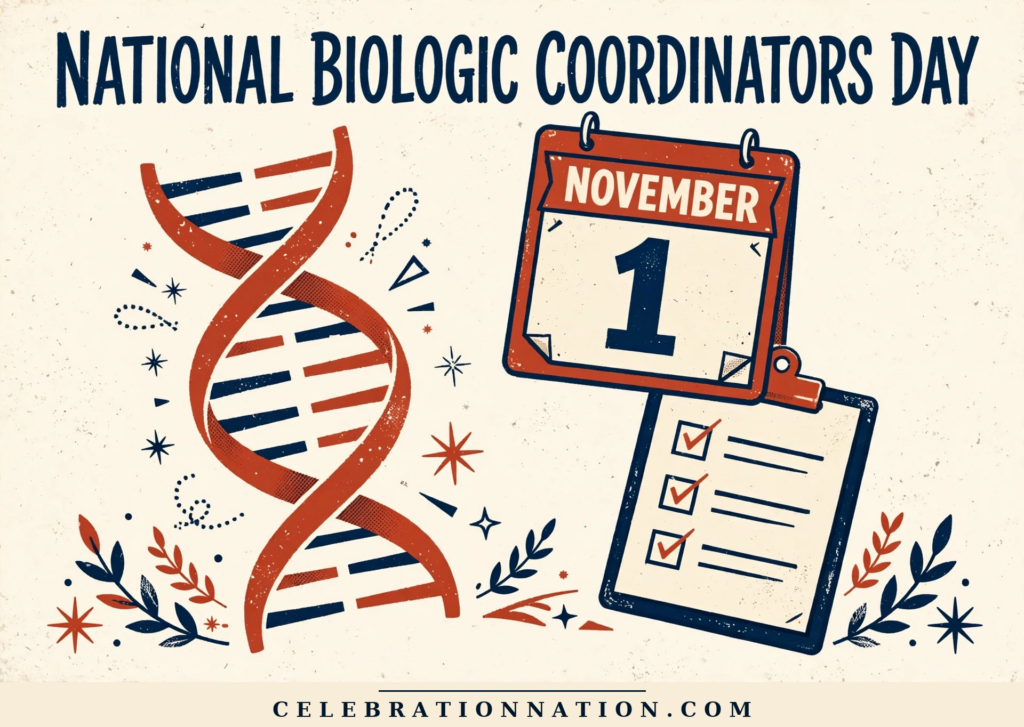
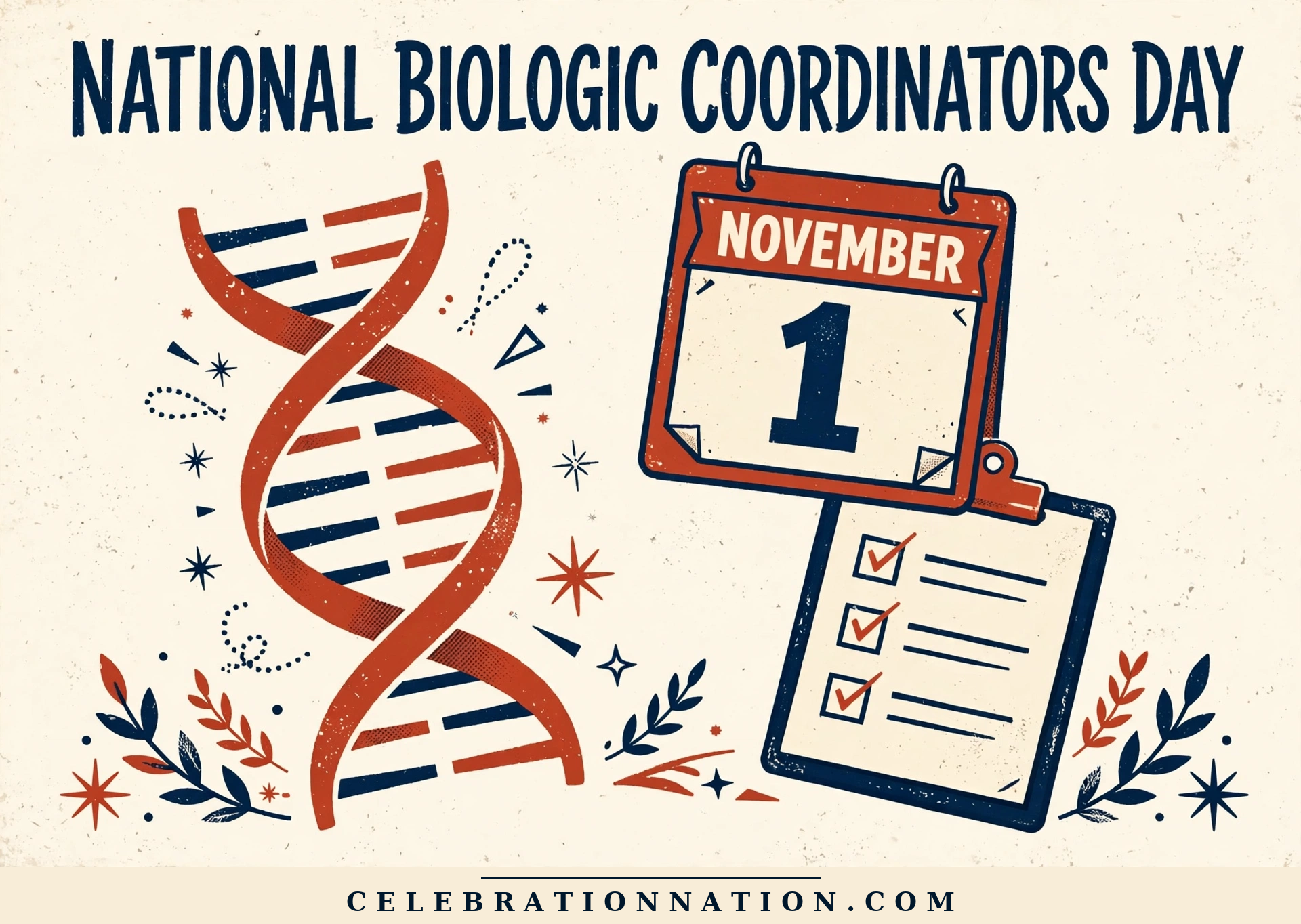
National Biologic Coordinators Day
Join us in recognizing the impact of biologic coordinators on patient health and treatment innovations.
- Roots
- Established in 2021 by Janssen Pharmaceutical Companies.
- Vibe
- Recognizing dedication and expertise in healthcare.
- Also on Nov 1
- World Vegan Day · Brush Day · Calzone Day
- Hashtag
- #NationalBiologicCoordinatorsDay
3 ways to celebrate
Learn about clinical trials
Read how research studies bring new treatments to patients.
Thank a researcher
Send thanks to someone working in clinical research.
Share trial resources
Post info about local research studies on the board.
Plan ahead
National Biologic Coordinators Day is observed on November 1 every year. Here is where it lands for the next ten years, handy for planners, marketers and party people.
Fast facts
The story
National Biologic Coordinators Day is celebrated each year on November 1. This day shines a light on the essential role that biologic coordinators play in the healthcare system. These professionals are integral to the administration and management of biologic therapies, which are crucial in treating various diseases, including cancers and autoimmune disorders.
Read the full story
The emergence of biologic therapies has transformed patient care, leading to more effective treatments with fewer side effects. Biologic coordinators ensure that patients receive the correct treatment by coordinating complex logistics involving drug administration, patient education, and follow-up care. Their contributions are vital in facilitating communication between patients and healthcare providers.
In the field of healthcare, biologic coordinators are often the unsung heroes, working behind the scenes to ensure smooth operations. Their expertise not only enhances patient outcomes but also drives research and innovation in biologic therapies. This celebration reinforces the importance of this profession in advancing medical science.
As we observe this day, it's essential to reflect on the impact of biologic coordinators not just nationally but also globally. These professionals work in diverse environments, often collaborating with international teams. Their dedication fosters advancements that benefit patients across the world, making National Biologic Coordinators Day a moment to appreciate their hard work and commitment.
Did you know?
What are Biologics?
Biologics are medical products made from living organisms and are used in the treatment of various diseases.
First Biologic Drug
Insulin is one of the best-known biologic medicines.
Growth in Biologics
The biologics market has grown exponentially, now accounting for a significant portion of pharmaceutical revenues.
Patient Education
Biologic coordinators often provide crucial education to patients about their therapies and potential side effects.
Cost of Biologics
Biologic therapies can be expensive, sometimes costing thousands of dollars per month.
Regulatory Oversight
Biologics are heavily regulated by agencies like the FDA in the U.S. to ensure safety and efficacy.
Future of Biologics
The future of biologics includes advancements in personalized medicine and gene therapies, opening new treatment avenues.
Around the world
Every culture celebrates a little differently.
- USUnited StatesBiologic coordinators are critical within the U.S. healthcare landscape, contributing significantly to patient management and treatment.
- CACanadaIn Canada, biologic coordinators help streamline access to biologic therapies, ensuring patients receive timely care.
- GBUnited KingdomThe UK's healthcare system relies on biologic coordinators to manage treatment plans for patients receiving biologic drugs.
- AUAustraliaIn Australia, biologic coordinators play an essential role in patient care, particularly in oncology and chronic conditions.
- DEGermanyGermany's healthcare system benefits from the expertise of biologic coordinators, enhancing treatment protocols across various medical specialties.
- INIndiaIn India, biologic coordinators are emerging as vital players in the healthcare ecosystem, improving access to innovative treatments.
Keep the party going
See the calendar


Celebrate every day, all year
Official gear from the people who track 1,700+ celebrations.
Browse the shop 2027 Wall Calendar, signed by Marlo AndersonSigned by the founder of National Day Calendar.
Never miss a reason to celebrate.
One quick morning email with today's celebrations, ideas and posters. Free, unsubscribe anytime.
🎉 You're on the list! Watch your inbox for The Daily Confetti.