


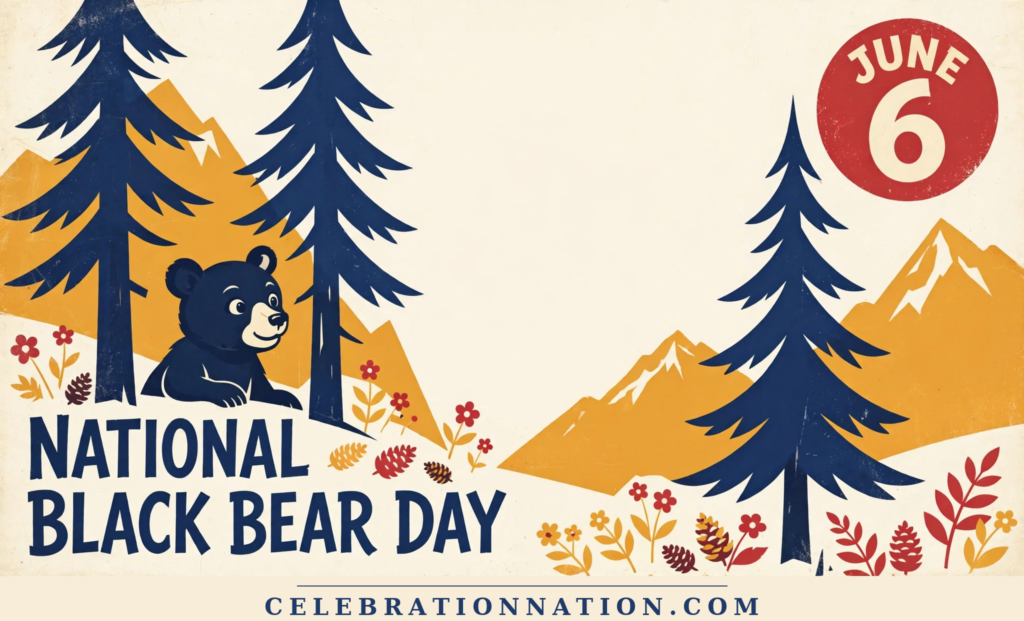
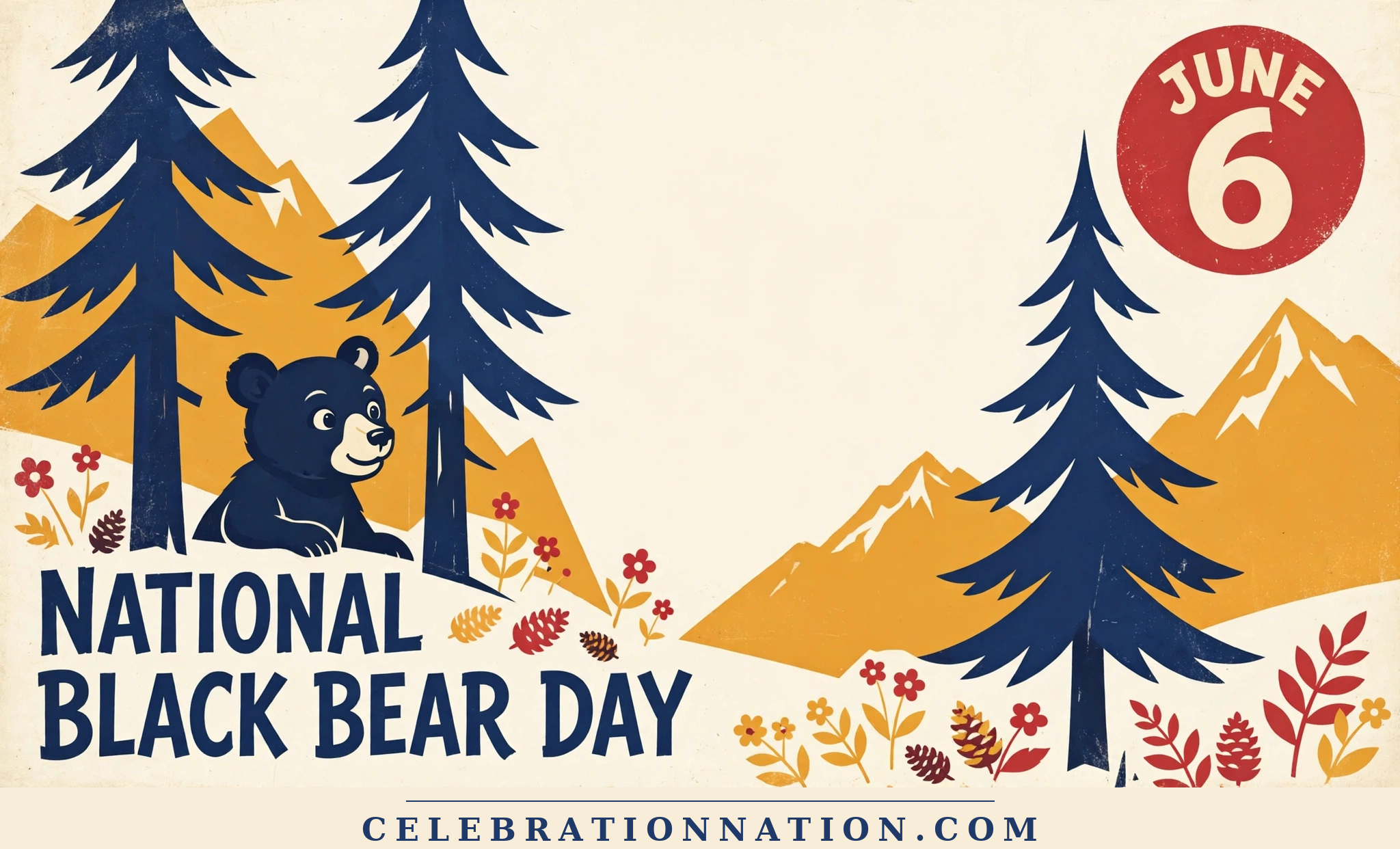
National Black Bear Day
National Black Bear Day encourages us to appreciate the beauty of black bears and their habitats, highlighting their crucial role in ecosystems.
- Roots
- Established in 2001 by wildlife conservation groups
- Vibe
- A day of education and appreciation for wildlife
- Also on Jun 6
- Day of Sweden · Drive-In Movie Day · Eyewear Day
- Hashtag
- #NationalBlackBearDay
3 ways to celebrate
Learn bear facts
Read up on black bears and their habitats.
Plan a hike
Hit a bear-country trail with proper safety prep.
Wildlife fundraiser
Collect donations for a bear conservation group.
Plan ahead
National Black Bear Day is observed on the first Saturday in June. Here is where it lands for the next ten years, handy for planners, marketers and party people.
Fast facts
The story
National Black Bear Day is celebrated on the first Saturday of June, a time to reflect on the significance of black bears in American wildlife. These majestic creatures, known scientifically as Ursus americanus, play a vital role in maintaining the health of their forest ecosystems. With a population estimated at around 600,000 across the United States, they are an iconic symbol of North American wildlife.
Read the full story
The day was founded by the NC Black Bear Festival and proclaimed by National Day Calendar beginning in 2018 to promote awareness and understanding of black bears. As omnivores, black bears contribute to their habitat by dispersing seeds and helping to control insect populations. They are adaptable animals, thriving in diverse environments from the forests of the Appalachian Mountains to the swamps of Florida.
On this day, many organizations host educational events and activities to engage communities in conservation efforts. National parks and wildlife reserves often offer guided tours and informational sessions that allow people to learn more about these remarkable animals. Additionally, schools frequently incorporate lessons on black bears into their curricula, fostering a sense of responsibility towards wildlife conservation among young learners.
As we observe National Black Bear Day, it is essential to recognize the threats facing these animals, including habitat loss and climate change. By promoting awareness and engaging in conservation efforts, individuals can help ensure that future generations will continue to enjoy the presence of black bears in the wild.
Did you know?
Black Bear Color Variations
Black bears can be found in various colors, including cinnamon and blond, depending on their habitat.
Diet Diversity
These bears are omnivores, feeding on fruits, nuts, insects, and small mammals.
Hibernation Habits
Black bears typically hibernate from November to March, depending on climate.
Cubs and Mothers
Mother bears usually give birth to 1-4 cubs in a den during hibernation.
Lifespan Insights
In the wild, black bears can live up to 20 years, while those in captivity may live longer.
Tracking Movements
Researchers often use GPS collars to monitor black bear movements for conservation studies.
Symbol of Strength
The black bear is a symbol of strength and resilience in various Native American cultures.
Around the world
Every culture celebrates a little differently.
- USUnited StatesHome to the largest population of black bears, with significant populations in states like California, Alaska, and North Carolina.
- CACanadaCanada hosts various bear species, including the black bear, which is widely found in its forests.
- MXMexicoBlack bears are also found in the northern regions of Mexico, where conservation efforts are in place.
- ITItalyThe Marsican brown bear, a relative of the black bear, is critically endangered and found only in the Apennine Mountains.
- DEGermanyGermany is home to a reintroduction program for bears, aiming to restore their place in the wild.
- AUAustraliaAustralia has its own unique bear species, the koala, showcasing the diversity of bear-like animals worldwide.
Keep the party going
See the calendar

Celebrate every day, all year
Official gear from the people who track 1,700+ celebrations.
Browse the shop National Day Celebration Card GameA party in a box, any day of the year.
Never miss a reason to celebrate.
One quick morning email with today's celebrations, ideas and posters. Free, unsubscribe anytime.
🎉 You're on the list! Watch your inbox for The Daily Confetti.