



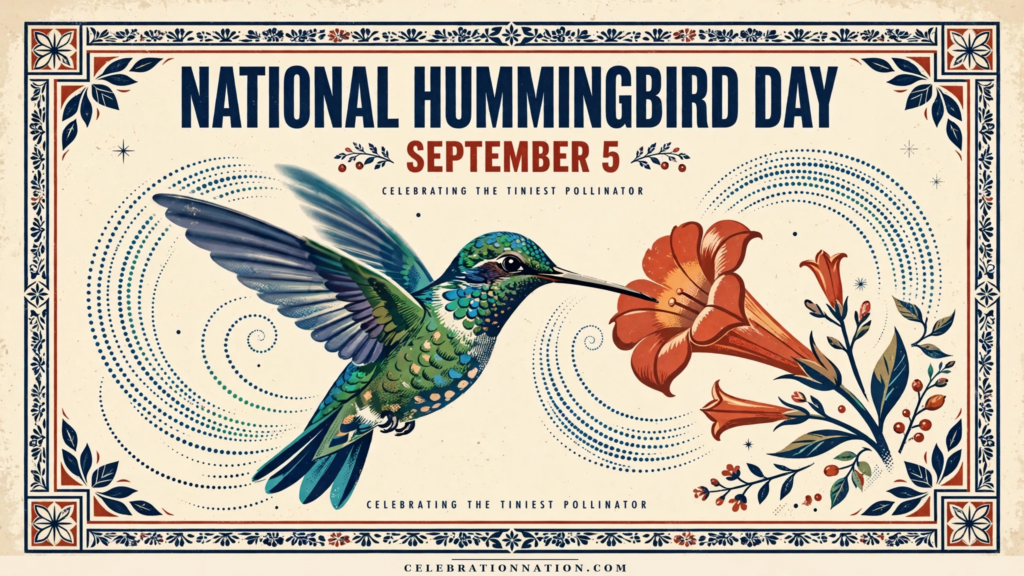
National Hummingbird Day
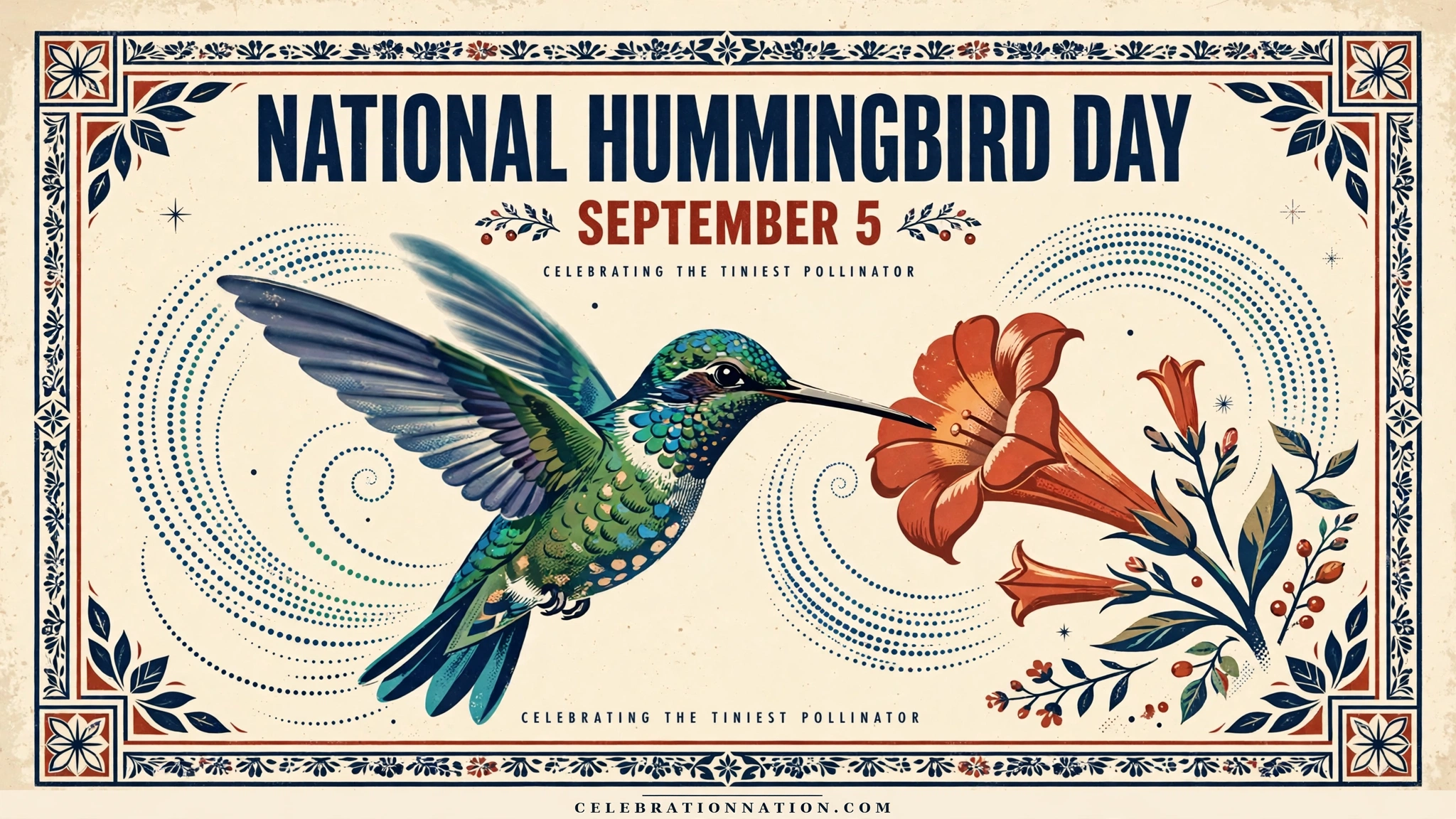
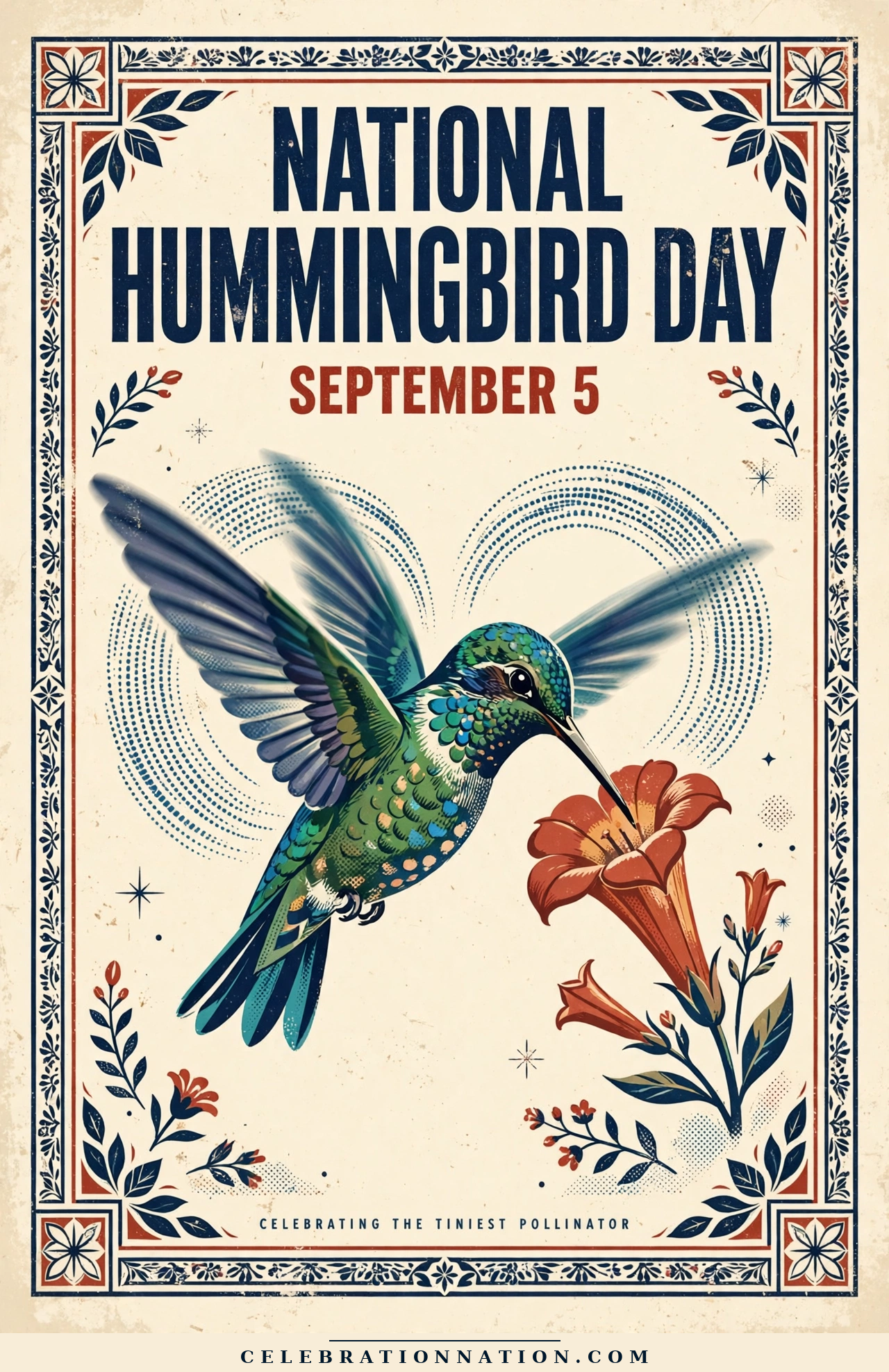
Join us in celebrating the vibrant world of hummingbirds and their role in our ecosystem.
- Roots
- A day celebrating these tiny, dazzling birds
- Vibe
- A celebration of nature's beauty and diversity.
- Also on Sep 5
- World Beard Day · World Samosa Day · International Day of Charity
- Hashtag
- #NationalHummingbirdDay
3 ways to celebrate
Set out a feeder
Hang a hummingbird feeder near a window and watch for tiny visitors.
Take a garden stroll
Walk through a blooming garden together and spot darting wings.
Plant a pollinator pot
Start a shared pot of bright flowers on a windowsill for pollinators.
Plan ahead
National Hummingbird Day is observed on the first Saturday in September. Here is where it lands for the next ten years, handy for planners, marketers and party people.
Fast facts
The story
Hummingbirds, known for their iridescent feathers and rapid wing beats, are a delight to observe. Each species possesses unique traits, with the Ruby-throated Hummingbird being the most common in North America. Found primarily in the eastern United States, this tiny bird travels thousands of miles during its migration, showcasing its remarkable endurance.
Read the full story
As we celebrate National Hummingbird Day on September 5, it’s important to recognize the ecological role these birds play. They are essential pollinators, visiting various flowers and helping to sustain numerous plant species. Their presence in gardens not only enchants birdwatchers but also supports local ecosystems.
To create a hummingbird haven, plant native flowering plants that are rich in nectar. Additionally, consider setting up feeders filled with a simple sugar-water solution, one part sugar to four parts water. With some patience and care, you may find these remarkable birds flocking to your yard.
National Hummingbird Day serves as a reminder to appreciate the intricate beauty of nature. As we observe these tiny marvels, we are encouraged to foster environments that support biodiversity. Through education and conservation efforts, we can ensure that future generations will also experience the joy of watching hummingbirds.
Did you know?
Fastest Bird
The Anna's Hummingbird can reach speeds up to 60 miles per hour during courtship dives.
Heart Rate
A hummingbird's heart rate can exceed 1,200 beats per minute while in flight.
Lifespan
Most hummingbirds have a lifespan of 3 to 5 years, but some can live over a decade.
Color Vision
Hummingbirds have excellent color vision and can see ultraviolet light, which humans cannot.
Nesting
Hummingbird nests are tiny, often the size of a thimble, and are made from plant fibers and spider silk.
Territorial
Male hummingbirds are highly territorial and will defend their feeding areas vigorously.
Migration
Some species of hummingbirds migrate over 3,000 miles each year between North America and Central America.
Around the world
Every culture celebrates a little differently.
- USUnited StatesHummingbirds are prevalent in many states, particularly in the southeastern U.S. during migration.
- CACanadaThe Ruby-throated Hummingbird migrates to Canada during summer, where it finds abundant flowering plants.
- MXMexicoMexico is home to many hummingbird species, with the Broad-billed Hummingbird being one of the most recognized.
- BRBrazilBrazil boasts a rich diversity of hummingbird species, making it a hotspot for birdwatchers.
- ARArgentinaIn Argentina, the Andean Hillstar, a type of hummingbird, can be found at high altitudes.
- CLChileChile is known for its unique species, such as the Chilean Hummingbird, which thrives in diverse habitats.
Keep the party going
See the calendar



Celebrate every day, all year
Official gear from the people who track 1,700+ celebrations.
Browse the shop 2027 Wall + Desk Calendar BundleCelebrate every day at home and at work.
Never miss a reason to celebrate.
One quick morning email with today's celebrations, ideas and posters. Free, unsubscribe anytime.
🎉 You're on the list! Watch your inbox for The Daily Confetti.