National Burrito Day
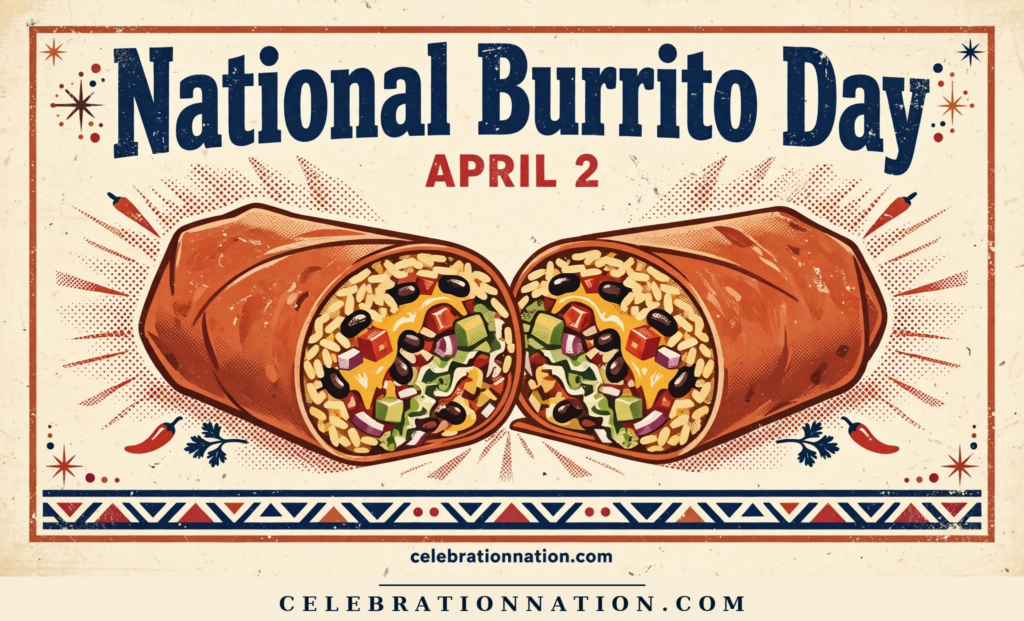
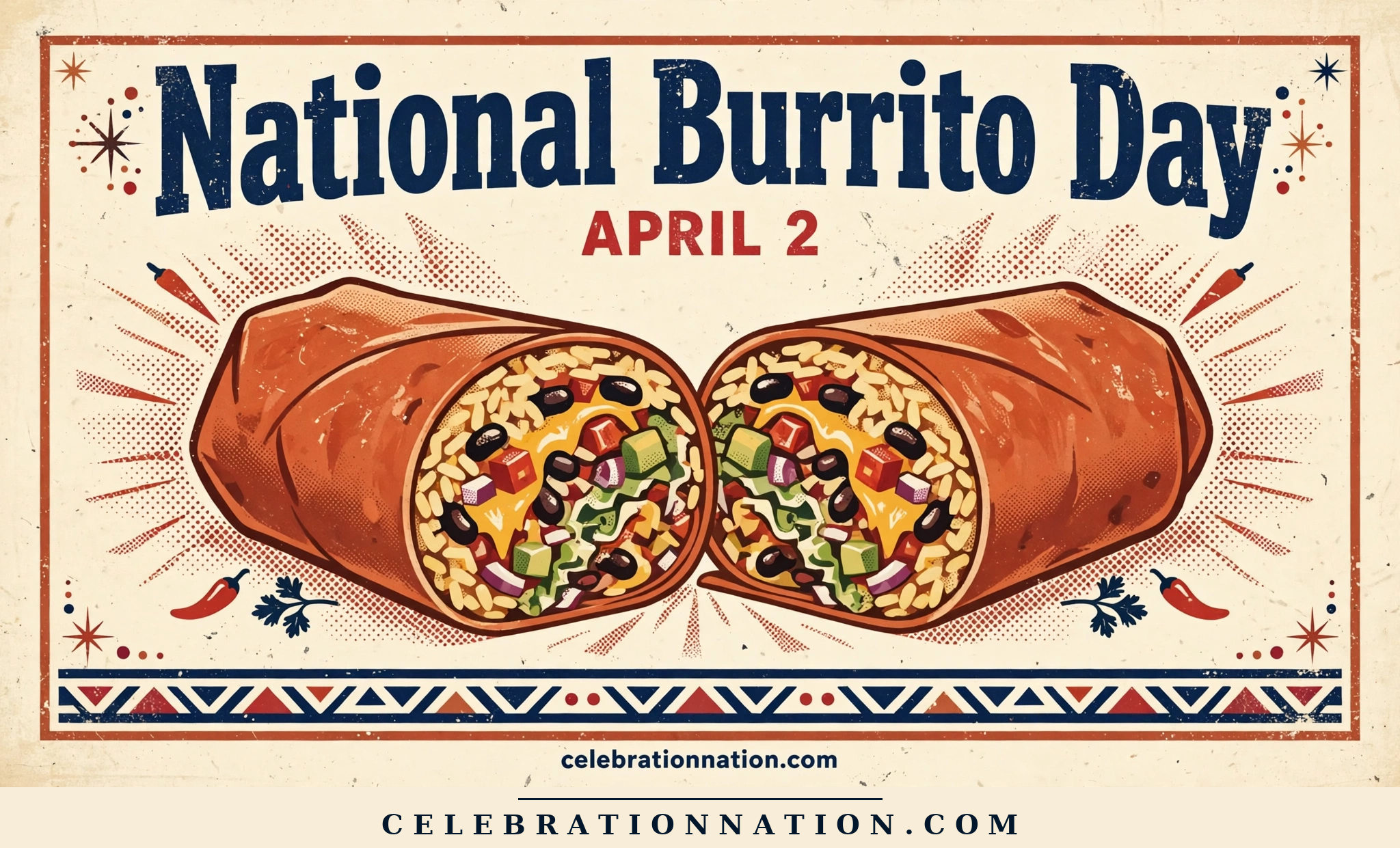
National Burrito Day on the first Thursday of April (April 2, 2026) honors the wrapped-tortilla handheld that became a defining American meal — a California and Mexican collaboration that fueled an industry from Chipotle to taquerías on every corner of every American city. Beans, rice, meat, cheese, salsa, wrapped in a warm flour tortilla — the perfect handheld.
- Roots
- Northern Mexico, 1800s
- Vibe
- Fresh & Handheld
- Hashtag
- #NationalBurritoDay
Ways to celebrate
Wrap up and enjoy:
- 🌯 Go to a taquería. Avoid chains; find a real family-run taquería. San Francisco's Mission District is the American burrito mecca; Los Angeles Eastside is a close second.
- 🏪 Try regional styles. Mission Burrito (SF), California Burrito (San Diego), Chimichanga (Arizona), Arkansas Hog Burrito. Different regions, different traditions.
- 🏠 Build your own at home. Warm flour tortilla, rice, beans (pinto or black), grilled meat, cheese, salsa, guacamole. 20 minutes; exceptional.
- 📚 Read 'Taqueria' by Gustavo Arellano. The definitive book on the Mexican-American food tradition.
- 🌮 Taste-test the chains. Chipotle vs. Qdoba vs. Rubio's vs. your local taquería. Blind tasting reveals surprising differences.
Make it your kind of celebration
Family
Family burrito night at home. Kids LOVE building their own — protein, rice, beans, cheese, veggies, salsa. Universal family dinner winner.
Kids
Kid-sized burritos with cheese and rice and beans (mild). One of the most reliable picky-eater wins of American cooking.
Couples
Burrito bar at home: multiple fillings, 2 types of tortillas, 3 salsas. Plus good Mexican beer or margaritas. Underappreciated date night.
Office
Burrito truck lunch for the team. Chipotle catering works too. Universally popular; almost always accommodates dietary restrictions.
School
Cross-cultural cooking lesson. Mexican-American food history, regional differences, ingredient geography. High-engagement topic.
Community
Taco/burrito fundraiser at a community event. Build-your-own burrito bar is a reliable fundraising format.
Just me
A great burrito and a good book. Or a great burrito and Netflix. Either works. The perfect solo weeknight.
Plan ahead
National Burrito Day is observed on the first Thursday in April. Here is where it lands for the next ten years, handy for planners, marketers and party people.
Fast facts
The story
The burrito is a Mexican invention with distinctly American evolution. Its origins are in northern Mexico, particularly the state of Chihuahua and the ranching regions along the US border, where flour tortillas (rather than corn) became the regional staple. A 1895 recipe in a Mexican cookbook is the first documented use of the word 'burrito,' and multiple folk histories trace the name to 19th-century Mexican street food. The basic form, fillings rolled in a flour tortilla for handheld eating, was already well-established in northern Mexico by the time American restaurants picked it up.
Read the full story
The American burrito boom started in California. Mexican-American communities in Los Angeles and San Francisco were serving burritos by the 1920s; the first documented LA burrito vendors date to 1923. But the defining moment was San Francisco's Mission District in the 1960s, where a new 'Mission Burrito' style emerged: extra-large, foil-wrapped, with rice added to the filling (making it substantial enough to be a full meal), and stuffed with options customers chose from behind a glass case. El Faro, a Mission Street taquería, is often credited with creating the format in 1961.
The Mission Burrito became America's burrito template. Chipotle founder Steve Ells, who worked in San Francisco restaurants, was directly inspired by the Mission Burrito when he opened his first Chipotle in Denver in 1993. Chipotle's assembly-line format, foil wrapping, and rice-heavy filling are all Mission Burrito innovations. Chipotle grew from 1 location to 3,000+ nationwide in 30 years. Competitors, Qdoba (1995), Rubio's (1983), Baja Fresh (1990), followed similar models. The Americanized burrito became a $15 billion-plus US industry.
Today's American burrito scene is wide. The authentic Mexican taquería tradition thrives in California, Texas, Arizona, and New Mexico, and in Mexican-American neighborhoods of every major US city. Regional American variants include the San Diego-style California Burrito (french fries inside), the Arizona Chimichanga (deep-fried burrito), the Wet Burrito (smothered in enchilada sauce, Michigan), and Arkansas Hog Burritos (barbecue-pork-filled). The burrito is now firmly embedded in American food, a handheld meal equally at home at a $3 taquería and a $12 fast-casual chain. A delicious cultural inheritance.
Regional variations worth knowing:
Six cities where burritos are religion:
Did you know?
El Farolito in SF was voted the best burrito in America.
In 2014, FiveThirtyEight (the statistical journalism site) ran a bracket tournament of 64 American burritos, voted by Mexican food experts. El Farolito on 24th Street in San Francisco won. Still operating; still essential.
Chipotle's founder had 4 years of French culinary training.
Chipotle founder Steve Ells trained at the Culinary Institute of America and worked as a line cook at Stars in San Francisco. His original plan was to open a fine-dining restaurant, using burrito profits to fund it. Chipotle's success changed those plans.
Breakfast burritos are a New Mexican invention.
The breakfast burrito was first documented at Tia Sophia's in Santa Fe in 1975. Their original breakfast burrito, eggs, bacon, potato, green chile, cheese, is still on the menu. One of the great American breakfast innovations.
Wrapping technique matters enormously.
A properly wrapped burrito doesn't leak, doesn't come apart, and holds everything in place. The San Francisco foil-wrap technique is specifically designed to let diners eat while preserving the burrito's integrity. A genuine professional skill, taquería staff wrap thousands per day.
Keep the party going
See the calendar
Celebrate every day, all year
Official gear from the people who track 1,700+ celebrations.
Browse the shop 2027 National Day Wall CalendarGet the 2026 edition free. 1,700+ observances.
Never miss a reason to celebrate.
One quick morning email with today's celebrations, ideas and posters. Free, unsubscribe anytime.
🎉 You're on the list! Watch your inbox for The Daily Confetti.