



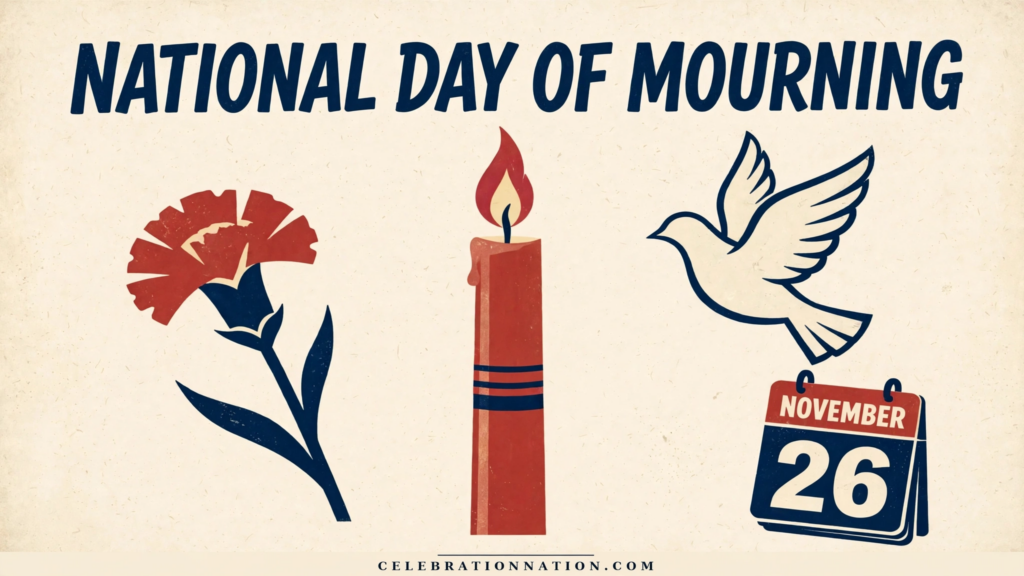
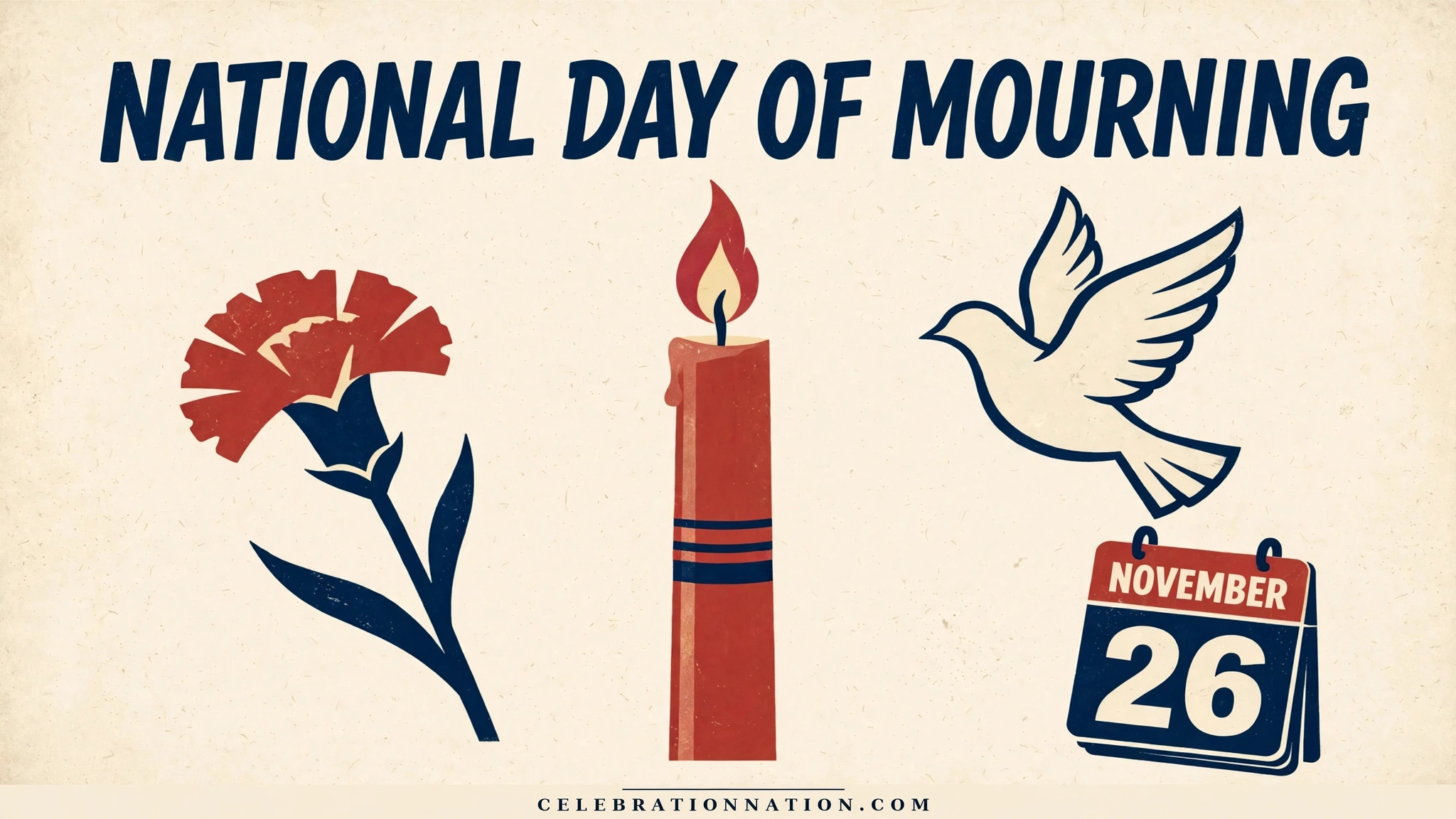
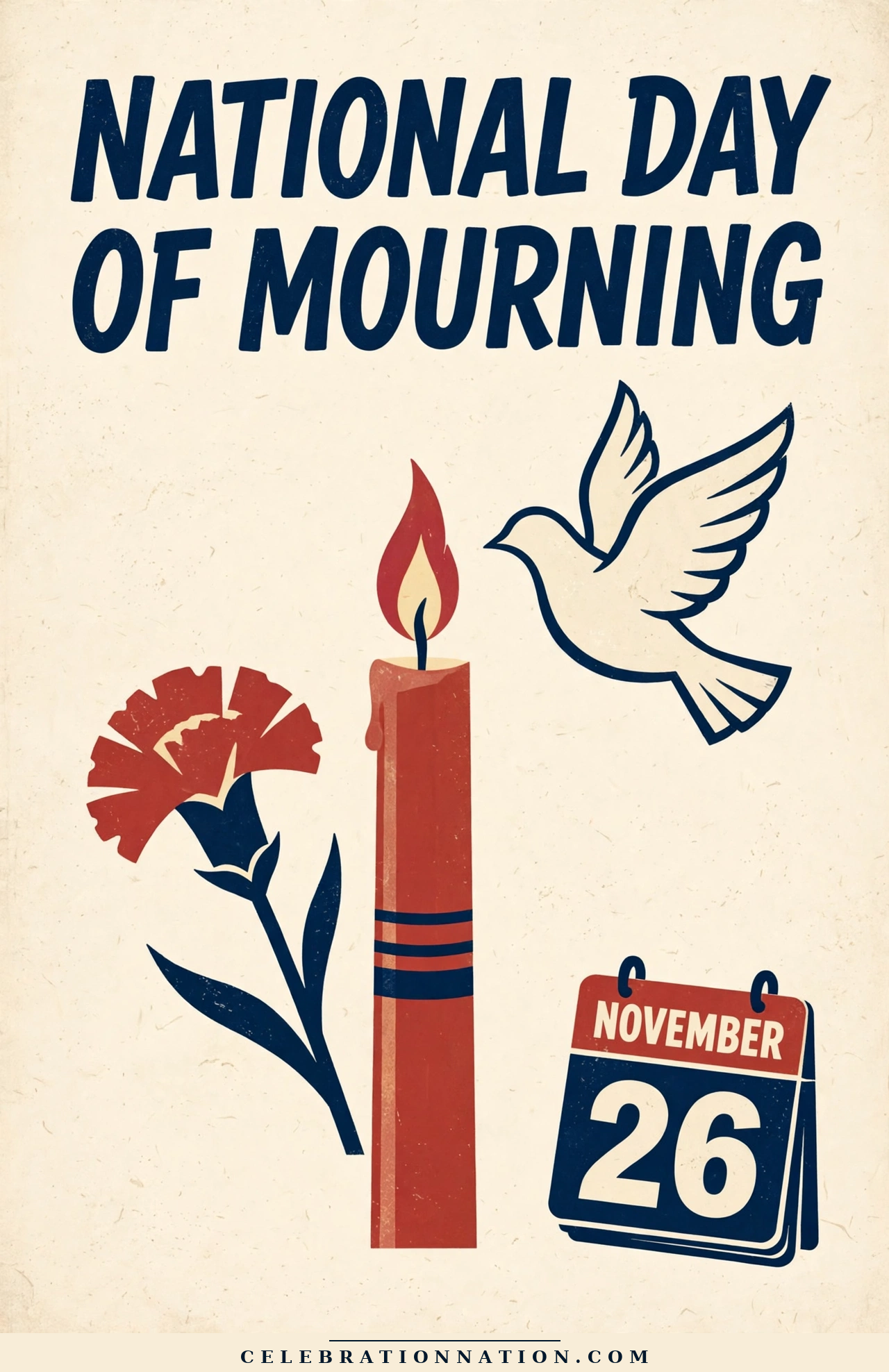
National Day of Mourning
Today, we take a moment to honor the resilience of Indigenous peoples throughout history.
- Roots
- Established by Native American activists in 1970.
- Vibe
- A day of reflection, education, and solidarity.
- Also on Nov 26
- Cake Day · Thanksgiving Day · Turkey Free Thanksgiving
- Hashtag
- #NationalDayOfMourning
3 ways to celebrate
Reflect quietly
Spend time reading and reflecting on the true history of Thanksgiving and its impact.
Listen and learn
Share resources from Indigenous voices and have an honest conversation together.
Acknowledge the day
Take a moment of recognition and share educational materials with your group.
Plan ahead
National Day of Mourning is observed on the fourth Thursday in November. Here is where it lands for the next ten years, handy for planners, marketers and party people.
Fast facts
The story
The National Day of Mourning is observed every year on the fourth Thursday of November, coinciding with the Thanksgiving holiday in the United States. Established in 1970 by Native American activists, this day serves as a poignant reminder of the suffering and injustices faced by Indigenous peoples since the arrival of European settlers. As many gather to celebrate Thanksgiving, this day calls for reflection on the true history of colonization and its lasting impact.
Read the full story
The observance began in Plymouth, Massachusetts, a historically significant site for both Native Americans and European settlers. Plymouth Rock symbolizes the arrival of the Pilgrims but also represents the beginning of a painful chapter for Indigenous communities. The National Day of Mourning provides a platform for Indigenous voices, allowing them to share their stories, struggles, and resilience in the face of adversity.
The annual commemoration includes a gathering on Cole's Hill in Plymouth, where speakers share personal narratives and cultural traditions. The event emphasizes the importance of recognizing the ongoing challenges faced by Indigenous peoples, including land rights, cultural preservation, and social justice. It serves as a reminder that the fight for recognition and rights is far from over, and that solidarity with Indigenous communities is crucial. A strong sense of community and healing is fostered through shared remembrance and education.
In addition to attending local events, individuals are encouraged to engage in self-education about Indigenous history and contemporary issues. This can include reading literature by Indigenous authors, viewing documentaries, and participating in workshops. By sharing knowledge and advocating for Indigenous rights, we can all contribute to a more equitable future. On this National Day of Mourning, let us honor the past while working towards justice and healing for Indigenous communities.
Keep the party going
See the calendar

Celebrate every day, all year
Official gear from the people who track 1,700+ celebrations.
Browse the shop 2027 Wall Calendar, signed by Marlo AndersonSigned by the founder of National Day Calendar.
Never miss a reason to celebrate.
One quick morning email with today's celebrations, ideas and posters. Free, unsubscribe anytime.
🎉 You're on the list! Watch your inbox for The Daily Confetti.