


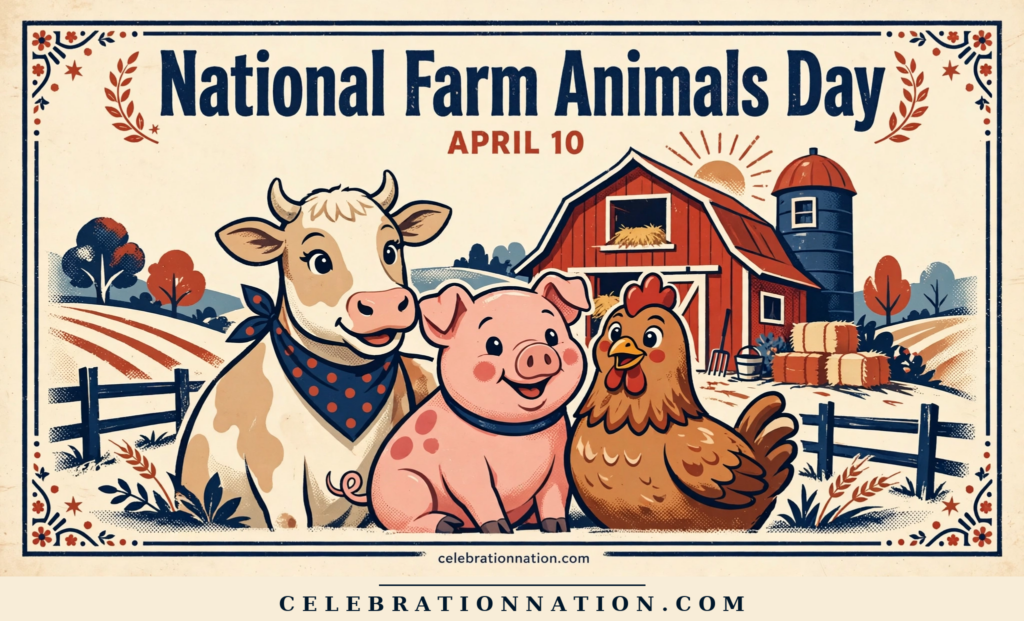
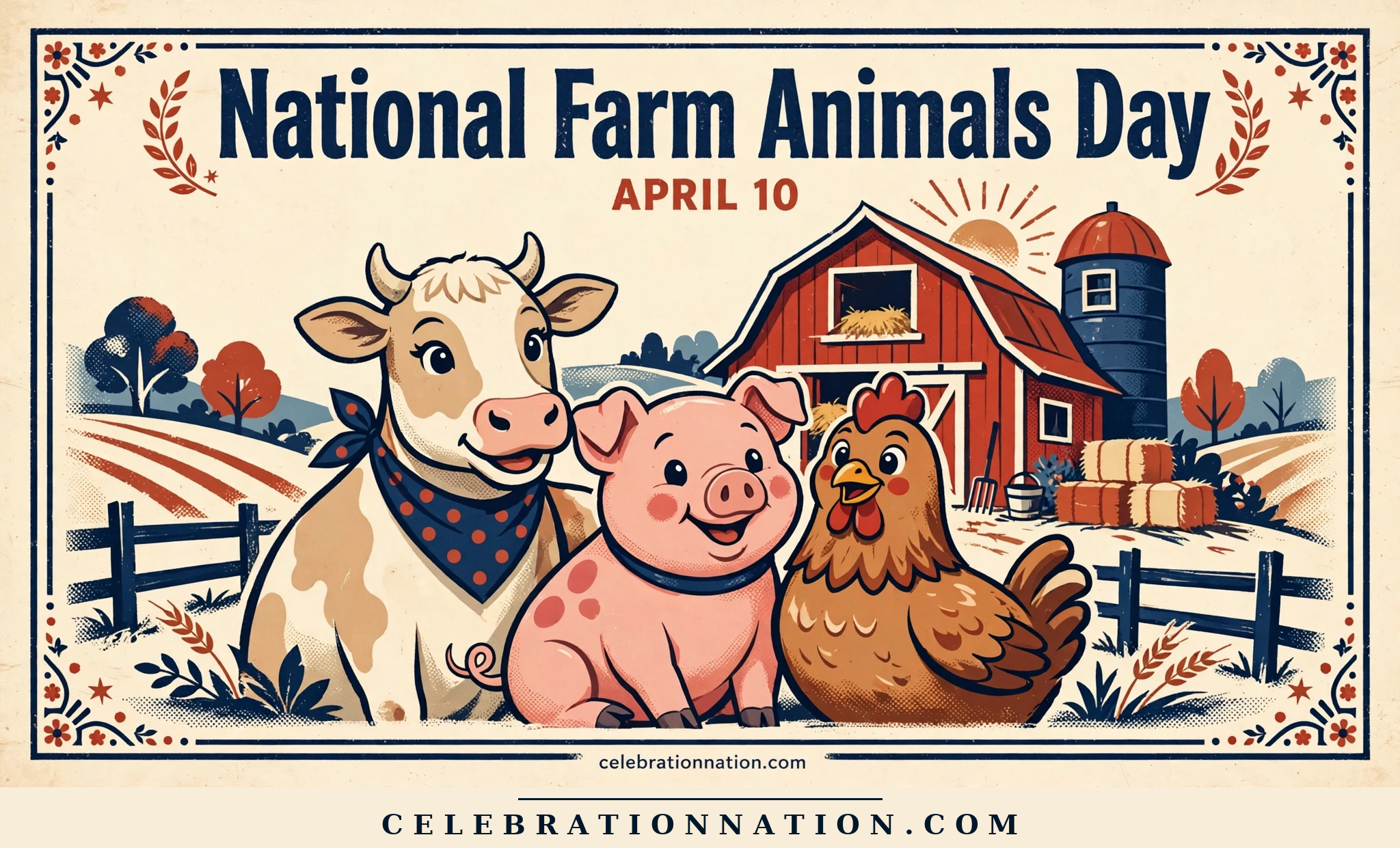
National Farm Animals Day
National Farm Animals Day on April 10 honors the cows, chickens, pigs, sheep, goats, ducks, turkeys, horses, and working donkeys that built American agriculture — and asks us to think about how they're treated today. Founded in 2005 by animal welfare advocate Colleen Paige, it's both a celebration of agrarian heritage and a call for better farm animal welfare.
- Vibe
- Earthy & Respectful
- Also on Apr 10
- World Homeopathy Day · International Safety Pin Day · Cinnamon Crescent Day
- Hashtag
- #NationalFarmAnimalsDay
Ways to celebrate
Connect with farm animals — whichever way fits:
- 🚜 Visit a working farm. Find a local U-pick or open farm. Seeing working farm animals up close changes how you think about where food comes from.
- 🐑 Support heritage breeds. Heritage-breed meat, eggs, and dairy cost more because the animals take longer to raise. Every purchase keeps a rare breed alive.
- 🏞️ Visit a farm sanctuary. Accredited sanctuaries rehome rescued farm animals. Most offer public tours; many rely on visits for funding.
- 📖 Learn about breed conservation. The Livestock Conservancy's website has profiles of 150+ endangered American heritage breeds — fascinating reading.
- 👩🍳 Choose better food. Pasture-raised, Certified Humane, or Animal Welfare Approved labels represent real standards — not just marketing.
Make it your kind of celebration
Family
Weekend farm visit. Many state and county parks have working demonstration farms with heritage breeds. Perfect 2-hour family outing.
Kids
Petting zoos (AZA-accredited) let kids meet goats, sheep, and rabbits safely. Start the conversation about where food comes from.
Couples
Date at a cheese or dairy farm with tours. Many allow you to meet the cows that made the cheese you taste. Weirdly moving.
Office
Team volunteer day at a farm sanctuary. Hands-on, physical, refreshingly different from any other corporate volunteering.
School
Farm-to-school programs connect classrooms with local farms. Many offer field trips — kids spend a day with the animals. Impactful.
Community
Local fairs and livestock shows — county fair judging day is a beautiful American tradition anyone can watch.
Just me
Bookstore + a biography of a breed like the Jersey cow or the Delaware chicken. Animal biographies are an underappreciated genre.
Plan ahead
National Farm Animals Day is observed on April 10 every year. Here is where it lands for the next ten years, handy for planners, marketers and party people.
Fast facts
The story
American agriculture was built by animals. Cows, pigs, chickens, sheep, goats, horses, oxen, mules, they pulled the plows, fertilized the fields, produced the milk, provided the meat, kept the families. For 300 years they were neighbors, not inputs. Every family farm had them. Every child grew up feeding them.
Read the full story
That relationship started changing around 1950 with the rise of industrial agriculture, CAFOs (Concentrated Animal Feeding Operations), factory hatcheries, feedlots. Output soared; animal welfare plummeted. By the 1970s, most American chicken came from barns housing 200,000 birds. Most pork came from sow crates. Most beef came from feedlots.
National Farm Animals Day was founded in 2005 by Colleen Paige, author and founder of National Dog Day. She created it to call attention to the welfare conditions of farm animals and to celebrate the ones living good lives at sanctuaries, family farms, and in the pastures that still exist across the country.
The modern movement has two tracks. Heritage breed preservation, The Livestock Conservancy (founded 1977) works to save 150+ American farm animal breeds from extinction, including the Ossabaw Island hog, the Gulf Coast sheep, and the American Mammoth Jackstock donkey. And welfare reform, laws like California's Proposition 12 (2018) set minimum standards for hen, pig, and veal housing. Both movements are quietly, steadily changing how Americans think about farm animals.
Four organizations doing the work every day, year-round:
Six of America's most iconic (and often endangered) heritage farm breeds:
Did you know?
American chickens outnumber Americans 29-to-1.
9.6 billion broiler chickens are raised annually in the US, compared to a human population of ~336 million. American chicken is a massive export industry.
California has the strictest farm animal housing laws.
Proposition 12 (passed 2018, fully in effect 2022) sets minimum space requirements for hens, veal calves, and pigs. Upheld by the US Supreme Court in 2023 after major industry lawsuits.
Pigs are smarter than dogs.
Research places pig cognition on par with a 3-year-old human child. They can solve puzzles, play video games designed for them, and recognize themselves in mirrors. Often considered the 4th-smartest animal species on Earth.
Your Thanksgiving turkey is one of two breeds.
99% of US commercial turkeys are Broad-Breasted White. Heritage breeds, Narragansett, Bourbon Red, Royal Palm, Slate, survive only via small farms and conservation programs.
Keep the party going
See the calendar

Celebrate every day, all year
Official gear from the people who track 1,700+ celebrations.
Browse the shop National Day Celebration Card GameA party in a box, any day of the year.
Never miss a reason to celebrate.
One quick morning email with today's celebrations, ideas and posters. Free, unsubscribe anytime.
🎉 You're on the list! Watch your inbox for The Daily Confetti.