






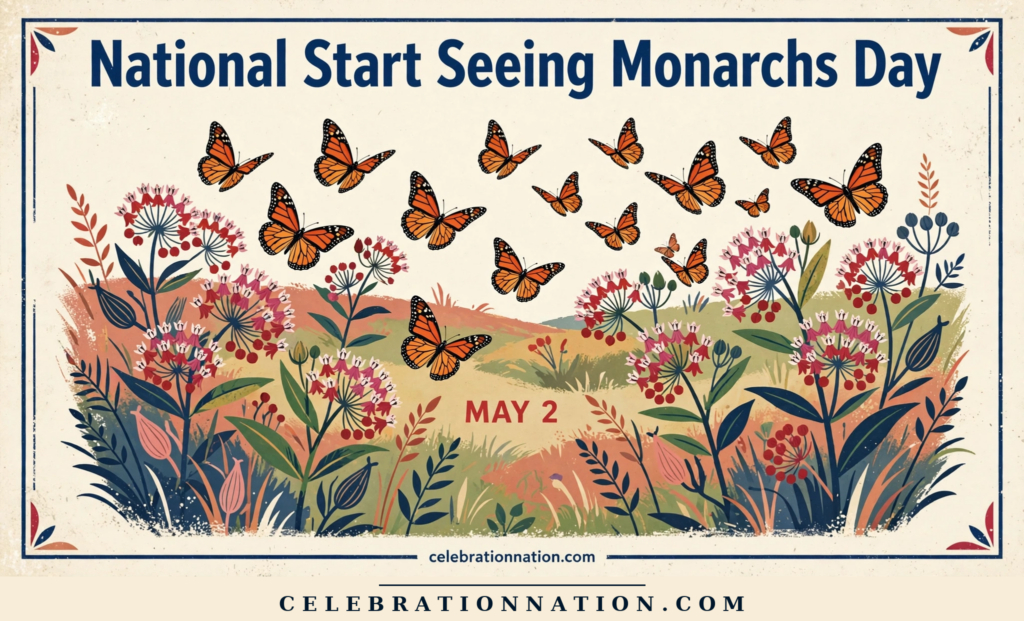
National Start Seeing Monarchs Day
On National Start Seeing Monarchs Day, we make a little room on the calendar for the thing that makes us who we are.
- Roots
- Established in 1995 by the Monarch Watch organization
- Vibe
- A celebration of nature and conservation
- Also on May 2
- International Female Ride Day · International Drone Day · Fitness Day
- Hashtag
- #NationalStartSeeingMonarchsDay
Ways to celebrate
Small, doable ways to celebrate National Start Seeing Monarchs Day.
- Do one small thing that makes the day feel marked.
- Tell someone what you're celebrating and why.
- Share a post, a photo, or a memory connected to it.
- Make a tiny tradition — something you could do again next year.
- Let it be simple. Not every celebration has to be a production.
Make it your kind of celebration
Family
Do one small thing together that everyone will remember.
Kids
Turn it into a craft, a story, or a snack — meet them where they are.
Couples
Use the day as an excuse for a little intentional time together.
Office
Acknowledge the day in the team chat or at a stand-up. Small, sincere, fast.
School
Anchor a short lesson or activity around the day.
Community
Share, volunteer, or donate to make the day mean something locally.
Just me
Celebrate quietly and completely. One person can still mark a day.
Plan ahead
National Start Seeing Monarchs Day is observed on the first Saturday in May. Here is where it lands for the next ten years, handy for planners, marketers and party people.
Fast facts
The story
National Start Seeing Monarchs Day, observed on First Saturday of May, is a special occasion that heralds the arrival of monarch butterflies in North America. As these vibrant insects embark on their extensive migration journey from central Mexico to the southern United States, enthusiasts across the country prepare for their return. This day not only celebrates the beauty of monarchs but also raises awareness about the challenges they face during their migration.
Read the full story
The tradition of observing this day began in 1995, initiated by Monarch Watch, a nonprofit organization dedicated to the study and conservation of the monarch butterfly. With a mission to educate people on the importance of butterflies and their habitats, Monarch Watch encourages communities to participate in activities that promote butterfly conservation. Over the years, this initiative has grown, inspiring thousands to engage with nature and protect these delicate creatures.
Monarch butterflies are renowned for their incredible migration journey, which can span over 3,000 miles. Each year, millions of these butterflies travel from their wintering grounds in Mexico to the warm summer habitats in the United States and Canada. Unfortunately, only about 5% of these butterflies survive the perilous journey, facing threats such as habitat loss, climate change, and pesticide use. National Start Seeing Monarchs Day serves as a reminder of the importance of protecting their migratory routes and breeding grounds.
As spring approaches and the weather warms, many people partake in activities to celebrate National Start Seeing Monarchs Day. Families, schools, and communities come together to plant milkweed gardens, host butterfly walks, or participate in citizen science projects. By fostering a greater understanding of these insects and their habitats, we can help ensure that future generations will also experience the wonder of seeing monarch butterflies in flight.
Did you know?
Migration Timing
Monarchs typically begin their migration in March.
Lifespan
Adult monarchs can live up to 9 months.
Population Decline
Monarch numbers have decreased by 90% since the 1990s.
Tagging Programs
Researchers use tagging to study migration.
Migration Routes
Monarchs follow specific routes across North America.
Cultural Significance
Monarchs are associated with various cultural beliefs.
Milkweed Dependency
Monarch larvae can only feed on milkweed plants.
Around the world
Every culture celebrates a little differently.
- USUnited StatesA prime wintering ground for monarchs.
- MXMexicoThe starting point of their migration journey.
- CACanadaSummer breeding grounds for monarchs.
- BRBrazilHome to various butterfly species.
- AUAustraliaHosts a range of butterfly conservation efforts.
- EUEuropeVarious initiatives to protect butterfly habitats.
Keep the party going
See the calendar



Celebrate every day, all year
Official gear from the people who track 1,700+ celebrations.
Browse the shop 2027 Wall + Desk Calendar BundleCelebrate every day at home and at work.
Never miss a reason to celebrate.
One quick morning email with today's celebrations, ideas and posters. Free, unsubscribe anytime.
🎉 You're on the list! Watch your inbox for The Daily Confetti.