





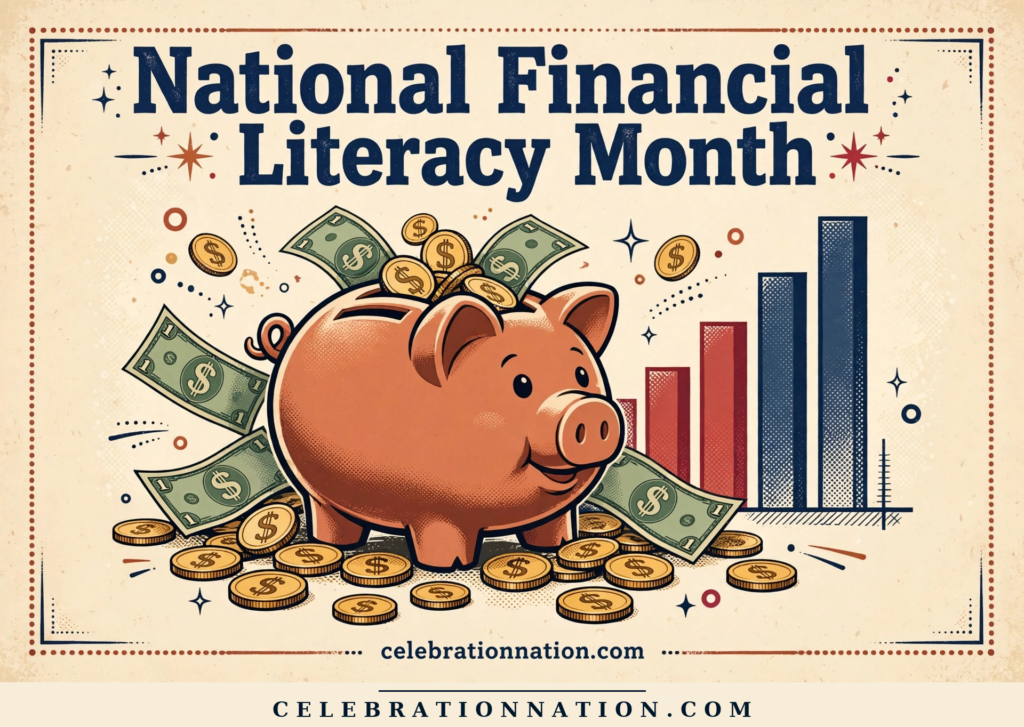
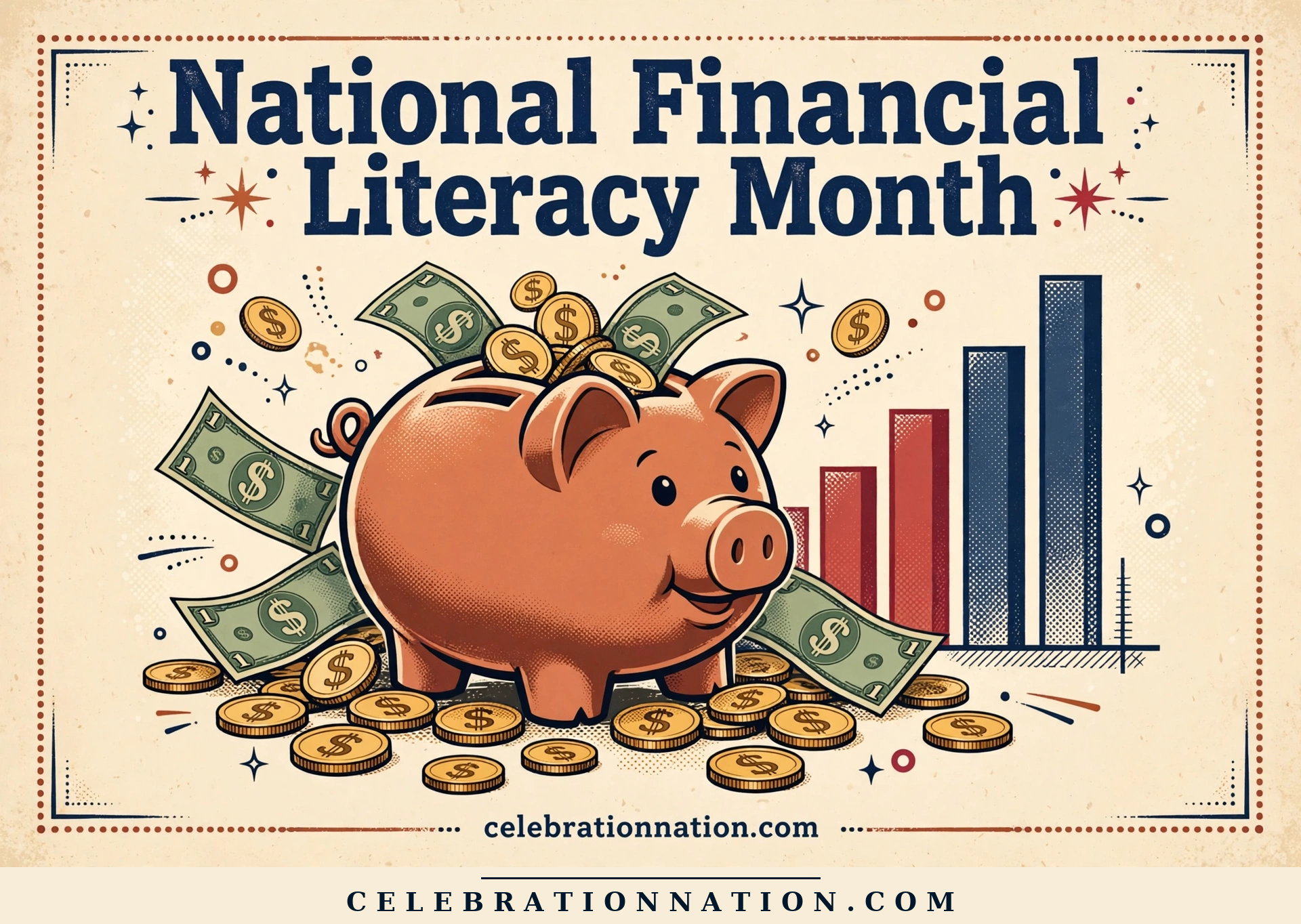
National Financial Literacy Month
National Financial Literacy Month is a plain-English invitation to get a little more comfortable with money.
- Roots
- First recognized in 2004 by the U.S. Senate
- Vibe
- Encouraging informed financial choices and empowerment.
- Hashtag
- #NationalFinancialLiteracyMonth
Ways to celebrate
Small, doable ways to celebrate National Financial Literacy Month.
- Check one account balance you've been avoiding.
- Set one small automatic transfer to savings — any amount counts.
- Book a free 15-minute call with a credit union or financial counselor.
- Talk with a partner or family member about one clear money goal.
- Teach a kid how to read a receipt.
Fast facts
The story
National Financial Literacy Month was established to raise awareness about the importance of financial education. Initiated in 2004 by the U.S. Senate, this month-long campaign aims to highlight the need for improved financial literacy among Americans of all ages. The goal is to promote financial skills that can lead to better financial stability and independence.
Read the full story
In the United States, financial literacy remains a pressing concern. Many Americans still lack confidence in basic financial concepts such as budgeting and saving. This gap in knowledge can lead to poor financial decisions, such as accumulating debt or failing to save for retirement. As we navigate an increasingly complex financial landscape, the need for education becomes even more critical.
Throughout April, various organizations and institutions will host events and workshops focused on financial education. These initiatives often include budgeting workshops, retirement planning sessions, and seminars on debt management. It's a time to reflect on one’s financial habits and seek out resources that can help improve financial literacy and stability. A financially educated community is a stronger community.
As we observe National Financial Literacy Month, it is essential to engage with the available resources, whether through online courses, local workshops, or community events. By fostering a culture of financial literacy, we can equip ourselves and future generations with the knowledge needed to make informed financial choices and achieve long-term financial success.
Worth knowing
Financial Workshops
Participate in local or online financial workshops. They can provide valuable insights into budgeting, saving, and investing.
Recommended Reads
Explore books on personal finance to deepen your understanding. Knowledge is a powerful tool for financial well-being.
Savings Challenges
Join or create a savings challenge with friends or family. It’s a fun way to encourage saving and financial responsibility.
Open Discussions
Start conversations about finances with family and friends. Sharing experiences can lead to better financial practices and support.
Did you know?
Did You Know?
The observance grew from Youth Financial Literacy Day, launched by the National Endowment for Financial Education in 2000.
On the Rise
The Jump$tart Coalition supports National Financial Literacy Month.
Global Concern
Financial literacy is a concern for adults around the world.
Young Savers
Teaching children about money management early helps them make smart decisions now and in the future.
State Efforts
Some states require high school students to take a financial literacy course before graduation.
Investment Knowledge
The U.S. Department of Education also promotes National Financial Literacy Month.
Financial Wellness
Financial wellness can lead to improved mental health and lower stress levels.
Around the world
Every culture celebrates a little differently.
- USUnited StatesObserving National Financial Literacy Month since 2004.
- CACanadaCanada promotes financial literacy through its own educational initiatives.
- GBUnited KingdomFinancial education is also a key topic in the UK, focusing on consumer rights and managing debt.
- AUAustraliaAustralia emphasizes financial literacy through its national curriculum and community programs.
- DEGermanyGermany offers financial education resources aimed at both youth and adults.
- INIndiaIndia has various initiatives to improve financial literacy among its population, especially in rural areas.
Coming up next
See the calendar


Celebrate every day, all year
Official gear from the people who track 1,700+ celebrations.
Browse the shop 2027 National Day Wall CalendarGet the 2026 edition free. 1,700+ observances.
Never miss a reason to celebrate.
One quick morning email with today's celebrations, ideas and posters. Free, unsubscribe anytime.
🎉 You're on the list! Watch your inbox for The Daily Confetti.