

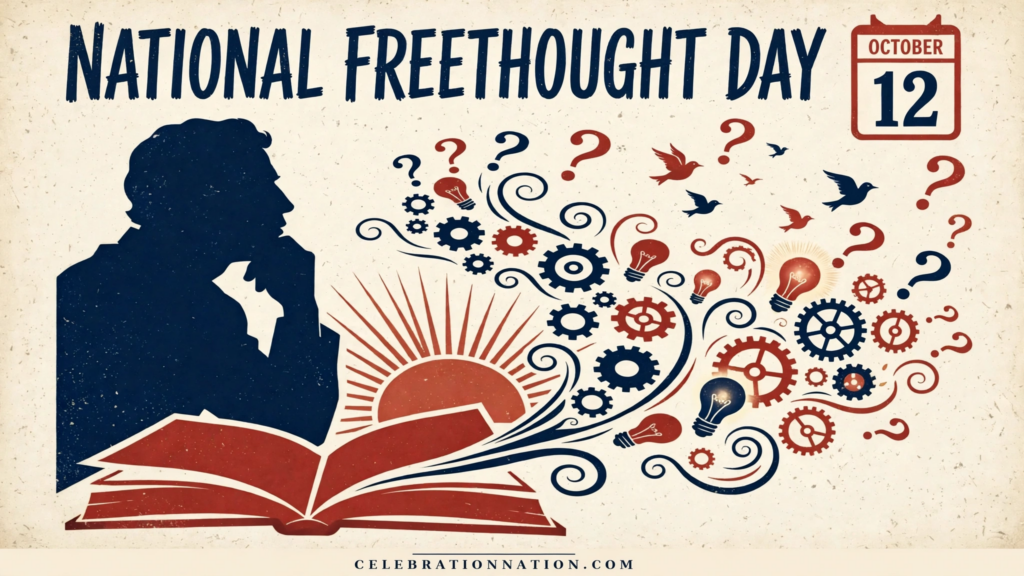
National Freethought Day
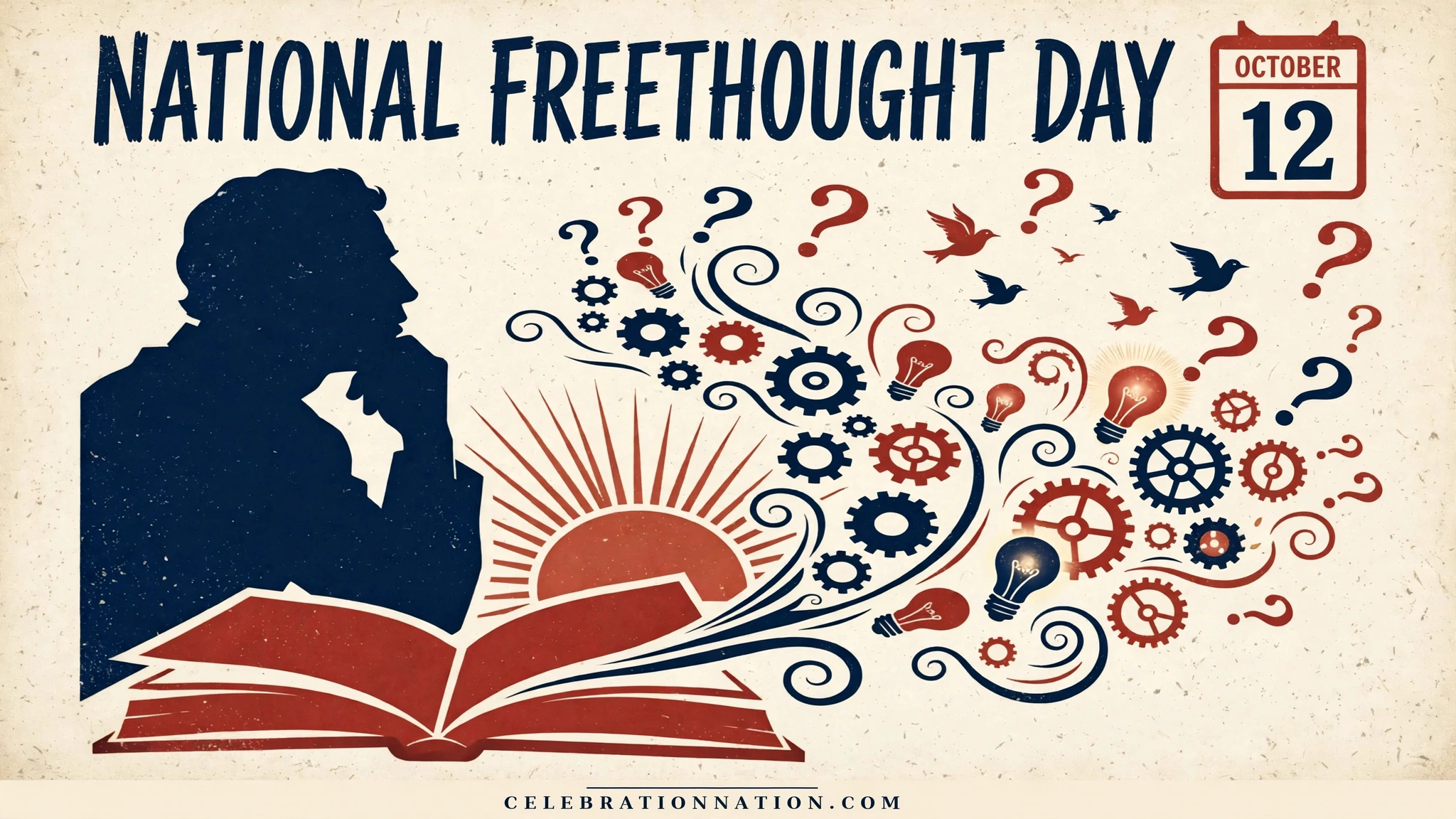
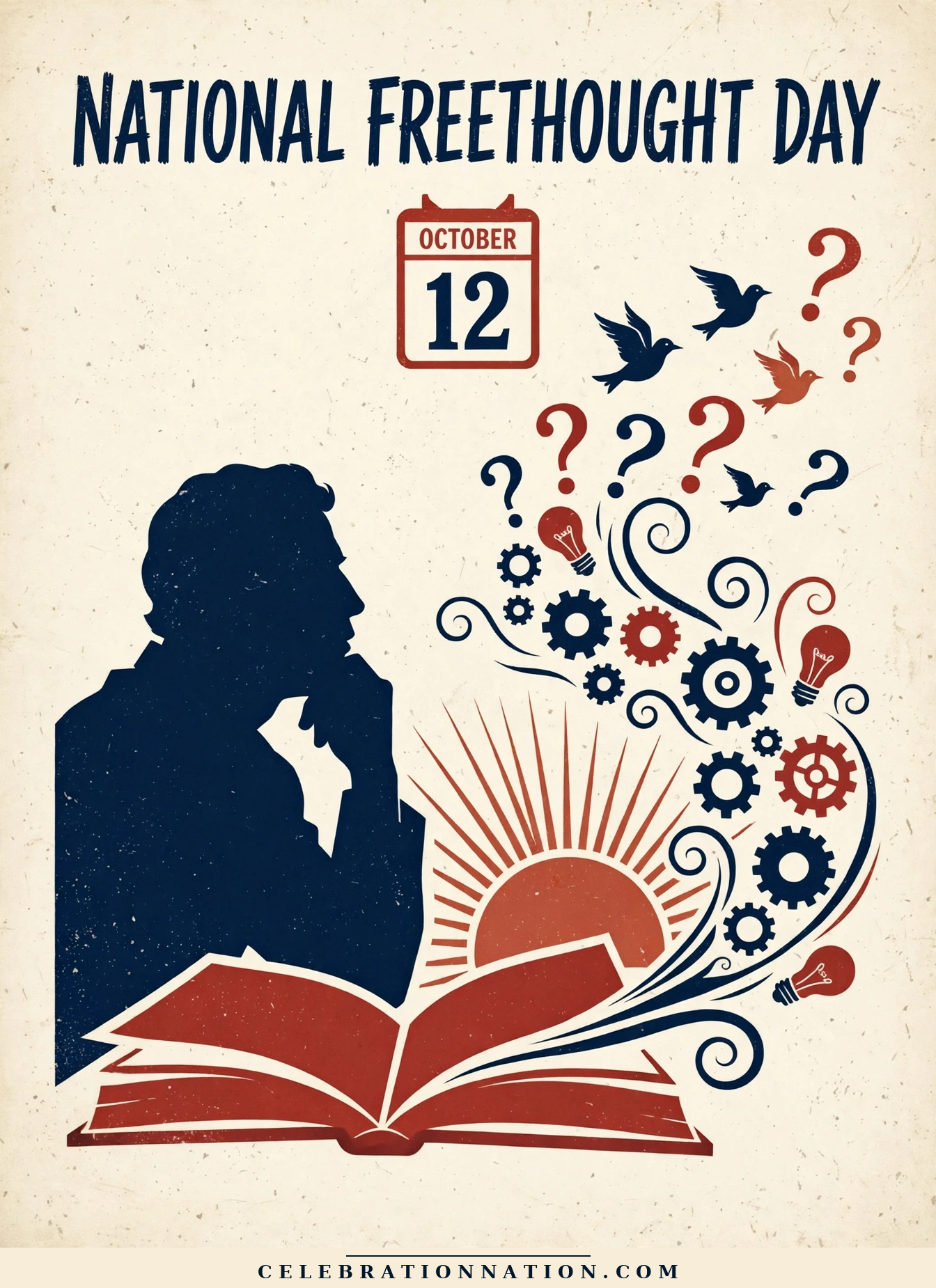
National Freethought Day invites everyone to embrace the spirit of independent thinking and reasoned discourse.
- Roots
- Promoted by freethought groups since at least 1997
- Vibe
- A day for reflection, discussion, and community engagement
- Also on Oct 12
- World Arthritis Day · Columbus Day · Indigenous Peoples’ Day
- Hashtag
- #NationalFreethoughtDay
3 ways to celebrate
Question one assumption
Pick a belief and examine it with fresh eyes.
Host a big-ideas dinner
Debate life's questions over a long meal.
Share a book
Recommend a book that changed how you think.
Plan ahead
National Freethought Day is observed on October 12 every year. Here is where it lands for the next ten years, handy for planners, marketers and party people.
Fast facts
The story
National Freethought Day, observed on October 12, serves as a reminder of the power of reason and the importance of questioning established beliefs. It encourages individuals to think critically and independently, fostering a society where ideas can be challenged and explored. The date marks Governor William Phips's 1692 letter that helped end the Salem witch trials' use of spectral evidence.
Read the full story
The celebration of freethought is not limited to the United States; it resonates with movements worldwide that advocate for rational discourse and secular governance. Various organizations and communities come together to celebrate this day through events that highlight the contributions of notable freethinkers throughout history. From philosophers like John Stuart Mill to modern advocates for science and reason, the legacy of freethought continues to influence our world.
As we reflect on the principles of freethinking, it becomes essential to engage with diverse perspectives and embrace the rich tapestry of human thought. A strong emphasis is placed on critical thinking and open dialogue, encouraging individuals to seek truth through inquiry rather than acceptance of dogma. This day serves as a call to action to foster environments where questioning and curiosity thrive.
Celebrating National Freethought Day can take many forms, from attending lectures and discussions to engaging in social media campaigns. Individuals are encouraged to share their thoughts on the importance of freethought and reason, creating spaces for dialogue and education. As this day unfolds each year, it offers an opportunity to reflect on the ongoing journey toward a more rational and just society.
Did you know?
Freethought and Science
Freethought is often associated with the scientific method, emphasizing evidence-based reasoning.
Historical Figures
Notable freethinkers include Thomas Paine, who advocated for reason and individual rights.
The Freethought Movement
The modern freethought movement began in the 19th century, challenging religious dogma.
Secular Organizations
Numerous organizations promote freethought, including the Freedom From Religion Foundation.
Global Reach
Freethought is a global movement, influencing social and political change in various countries.
Philosophical Roots
The roots of freethought can be traced back to ancient Greece and the Enlightenment.
Cultural Impact
Freethought has shaped modern discussions on ethics, governance, and education.
Around the world
Every culture celebrates a little differently.
- USUnited StatesNational Freethought Day originated in the U.S. and is celebrated widely across the country.
- GBUnited KingdomThe UK has a rich history of freethought, with significant contributions from philosophers and writers.
- AUAustraliaAustralia celebrates freethought through various secular organizations and events.
- CACanadaIn Canada, freethought movements emphasize secularism and freedom of belief.
- DEGermanyGermany's Enlightenment thinkers significantly influenced global freethought principles.
- FRFranceFrance has a long-standing tradition of secularism and freethought, highlighted during the Enlightenment.
Keep the party going
See the calendar

Celebrate every day, all year
Official gear from the people who track 1,700+ celebrations.
Browse the shop 2027 National Day Wall CalendarGet the 2026 edition free. 1,700+ observances.
Never miss a reason to celebrate.
One quick morning email with today's celebrations, ideas and posters. Free, unsubscribe anytime.
🎉 You're on the list! Watch your inbox for The Daily Confetti.