
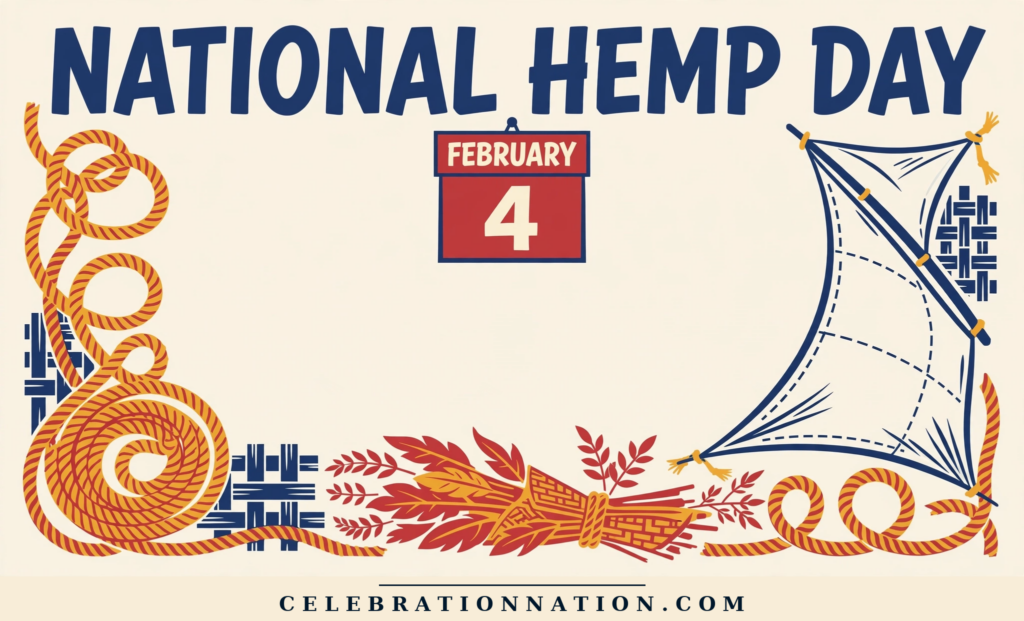
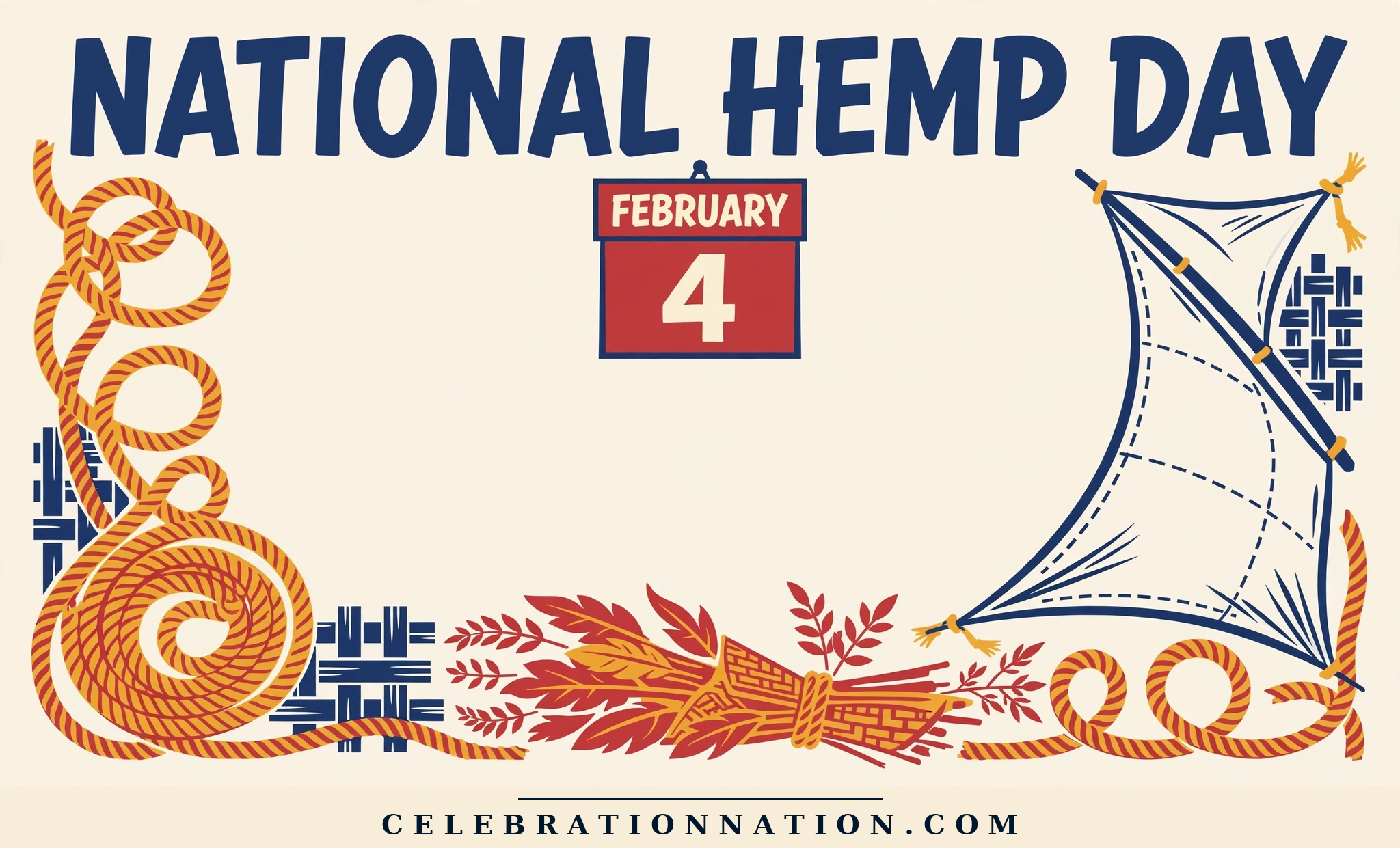
National Hemp Day
Discover the fascinating world of hemp and its important role in sustainability and culture.
- Roots
- Founded by cbdMD; first observed in 2019
- Vibe
- Celebratory and educational
- Also on Feb 4
- International Day of Human Fraternity · Sweater Day · Thank a Mail Carrier Day
- Hashtag
- #NationalHempDay
3 ways to celebrate
Try a hemp snack
Toss hemp seeds into a smoothie or salad and taste what they add.
Share hemp recipes
Cook a meal using hemp oil or hemp seeds and swap recipes with friends.
Learn hemp uses
Look up all the things made from hemp, from paper to rope to lotion, and share your findings.
Plan ahead
National Hemp Day is observed on February 4 every year. Here is where it lands for the next ten years, handy for planners, marketers and party people.
Fast facts
The story
Hemp has a storied place in American history, dating back to colonial times when it was cultivated for its strong fibers. Early settlers relied on hemp for rope, clothing, and other essential goods. Its resurgence in recent years highlights not only its agricultural importance but also its adaptability in various industries, from textiles to construction materials.
Read the full story
On February 4th, National Hemp Day serves as a reminder of hemp's potential in promoting sustainability. As more consumers seek eco-friendly alternatives, hemp has emerged as a viable option for reducing our carbon footprint. This versatile crop requires less water and pesticides compared to traditional crops, making it a favored choice for sustainable farming practices.
In addition to its environmental benefits, hemp offers a wide range of products, from food items like hemp seeds and oils to raw materials for biodegradable plastics. The growing hemp industry is creating jobs and fostering innovation, while also being a critical component of a circular economy.
As we celebrate National Hemp Day, it is essential to advocate for policies that support hemp production and research. With its deep historical roots and promising future, hemp stands as a testament to the potential of natural resources in addressing modern challenges.
Did you know?
Hemp vs. Marijuana
Hemp is a variety of Cannabis sativa but contains minimal THC, making it non-psychoactive.
Historical Uses
Hemp was used to make ropes for the first American flag.
Fast Growth
Hemp can grow in a variety of climates and is incredibly fast-growing.
Nutritional Benefits
Hemp seeds are rich in protein, omega-3, and omega-6 fatty acids.
Renewable Resource
Hemp can be harvested multiple times a year, making it a renewable resource.
Economic Impact
The U.S. hemp market is projected to grow significantly in the coming years.
Cultural Significance
Hemp has been an important crop for many cultures throughout history.
Around the world
Every culture celebrates a little differently.
- USUnited StatesHemp has a rich history in the U.S., and its cultivation is now seeing a revival.
- CACanadaCanada is one of the largest producers of hemp in North America, focusing on sustainability.
- DEGermanyGermany has embraced hemp farming, promoting its ecological benefits and diverse uses.
- GBUnited KingdomThe UK is increasingly exploring hemp for its potential in various sectors, including textiles.
- AUAustraliaAustralia is expanding its hemp industry, focusing on both cultivation and processing.
- NZNew ZealandNew Zealand is recognizing the economic and environmental potential of hemp.
Keep the party going
See the calendar

Celebrate every day, all year
Official gear from the people who track 1,700+ celebrations.
Browse the shop 2027 National Day Wall CalendarGet the 2026 edition free. 1,700+ observances.
Never miss a reason to celebrate.
One quick morning email with today's celebrations, ideas and posters. Free, unsubscribe anytime.
🎉 You're on the list! Watch your inbox for The Daily Confetti.