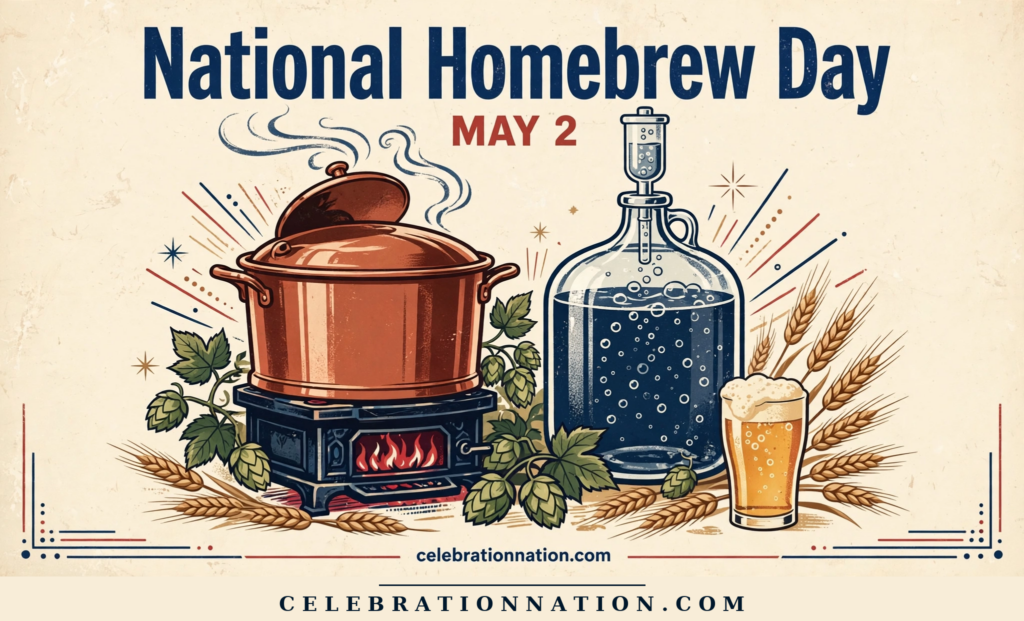
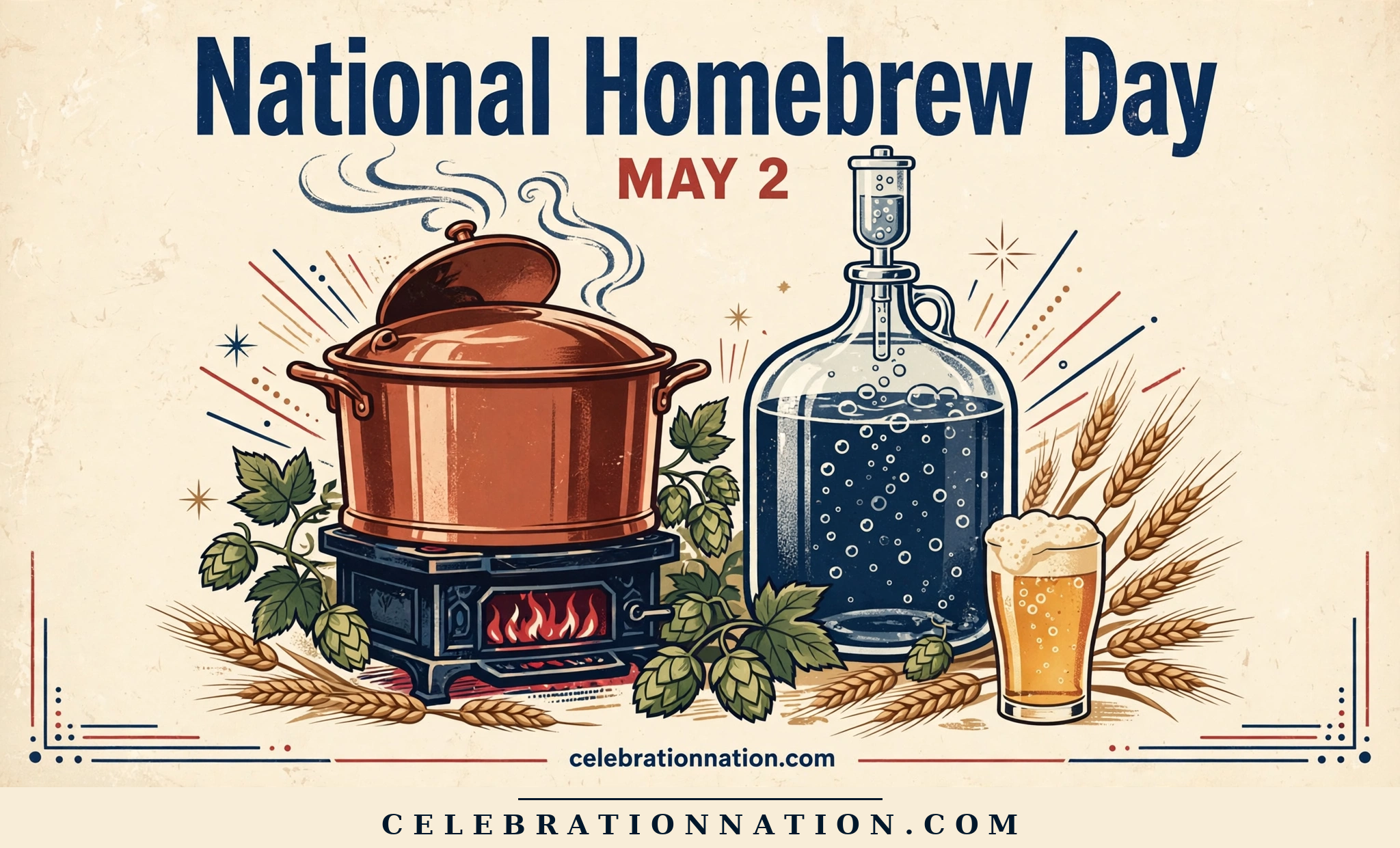
National Homebrew Day
The first Saturday in May. A national salute to home brewing — the 3 million+ Americans turning grain and water into beer in basements, garages, and kitchens, and keeping alive a tradition as old as the country itself.
- Vibe
- Patient & Bubbly
- Also on May 2
- International Female Ride Day · International Drone Day · Fitness Day
- Hashtag
- #NationalHomebrewDay
Ways to celebrate
From curious beginner to certified brewer, ways in:
- 🍺 Visit a local homebrew shop. Tell them you want to start. They'll sell you a starter kit ($80-120) with everything to make your first 5-gallon batch.
- 🏭 Tour a local brewery. Most craft breweries started as home brewers. Great inspiration; often free.
- 📖 Join the AHA Big Brew. American Homebrewers Association organizes a worldwide brew-the-same-recipe day. Find a local host at homebrewers.org.
- 📚 Read one chapter of Palmer. "How to Brew" by John Palmer is the gospel. Free first edition online.
- 🎓 Take a class. Many homebrew shops run free beginner classes today.
Make it your kind of celebration
Family
Brewing is a weekend project kids can help with in supervised ways — grain mashing, hop smelling, bottling. Dad's hobby with kid participation.
Kids
Kids can help smell hops and taste fresh wort (before alcohol). A family brew day teaches science, patience, and process — all age-appropriate.
Couples
Brewing together is a great couples project. One of you manages temperature; the other runs the clock. Beer at the end, memories throughout.
Office
Office homebrew club is increasingly common. Shared equipment, rotating brew days, tasting evenings. Strong camaraderie tool.
School
Grown-up education only. Adult-ed classes on homebrewing are wildly popular at community colleges.
Community
Homebrew clubs in every major city. Free to join. Monthly meetings, group brews, tastings, competitions. Warmest hobby communities there are.
Just me
The classic solo brewer's arc: first batch drinkable; second batch good; third batch obsession for life.
Plan ahead
National Homebrew Day is observed on the first Saturday in May. Here is where it lands for the next ten years, handy for planners, marketers and party people.
Fast facts
The story
Home brewing is older than America. But for 58 years of the 20th century, it was illegal.
Read the full story
Americans have brewed beer at home since colonial times. George Washington's recipe for "Small Beer" survives in his papers. Thomas Jefferson built a brewery at Monticello. Benjamin Franklin wrote about brewing. Home brewing was universal in early America, water was often unsafe; beer was a daily staple.
Prohibition, starting in 1920, outlawed the production of all alcohol, including home brewing. When the 21st Amendment repealed Prohibition in 1933, it legalized commercial brewing but (due to a legislative oversight) kept home brewing illegal. For the next 45 years, home brewing was a federal crime.
In 1978, President Jimmy Carter signed HR 1337 into law, legalizing home brewing of up to 200 gallons per year per household. The law was championed by Senator Alan Cranston of California, pushed through by small-scale brewing advocates. The 1978 legalization launched the American craft-beer revolution. Home brewers like Ken Grossman (Sierra Nevada), Jim Koch (Samuel Adams), and Sam Calagione (Dogfish Head) went commercial within a decade, and craft beer exploded from
The American Homebrewers Association (founded 1978) organizes National Homebrew Day, always the first Saturday in May. The same day is "Big Brew," when tens of thousands of home brewers worldwide simultaneously brew the same recipe. It's the largest synchronized beer-making event on Earth. 3 million+ Americans now brew at home. Most started because someone invited them over for a brew day.
Beer is one of the simplest beverages on earth. Four ingredients, infinite combinations:
Six classic beer styles. A beginner can brew all of these with basic equipment:
Did you know?
Big Brew is a global event.
Every year, American Homebrewers Association releases a "recipe of the day" weeks ahead. On National Homebrew Day, thousands of brewers in 20+ countries brew the same recipe simultaneously. The largest coordinated brewing event in human history.
Jimmy Carter, accidental craft beer hero.
Carter signed HR 1337 on October 14, 1978, legalizing home brewing. He signed 1,200+ bills that year. This one quietly launched a multibillion-dollar industry.
America's 10,000+ craft breweries.
From ~80 in 1980 to over 10,000 today. Almost all founded by ex-home brewers. The 1978 legalization was the economic butterfly flap.
Beer is legally a food.
Under FDA regulations, beer is classified as a food product. This is why ingredients must be listed if beer is sold commercially, and why beer labeling rules are stricter than wine labeling.
Keep the party going
See the calendar
Celebrate every day, all year
Official gear from the people who track 1,700+ celebrations.
Browse the shop 2027 Wall Calendar, signed by Marlo AndersonSigned by the founder of National Day Calendar.
Never miss a reason to celebrate.
One quick morning email with today's celebrations, ideas and posters. Free, unsubscribe anytime.
🎉 You're on the list! Watch your inbox for The Daily Confetti.