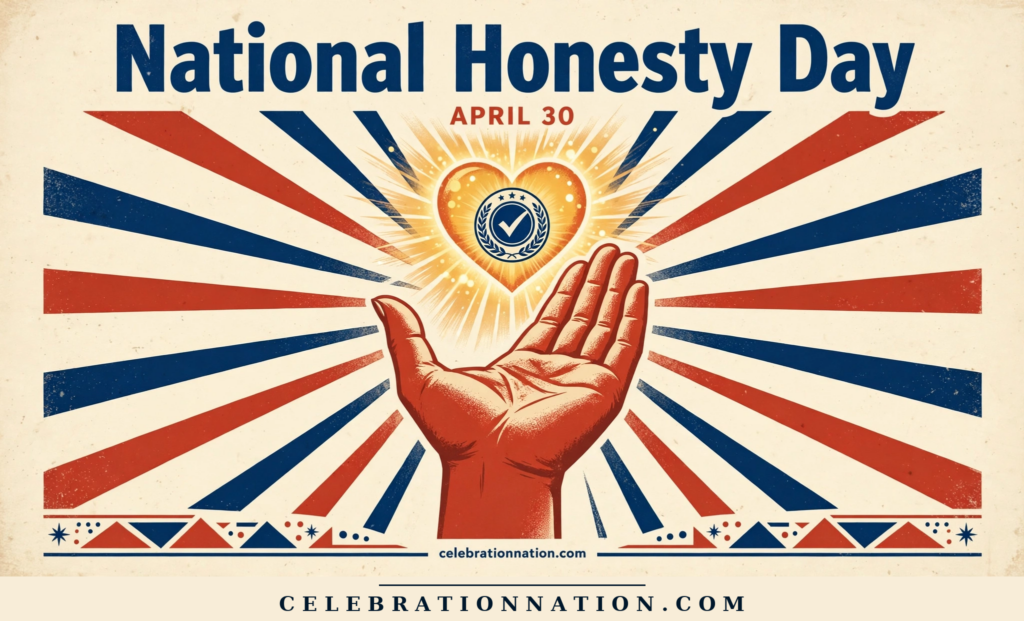
National Honesty Day
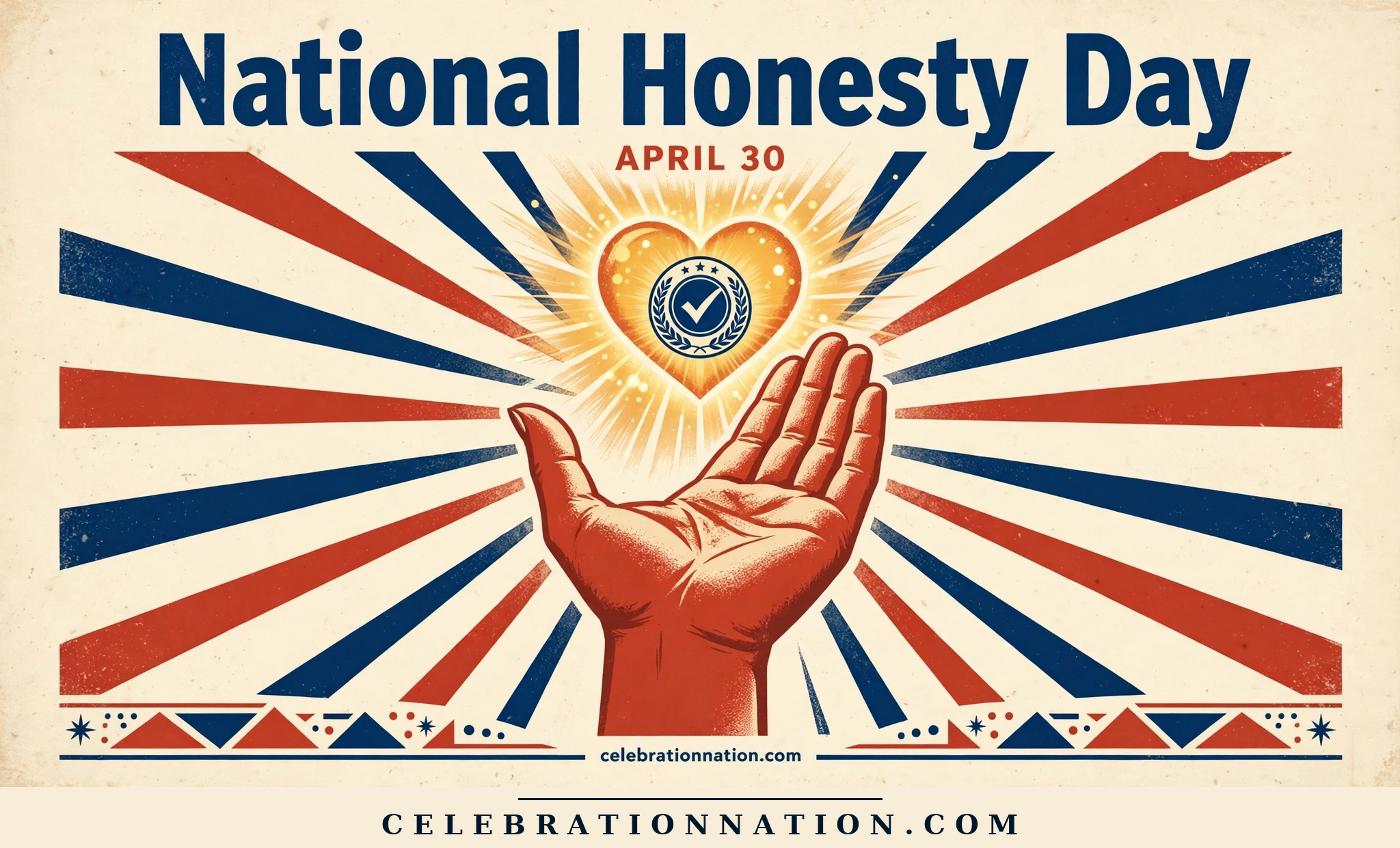
No pranks, no tall tales, no fine print. National Honesty Day on April 30 was founded as the month-capping antidote to April Fools' Day — a whole 24 hours dedicated to telling the truth.
- Vibe
- Unvarnished
- Also on Apr 30
- International Jazz Day · Military Brats Day · Oatmeal Cookie Day
- Hashtag
- #NationalHonestyDay
Ways to celebrate
Harder than it sounds. A few real ways in:
- 📝 Write one honest thing down. To a person, to yourself, to a journal. Something you've been avoiding saying.
- 💬 Have one real conversation. The kind you've been putting off. Short is fine; honest is the point.
- 🙅 Notice your small lies. Most dishonesty is tiny — "I'm good," "I'll be there in 5 minutes," "I read it." Count yours today.
- 📖 Read one honest memoir. The memoir genre at its best teaches what telling the truth about yourself actually costs.
- 🙏 Apologize if you owe one. "I was wrong" is four syllables. They change relationships.
Make it your kind of celebration
Family
Family dinner with the rule: one honest appreciation, one honest request per person. Eight sentences, real ones. Lighter than it sounds.
Kids
Kids are often more honest than adults. Let them teach you. Ask: "If you could tell one person something honest today and have it be okay, what would it be?"
Couples
The appreciation + request structure is gold for couples. Try it tonight.
Office
Give one honest, specific piece of positive feedback to someone on your team today. Not praise — feedback. Feels different.
School
Teach the difference between truth, kindness, and necessity. "Honest" doesn't mean "say every thought." It means "don't say the false thing."
Community
Neighborhood-watch energy, but for truth. If there's a community issue you've been quiet about, today's a day to bring it up at the next meeting.
Just me
Journal prompt: "The thing I keep from myself is..." Fill in. Sit with it.
Plan ahead
National Honesty Day is observed on April 30 every year. Here is where it lands for the next ten years, handy for planners, marketers and party people.
Fast facts
The story
National Honesty Day was designed to be the bookend to a month that starts with America's most celebrated day of lying.
Read the full story
The holiday was founded in the early 1990s by M. Hirsh Goldberg, a Maryland author and former press secretary who had written a book called The Book of Lies. He noticed that April opens with April Fools' Day, a day dedicated to elaborate, affectionate lying, and argued the month should close with its opposite: a day dedicated to telling the truth. April 30 was the natural pick.
Every year since, Goldberg gave out the "Abe Award" named for Honest Abe Lincoln, to the public figure he considered most honest. Recipients over the years included Ted Koppel, Senator Bob Graham, the police officer who returned a $1 million bag of cash, and a handful of whistle-blowers. Goldberg died in 2021; the Abe Award no longer runs, but April 30 remains a quiet civic prompt to do the unexciting thing: tell the truth.
Researchers have studied how much people lie. The average American tells 1-2 lies per day, mostly small ones, "I'm fine," "I'm five minutes away," "I love your haircut." Psychologist Bella DePaulo's 1996 study of 147 adults over a week found that the average person lies in about 20-30% of their social interactions. Most of the lies are what researchers call "pro-social" meant to smooth, not to harm. But the cumulative effect matters.
National Honesty Day isn't about confessing everything. It's about noticing. Noticing where the defaults tip toward avoidance, where relationships get thinner because nothing real gets said, where one hard conversation could replace months of silent misery. Today's a single-day invitation to say one true thing.
Not all honesty is the same. Four flavors worth practicing:
M. Hirsh Goldberg gave out the Abe Award annually for public figures of uncommon honesty. Six past recipients worth remembering:
Did you know?
Average American lies 1-2 times per day.
Per Bella DePaulo's widely-cited 1996 research. Most lies are small and pro-social, social lubricant rather than malice.
Children learn to lie around age 2-3.
Psychologists consider first successful lying a cognitive milestone, it requires theory of mind (understanding what someone else knows). Parenting handbook surprise: it's developmentally normal and healthy.
Polygraphs are ~60-70% accurate.
Not good enough for court in most jurisdictions. The device measures physiological stress, not truth. Practiced liars can beat them; nervous truth-tellers can fail them.
Lincoln was called "Honest Abe" for a reason.
As a young store clerk in 1830s Illinois, Lincoln famously walked miles to return a few cents of overpayment to a customer. The nickname, and the legend, was real, not spin.
Keep the party going
See the calendar
Celebrate every day, all year
Official gear from the people who track 1,700+ celebrations.
Browse the shop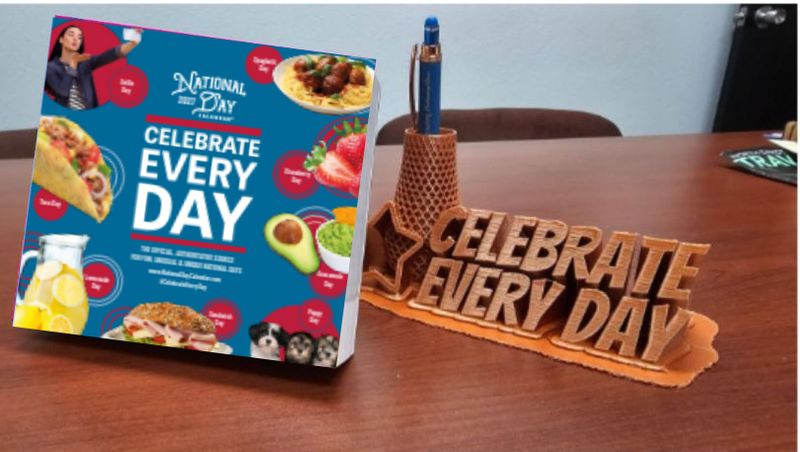 2027 National Day Desk CalendarA new celebration every morning. Daily tear-off.
Never miss a reason to celebrate.
One quick morning email with today's celebrations, ideas and posters. Free, unsubscribe anytime.
🎉 You're on the list! Watch your inbox for The Daily Confetti.