




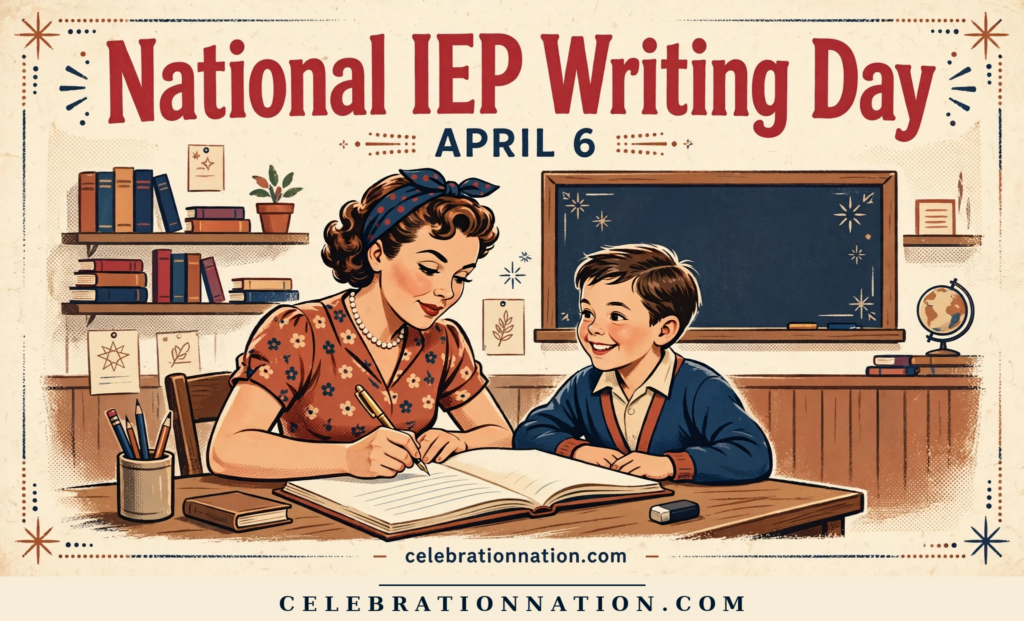
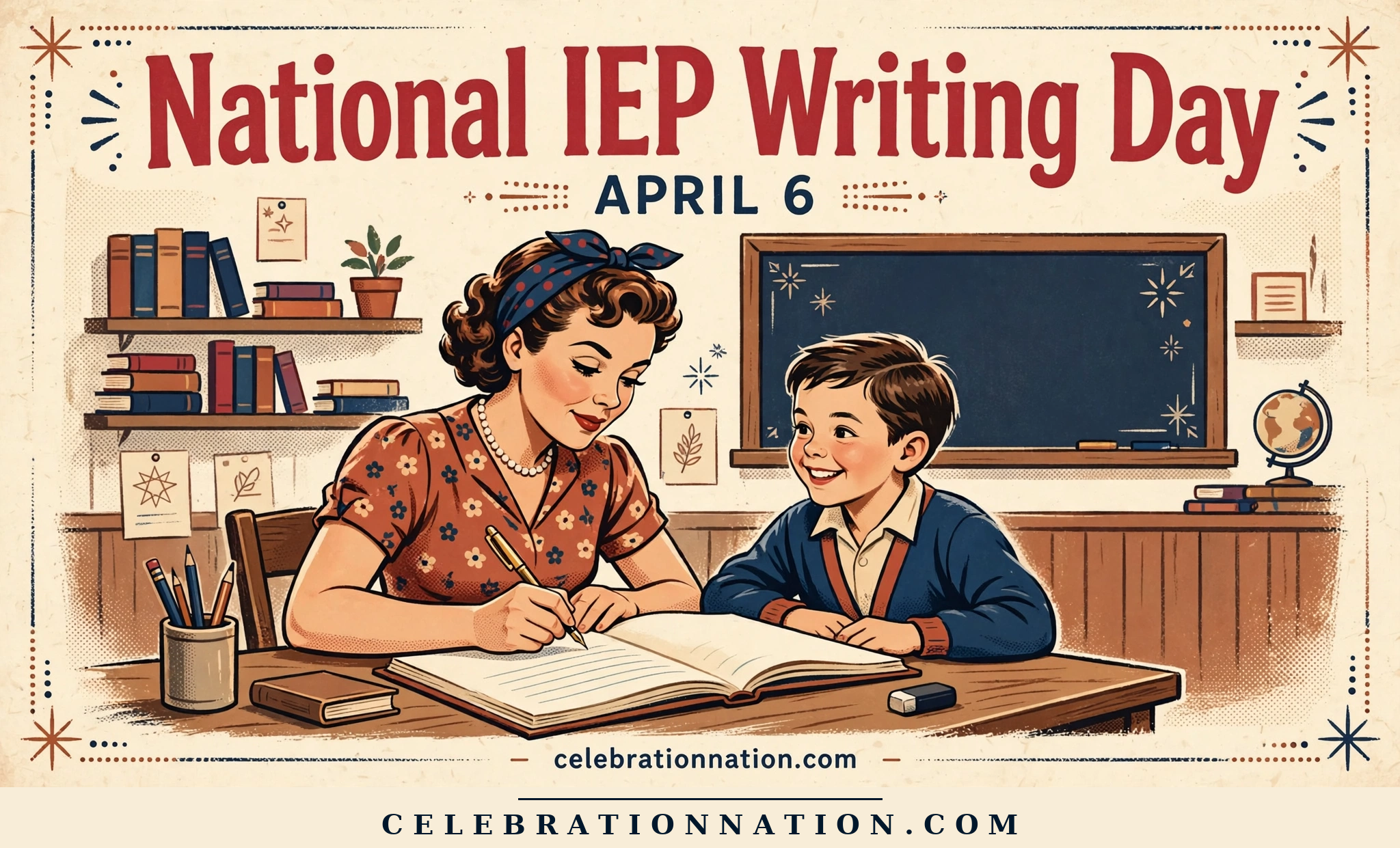
National IEP Writing Day
National IEP Writing Day is a small but real reason to pause, notice, and celebrate — together if we can.
- Roots
- Formed in 2022 through National Day Calendar and The Intentional IEP
- Vibe
- Community collaboration and advocacy
- Also on Apr 6
- Bohring-Opitz Syndrome (Bos) Awareness Day · Teflon Day · New Beer’s Eve
- Hashtag
- #NationalIEPWritingDay
Ways to celebrate
Small, doable ways to celebrate National IEP Writing Day.
- Do one small thing that makes the day feel marked.
- Tell someone what you're celebrating and why.
- Share a post, a photo, or a memory connected to it.
- Make a tiny tradition — something you could do again next year.
- Let it be simple. Not every celebration has to be a production.
Make it your kind of celebration
Family
Do one small thing together that everyone will remember.
Kids
Turn it into a craft, a story, or a snack — meet them where they are.
Couples
Use the day as an excuse for a little intentional time together.
Office
Acknowledge the day in the team chat or at a stand-up. Small, sincere, fast.
School
Anchor a short lesson or activity around the day.
Community
Share, volunteer, or donate to make the day mean something locally.
Just me
Celebrate quietly and completely. One person can still mark a day.
Plan ahead
National IEP Writing Day is observed on the first Monday in April. Here is where it lands for the next ten years, handy for planners, marketers and party people.
Fast facts
The story
National IEP Writing Day is more than just a day on the calendar; it represents a collective effort to ensure students with disabilities have access to personalized education. Each year, educators, parents, and advocates come together to emphasize the importance of creating effective Individualized Education Programs. These tailored plans are essential for addressing the unique needs of each student, fostering an inclusive educational environment.
Read the full story
The Individuals with Disabilities Education Act (IDEA), enacted in 1975, lays the groundwork for IEPs, ensuring that students with disabilities receive a Free Appropriate Public Education (FAPE). IEPs serve as legal documents that outline specific educational goals and the services required to achieve them. On National IEP Writing Day, stakeholders are encouraged to reflect on these crucial components and collaborate on their development.
For families, navigating the IEP process can be overwhelming. However, with the right support, they can take an active role in shaping their child's educational journey. This day serves as a reminder of the importance of **advocacy** and partnership among parents, teachers, and specialists. By working together, they can create meaningful IEPs that truly reflect the needs and aspirations of students.
As we observe National IEP Writing Day, it is vital to celebrate the contributions of educators and advocates who work tirelessly to support students with disabilities. Their dedication not only impacts individual lives but also strengthens the educational system as a whole. Engaging in this dialogue fosters a more inclusive society where every student has the opportunity to thrive.
Did you know?
IEP Components
An IEP typically includes information about the student’s current performance, measurable annual goals, and the specific services provided.
Legal Rights
Under IDEA, parents have the right to participate in the IEP process, advocating for their child's educational needs.
IEP Meetings
IEP meetings must be held at least once a year, but can be convened more frequently if needed.
Diverse Needs
IEPs are designed to address a wide range of disabilities, including learning disabilities, speech impairments, and autism.
Transition Planning
For older students, IEPs should include transition planning to prepare them for life after high school.
Collaboration Importance
Research shows that collaborative IEP teams lead to more effective educational outcomes for students.
Parental Involvement
Active parental involvement in the IEP process is linked to improved student performance and satisfaction.
Around the world
Every culture celebrates a little differently.
- USUnited StatesNational IEP Writing Day is recognized across the U.S. as a day to focus on the importance of individualized education.
- CACanadaSimilar initiatives in Canada emphasize the need for tailored education plans for students with disabilities.
- GBUnited KingdomIn the UK, Education Health and Care Plans (EHCPs) serve a similar purpose to IEPs, ensuring support for children with special educational needs.
- AUAustraliaAustralia also recognizes the importance of personalized educational plans through Individual Education Plans (IEPs), focusing on inclusive education.
- DEGermanyGermany's approach to special education includes tailored plans to support students in mainstream schools, reflecting a commitment to inclusion.
- FRFranceIn France, educational support for students with disabilities is provided through individual plans, highlighting the global movement towards inclusive education.
Keep the party going
See the calendar

Celebrate every day, all year
Official gear from the people who track 1,700+ celebrations.
Browse the shop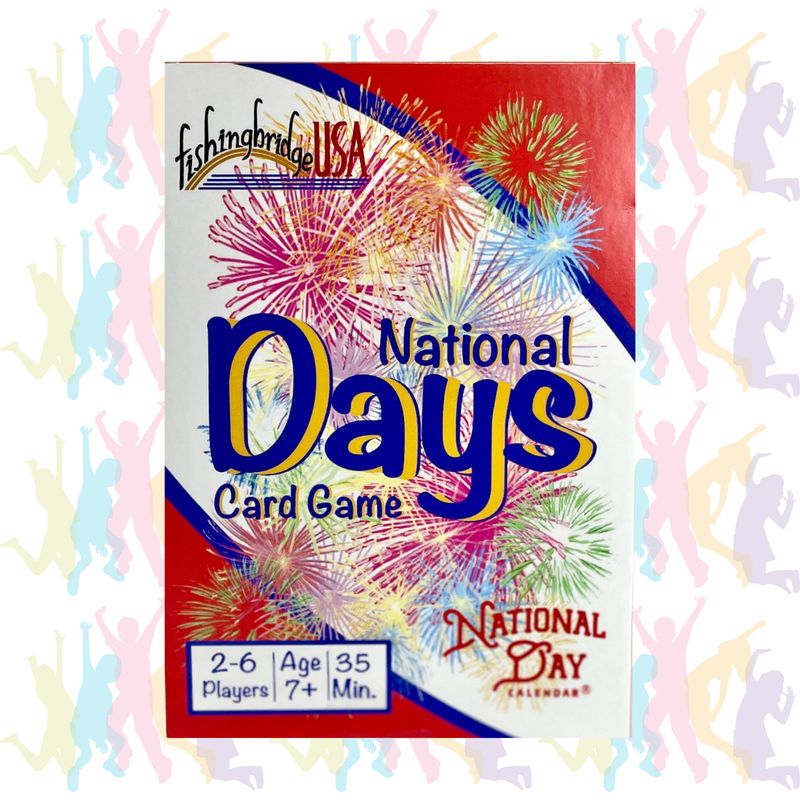 National Day Celebration Card GameA party in a box, any day of the year.
Never miss a reason to celebrate.
One quick morning email with today's celebrations, ideas and posters. Free, unsubscribe anytime.
🎉 You're on the list! Watch your inbox for The Daily Confetti.