


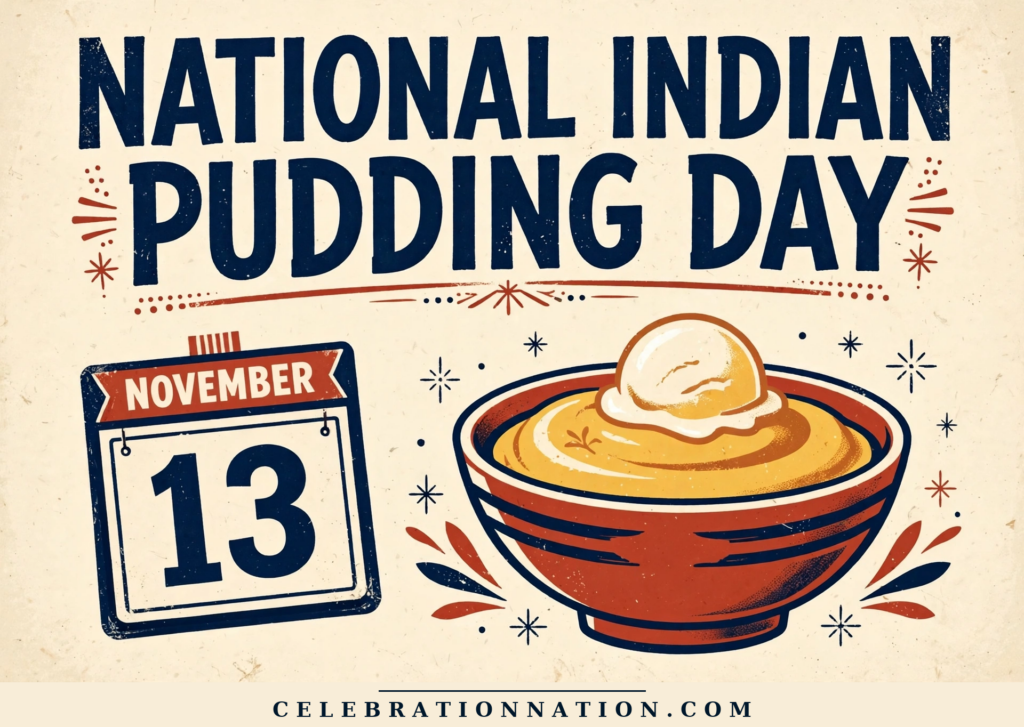
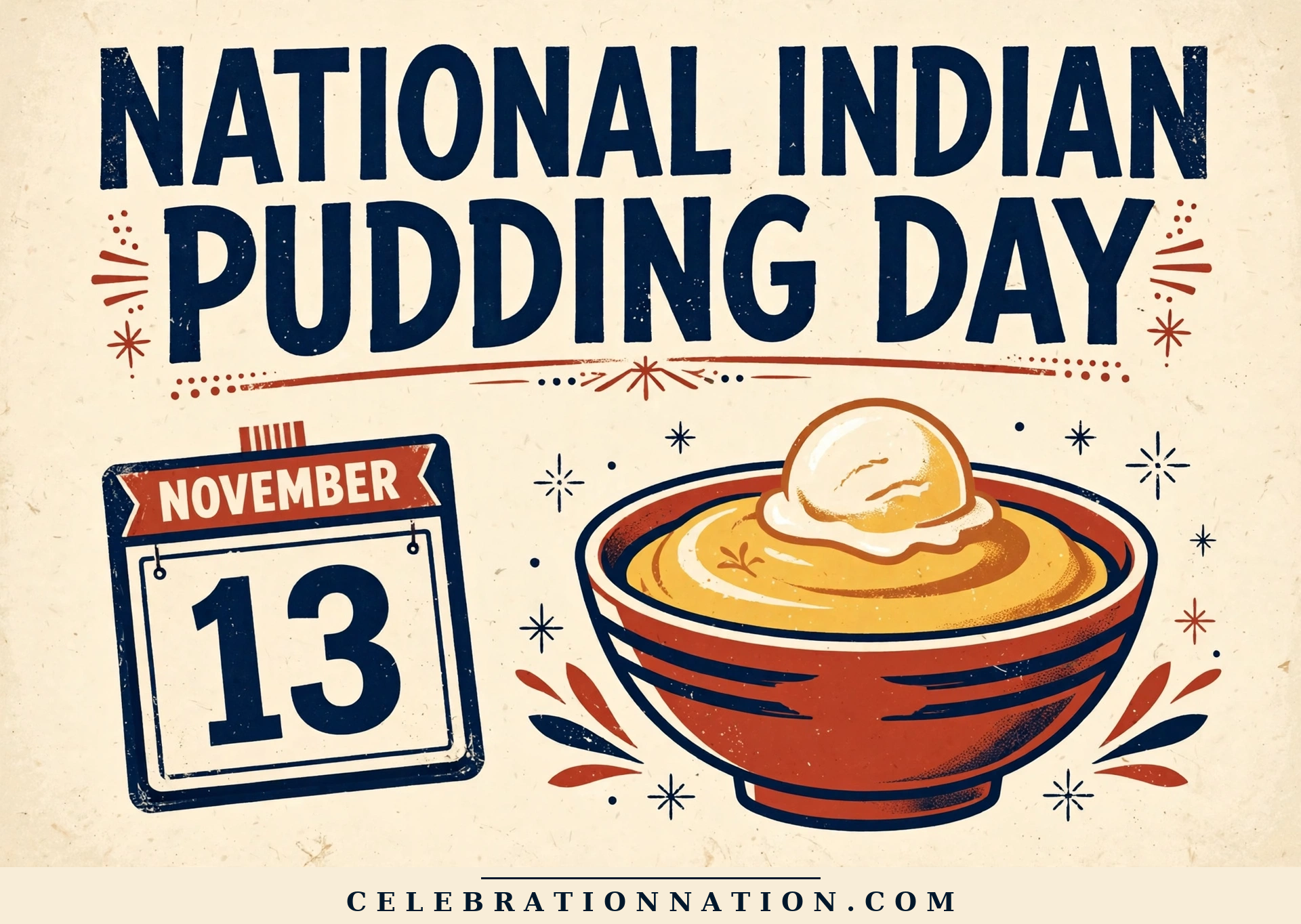
National Indian Pudding Day
Experience the delight of a classic dessert that has stood the test of time.
- Roots
- New England, United States
- Vibe
- Comforting and nostalgic
- Also on Nov 13
- Friday the 13th · World Kindness Day
- Hashtag
- #NationalIndianPuddingDay
3 ways to celebrate
Bake it slow
Stir cornmeal, molasses and spices, then bake low and slow. Serve warm with cream.
Dessert night
Serve Indian pudding to friends with vanilla ice cream. Old-fashioned comfort.
Bring a pan
Carry a pan of Indian pudding to share. New England nostalgia for all.
Plan ahead
National Indian Pudding Day is observed on November 13 every year. Here is where it lands for the next ten years, handy for planners, marketers and party people.
Fast facts
The story
National Indian Pudding Day falls on November 13, a date that honors this rich, historical dessert. Indian pudding is a traditional New England dish that has its roots in the early colonial days. It combines cornmeal, milk, and spices, resulting in a warm, comforting treat that evokes the spirit of early American cooking.
Read the full story
The origins of Indian pudding can be traced back to the 17th century when early settlers adapted their recipes from European pudding traditions. Corn, a staple crop for Native Americans, became a key ingredient, and the dish reflects a blend of Native American and colonial culinary practices. As settlers faced harsh winters, this pudding provided nourishment and warmth.
The texture of Indian pudding is dense and custard-like, often served warm with a scoop of vanilla ice cream or a drizzle of heavy cream on top. As you enjoy this dish, remember its significance in American history, connecting us to our roots and the flavors of our ancestors.
Today, Indian pudding remains a beloved dessert in many New England homes, with variations that reflect personal and regional tastes. Celebrating National Indian Pudding Day is not just about the food, but also about honoring the stories and traditions that have been passed down through generations.
Did you know?
Historical Significance
Indian pudding takes its name from 'Indian meal,' the colonists' term for cornmeal.
Regional Variations
Different New England states have their own variations, often incorporating local ingredients.
Culinary Fusion
The dish is a blend of Native American and colonial European cooking traditions.
Traditional Cooking Method
Historically, Indian pudding was baked in a wood-fired oven for hours to develop its flavor.
Holiday Favorite
Indian pudding is often served during Thanksgiving as a seasonal treat.
Cultural Recognition
It evolved from hasty pudding, which English colonists brought to North America.
Modern Comeback
In recent years, Indian pudding has seen a revival in interest, with many chefs reinterpreting the dish.
Around the world
Every culture celebrates a little differently.
- USNew EnglandThe birthplace of Indian pudding, where the dish remains a cherished part of local cuisine.
- USMassachusettsHome to many traditional recipes and celebrations of Indian pudding in local restaurants.
- USConnecticutConnecticut’s culinary landscape features Indian pudding as a seasonal favorite.
- USRhode IslandRhode Island is known for its variations of the dish, often served in local diners.
- USMaineMaine honors its heritage with Indian pudding as a staple dessert during holidays.
- USVermontVermont adds its twist to the classic pudding, incorporating local maple syrup.
Keep the party going
See the calendar

Celebrate every day, all year
Official gear from the people who track 1,700+ celebrations.
Browse the shop 2027 Wall Calendar, signed by Marlo AndersonSigned by the founder of National Day Calendar.
Never miss a reason to celebrate.
One quick morning email with today's celebrations, ideas and posters. Free, unsubscribe anytime.
🎉 You're on the list! Watch your inbox for The Daily Confetti.