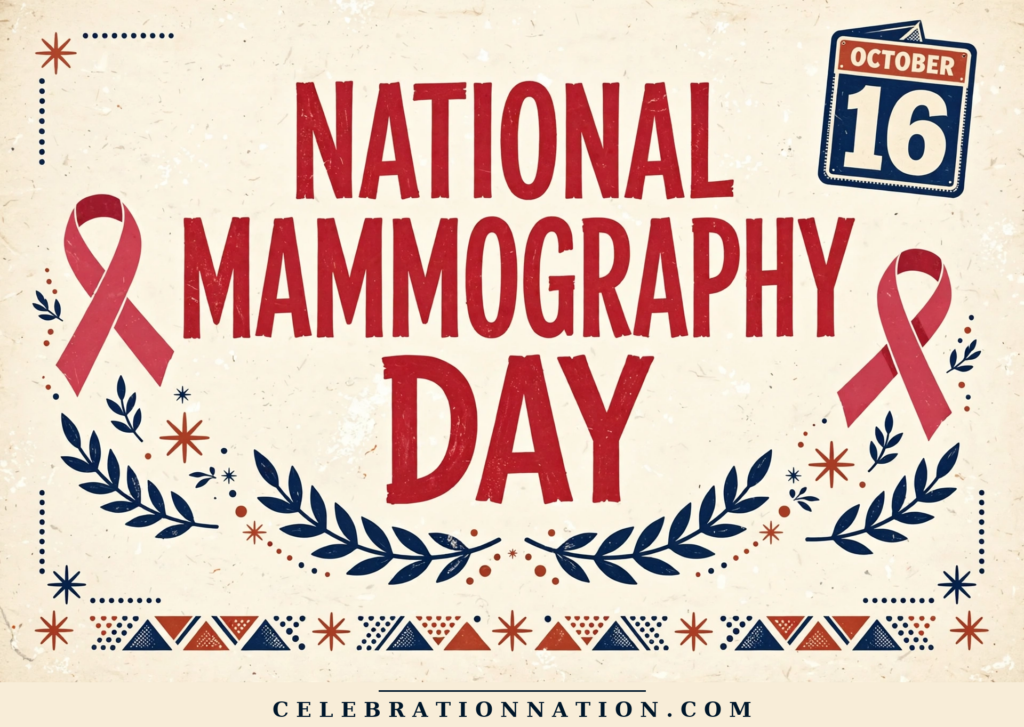
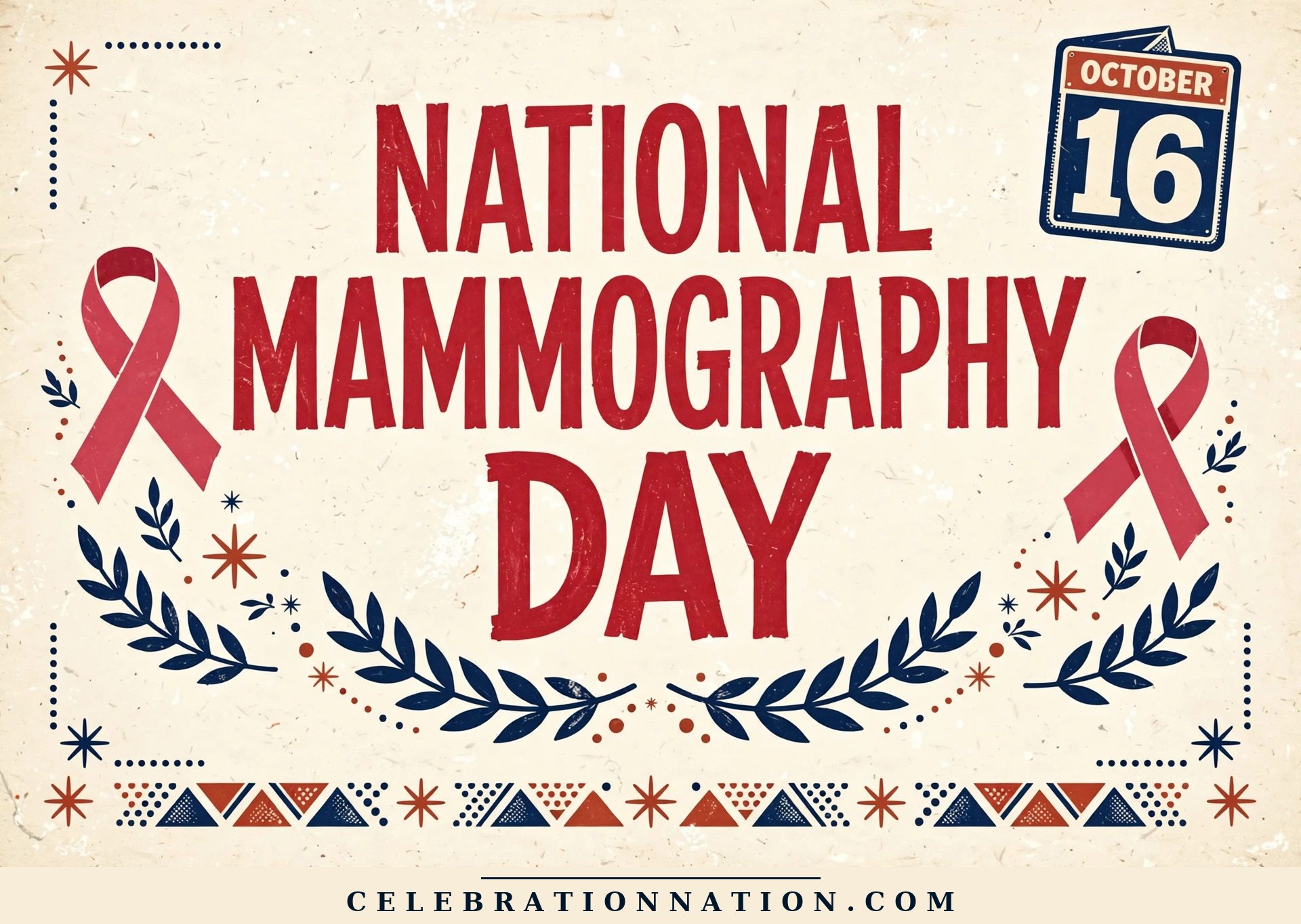
National Mammography Day
This day highlights the crucial role of early detection in saving lives from breast cancer.
- Roots
- Proclaimed in 1993 by President Bill Clinton
- Vibe
- Encouraging and supportive community involvement
- Also on Oct 16
- World Restart a Heart Day · World Spine Day · World Menopause Day
- Hashtag
- #NationalMammographyDay
3 ways to celebrate
Schedule your screening
Book your mammogram or remind a loved one to.
Walk for awareness
Join a breast health walk or fundraiser together.
Share screening info
Post reminders about mammograms in the breakroom.
Plan ahead
National Mammography Day is observed on the third Friday in October. Here is where it lands for the next ten years, handy for planners, marketers and party people.
Fast facts
The story
National Mammography Day is an annual observance that falls on the third Friday of October. Proclaimed in 1993 by President Bill Clinton, this day aims to raise awareness about the importance of mammograms in detecting breast cancer early. By encouraging women to schedule their mammograms, we can improve survival rates and promote better health practices.
Read the full story
Breast cancer is one of the most common cancers among women, with approximately 1 in 8 women being diagnosed in their lifetime. Early detection through mammograms is crucial, as it can significantly reduce mortality rates. Studies show that regular screenings can lower breast cancer mortality by as much as 30%. This makes National Mammography Day an essential date in the health calendar.
On this day, communities come together to promote awareness and education around breast health. Events and discussions are organized to highlight the importance of breast cancer screenings, encouraging women to take charge of their health. Sharing personal stories and experiences can inspire others to prioritize their screenings and health check-ups.
As we observe National Mammography Day, it is vital to remember the impact of community support and awareness. By discussing breast health openly and encouraging women to schedule their mammograms, we can contribute to a culture that values health and well-being. This day serves as a powerful reminder that early detection can save lives.
Did you know?
The First Mammogram
The first dedicated mammography machine debuted in 1969, revolutionizing breast cancer detection.
Breast Cancer Statistics
The American Cancer Society estimated 297,790 new invasive breast cancer cases in 2023.
Mammography Technology
Digital mammography was introduced in the early 2000s, improving detection rates.
Mammogram Frequency
Current U.S. guidelines recommend women begin regular mammograms at age 40.
Men and Breast Cancer
While rare, men can also develop breast cancer, and awareness is essential.
Global Awareness
National Mammography Day is a U.S. observance held during Breast Cancer Awareness Month.
Impact of Early Detection
Localized breast cancer has a five-year relative survival rate of about 99%.
Around the world
Every culture celebrates a little differently.
- USUnited StatesIn the U.S., mammography is a crucial aspect of preventative health care for women.
- CACanadaCanada also emphasizes the importance of regular mammograms, with national screening programs in place.
- GBUnited KingdomThe UK offers free mammograms to women aged 50 to 71, highlighting early detection.
- AUAustraliaAustralia promotes breast cancer awareness through initiatives like BreastScreen Australia.
- DEGermanyGermany provides comprehensive breast cancer screening programs to women, focusing on age-specific recommendations.
- FRFranceFrance has national campaigns encouraging women to participate in regular mammography screenings.
Keep the party going
See the calendar
Celebrate every day, all year
Official gear from the people who track 1,700+ celebrations.
Browse the shop 2027 National Day Wall CalendarGet the 2026 edition free. 1,700+ observances.
Never miss a reason to celebrate.
One quick morning email with today's celebrations, ideas and posters. Free, unsubscribe anytime.
🎉 You're on the list! Watch your inbox for The Daily Confetti.