



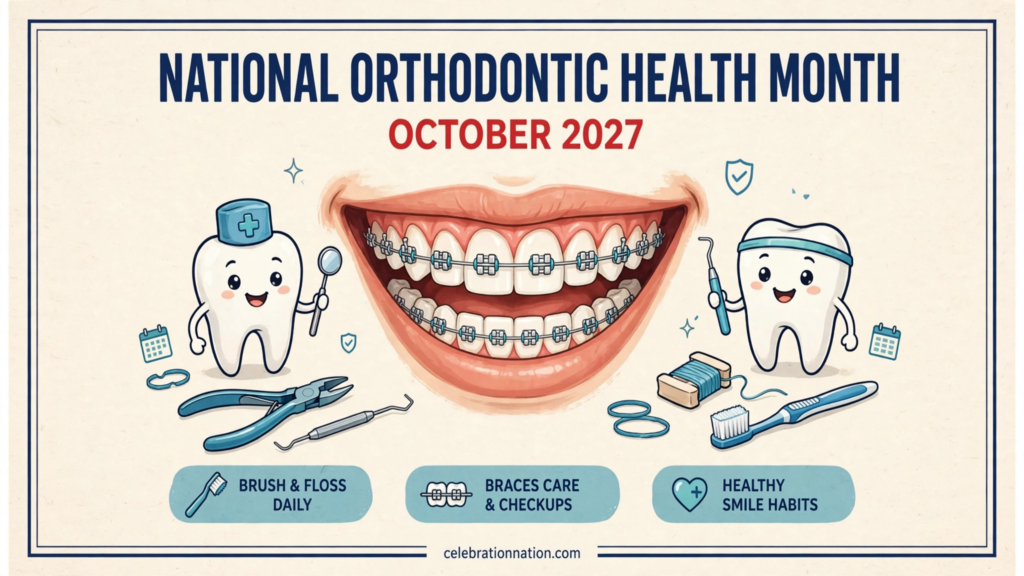
National Orthodontic Health Month
Every October, National Orthodontic Health Month turns the spotlight on the specialty devoted to healthy, well-aligned teeth and jaws. Proclaimed by the American Association of Orthodontists, the month reminds families that orthodontics is about far more than a pretty smile. It is about bites that work properly, teeth that are easier to keep clean, and confidence that shows in every grin. It also arrives at a perfect moment, just as students settle into new school routines with braces, retainers, and aligners in tow. In 2027, it runs October 1 through October 31.
- Hashtag
- #NationalOrthodonticHealthMonth
NATIONAL ORTHODONTIC HEALTH MONTH
Every October, National Orthodontic Health Month turns the spotlight on the specialty devoted to healthy, well-aligned teeth and jaws. Proclaimed by the American Association of Orthodontists, the month reminds families that orthodontics is about far more than a pretty smile. It is about bites that work properly, teeth that are easier to keep clean, and confidence that shows in every grin. It also arrives at a perfect moment, just as students settle into new school routines with braces, retainers, and aligners in tow. In 2027, it runs October 1 through October 31.
Orthodontics is the first specialty of dentistry, and its work reaches much deeper than appearance. Crooked or crowded teeth trap food and plaque in places a toothbrush struggles to reach, raising the risk of cavities and gum disease, while a misaligned bite can wear teeth unevenly, strain the jaw, and make chewing or speaking harder than it should be. By gently guiding teeth and jaws into their proper positions over time, orthodontists help patients bite comfortably, brush effectively, and keep their natural teeth healthier for life. Treatment is not only for teenagers, either. Adults increasingly seek orthodontic care thanks to discreet options like clear aligners, ceramic braces, and braces placed behind the teeth. The American Association of Orthodontists, the world’s oldest and largest dental specialty organization, represents about 19,000 orthodontist members across the United States, Canada, and abroad, all dedicated to advancing the art and science of orthodontics and educating the public about its benefits.
October is a fitting home for the observance. Fall is when millions of children and teens settle into new school routines while wearing braces, retainers, or clear aligners, and orthodontists see school-aged patients every six to eight weeks for adjustments, encouragement, and progress checks. Those regular visits build trusted relationships that go beyond teeth, which is one reason the profession takes its October platform seriously. It is also the ideal season for parents to think ahead about growing smiles. The American Association of Orthodontists recommends that every child receive an orthodontic checkup no later than age seven, when an orthodontist can spot developing bite problems early, while jaws are still growing and treatment can be at its most effective. An early look does not always mean early braces, but it does mean early answers.
This month also carries a message of kindness that goes beyond teeth. Each October, the American Association of Orthodontists joins Stand for the Silent, a nonprofit working to end bullying and youth suicide, for the Bullying Bites campaign, since October is also National Bullying Prevention Month. The need is urgent: nationwide, one in five students ages 12 to 18 experiences bullying, and an estimated 160,000 children miss school each day out of fear of attack or intimidation. Because orthodontists meet with young patients regularly throughout treatment, they are in a unique position to reinforce kindness and confidence. Everyone is invited to wear orange on Unity Day, October 22, to help young people feel confident and safe at school and online, not just in October but every day.
What does orthodontic care actually involve? It usually begins with a consultation, where the orthodontist examines the teeth and bite, takes photographs, X-rays, or digital scans, and maps out a personalized plan. Treatment options today go far beyond the classic metal braces: ceramic braces blend with the teeth, lingual braces hide behind them, and clear aligner trays straighten teeth without brackets or wires at all. After active treatment, retainers hold everything in its new place, because teeth naturally want to drift back. Only a trained orthodontic specialist has the years of extra education needed to guide that whole journey safely, which is why the association urges families to seek care from a specialist. This October, take a moment to appreciate the science, and the specialists, behind the smile.
THE STORY BEHIND NATIONAL ORTHODONTIC HEALTH MONTH
🦷 Ancient Aligners
People have wanted straighter teeth for thousands of years. As far back as 1000 B.C., ancient Egyptians and Etruscans used materials produced from animal intestines, along with gold wire and metal bands, to try to shift teeth into better positions, and the Phoenicians experimented with similar techniques. An ancient Roman scientist even observed that steady finger pressure applied to a tooth over many months could move it to a new position. The tools were crude, the understanding of biology was thin, and visits were surely less pleasant than today’s, but the goal was exactly the one orthodontists pursue now: teeth that line up the way nature intended, working together comfortably.
🔬 The Bandeau
Modern orthodontics began to take shape in the 1700s, when French dentist and surgeon Pierre Fauchard, often called the father of modern dentistry, invented the Bandeau. It was a horseshoe-shaped appliance designed to expand the dental arch and guide teeth into their proper places, and it ranks among the first devices ever built specifically to move teeth rather than simply fill or pull them. Early in the 1800s, Francois Delabarre followed with the wire crib, and by combining wire cribs with fine tubing, dentists learned to align the jaw and teeth at the same time. Step by step, straightening teeth was becoming a science.
📐 The Father of Modern Orthodontics
In the late 1800s, Edward H. Angle became the first dentist to specialize exclusively in orthodontics, and he went on to found the organization that became the American Association of Orthodontists, along with its first school and its first journal. Angle developed a classification system for malocclusions, the clinical term for misaligned bites, which gave the young profession a shared language for diagnosis and treatment planning. Remarkably, the classification system he created more than a century ago is still in use by orthodontists around the world today, a testament to how thoroughly he understood the mechanics of the bite.
🏗️ From Gold to Nearly Invisible
Braces have come a remarkable way in a hundred years. Early in the 1900s, orthodontists wrapped teeth with bands made of gold, ivory, wood, copper, or zinc, connected by wires that pressed teeth into place, and gold became especially popular because it was easy to mold and gentle on the mouth. Stainless steel took over in the 1970s for its strength, flexibility, and lower cost, removable retainers arrived to hold results in place after treatment, and by the late 1990s clear aligner systems and tooth-colored brackets offered nearly invisible ways to straighten teeth. Today’s patients can choose metal, ceramic, lingual, or removable options, a menu of choices those early gold-band wearers could never have imagined.
🧡 Bullying Bites
Because October is both National Orthodontic Health Month and National Bullying Prevention Month, the American Association of Orthodontists partners each October with Stand for the Silent, a nonprofit founded in 2010 to end bullying and youth suicide, on the Bullying Bites campaign. The campaign encourages everyone to wear orange on Unity Day, October 22, and to promote safe, healthy environments in and out of schools. With orthodontists seeing young patients every six to eight weeks, the profession uses those trusted, long-term relationships to reinforce kindness and help break the cycle of bullying, one appointment at a time.
WAYS TO CELEBRATE
🪥 Brush and Floss Like You Mean It
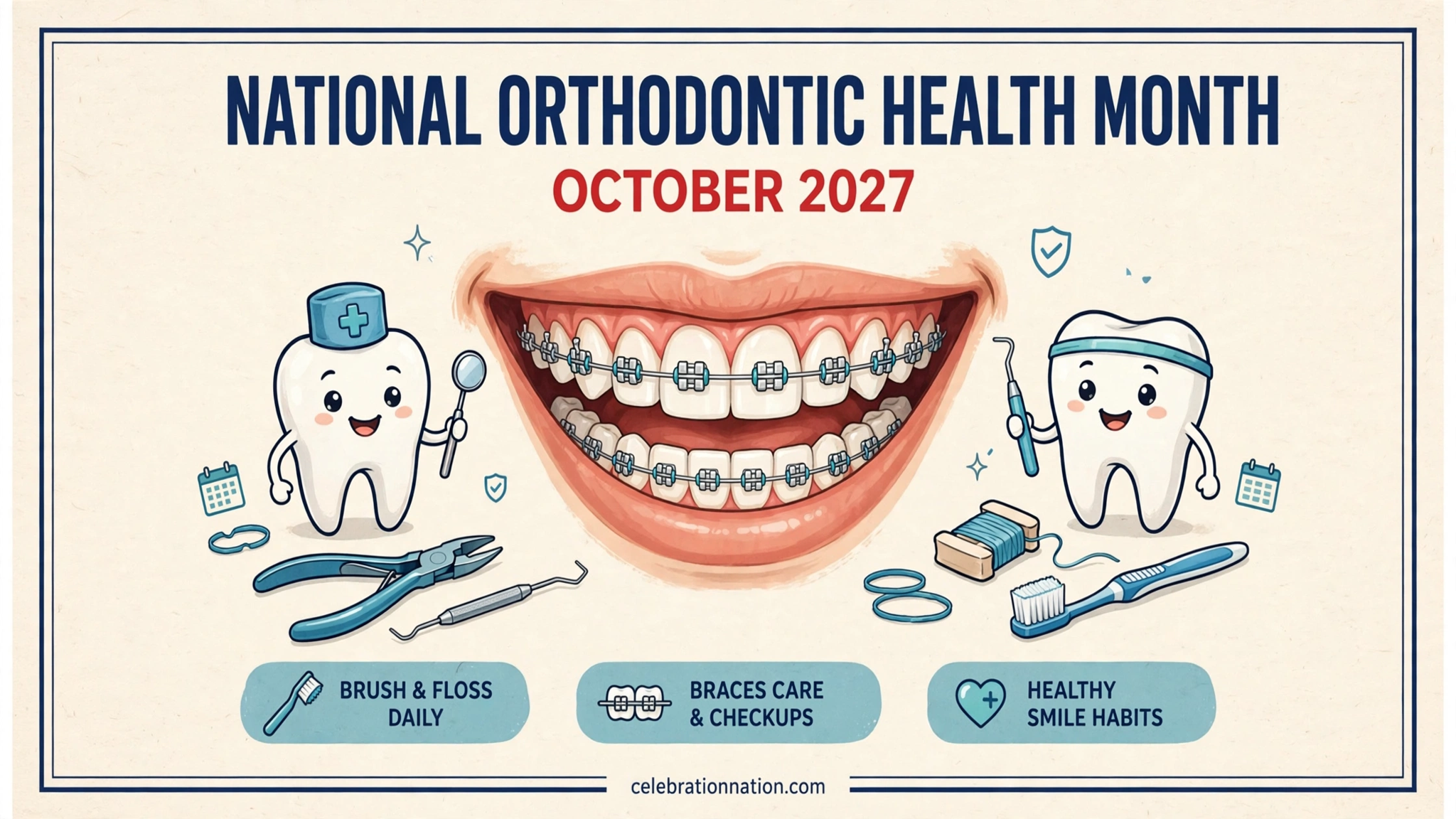
Good orthodontic health starts at the sink. Spend two full minutes brushing, clean carefully around every bracket and wire with interdental brushes or a water flosser, and floss daily so teeth stay healthy while they straighten. Good habits protect the investment treatment represents.
🧡 Wear Orange for Unity Day
Join the Bullying Bites campaign by wearing orange on October 22 and talking with friends about how kindness builds confidence, both on and off the orthodontic chair. A visible show of solidarity tells anyone being bullied that they are not alone.
🦷 Book That Age-Seven Checkup
The American Association of Orthodontists recommends an orthodontic evaluation no later than age seven. Call a local orthodontist or ask your family dentist for a referral, and encourage other parents at school or in community groups to do the same. Early answers give growing smiles the best start.
Celebrate National Orthodontic Health Month
Straight teeth, a healthy bite, and a confident smile are worth celebrating every day of October.
Coming up next
See the calendar



Celebrate every day, all year
Official gear from the people who track 1,700+ celebrations.
Browse the shop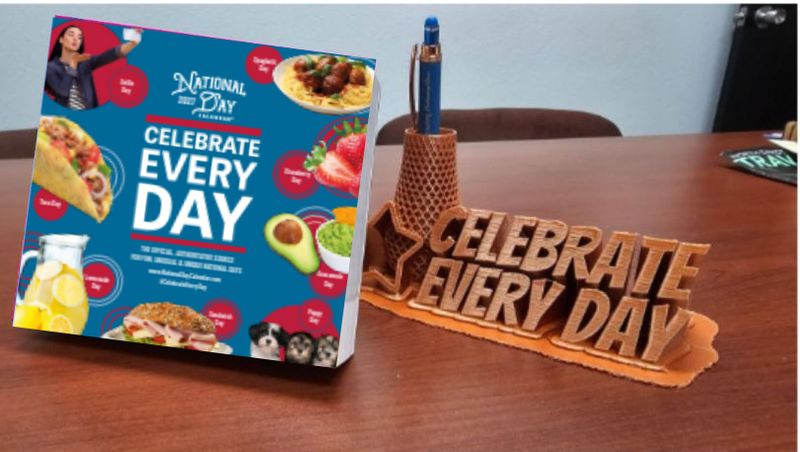 2027 National Day Desk CalendarA new celebration every morning. Daily tear-off.
Never miss a reason to celebrate.
One quick morning email with today's celebrations, ideas and posters. Free, unsubscribe anytime.
🎉 You're on the list! Watch your inbox for The Daily Confetti.