




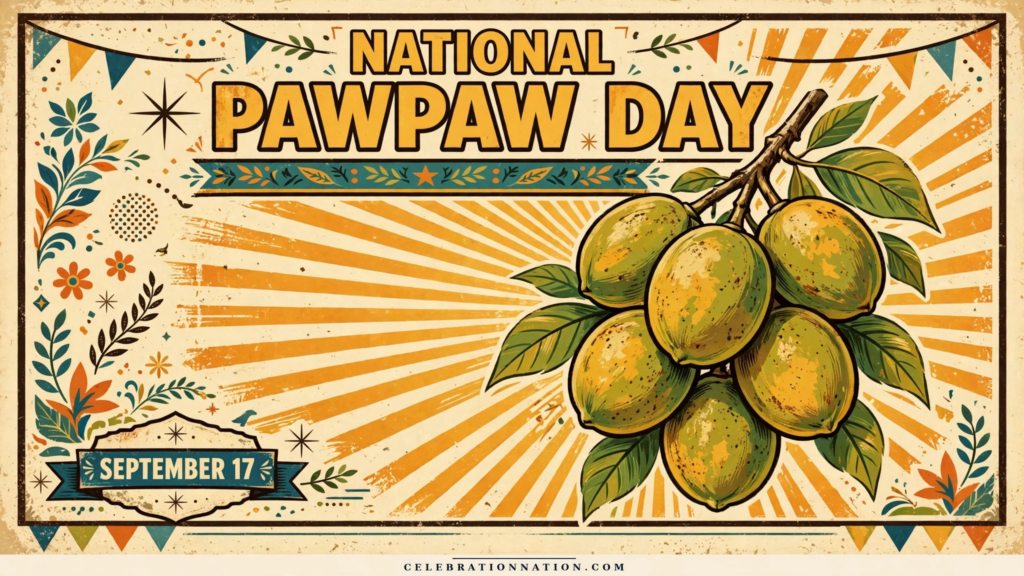
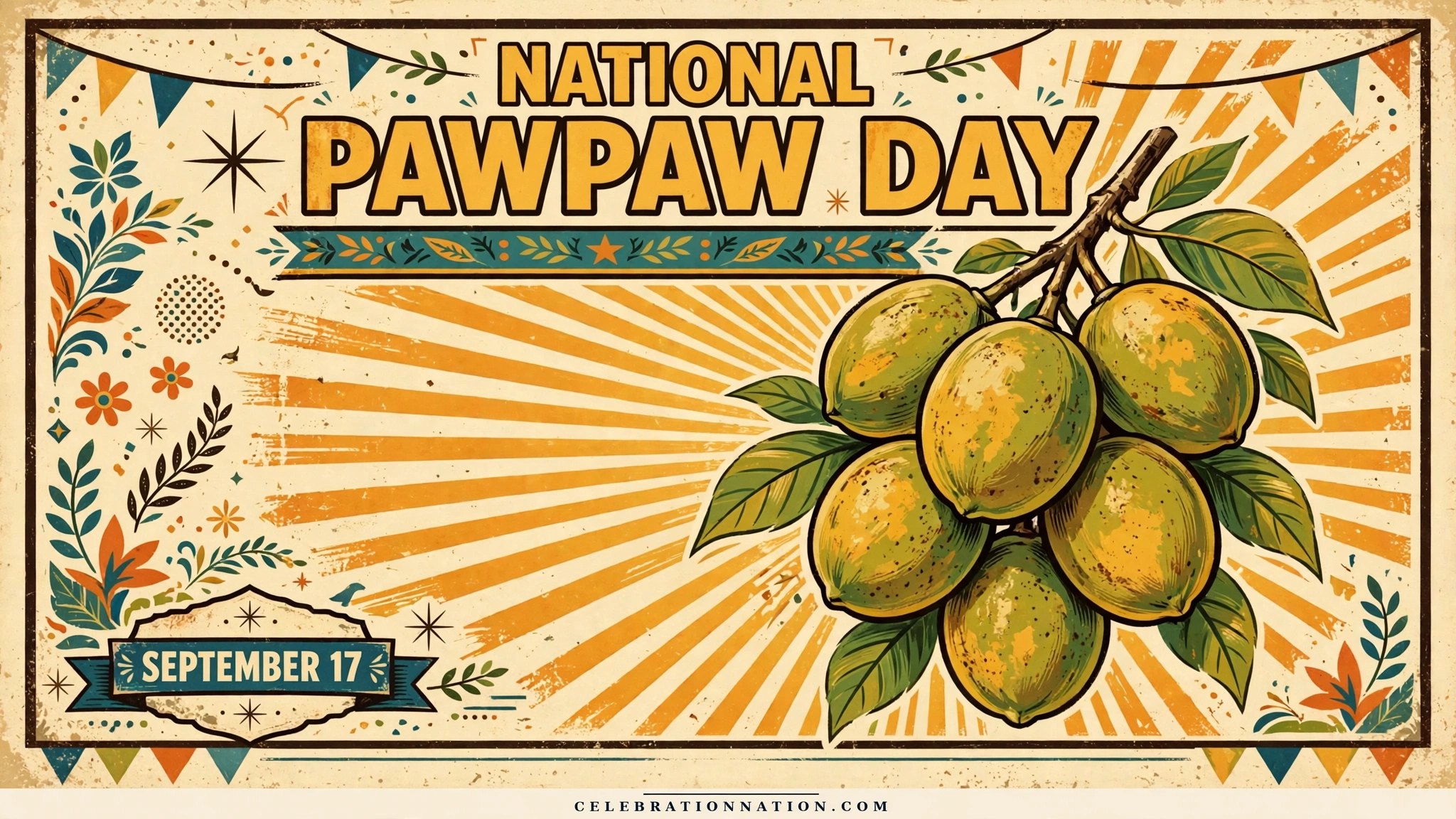
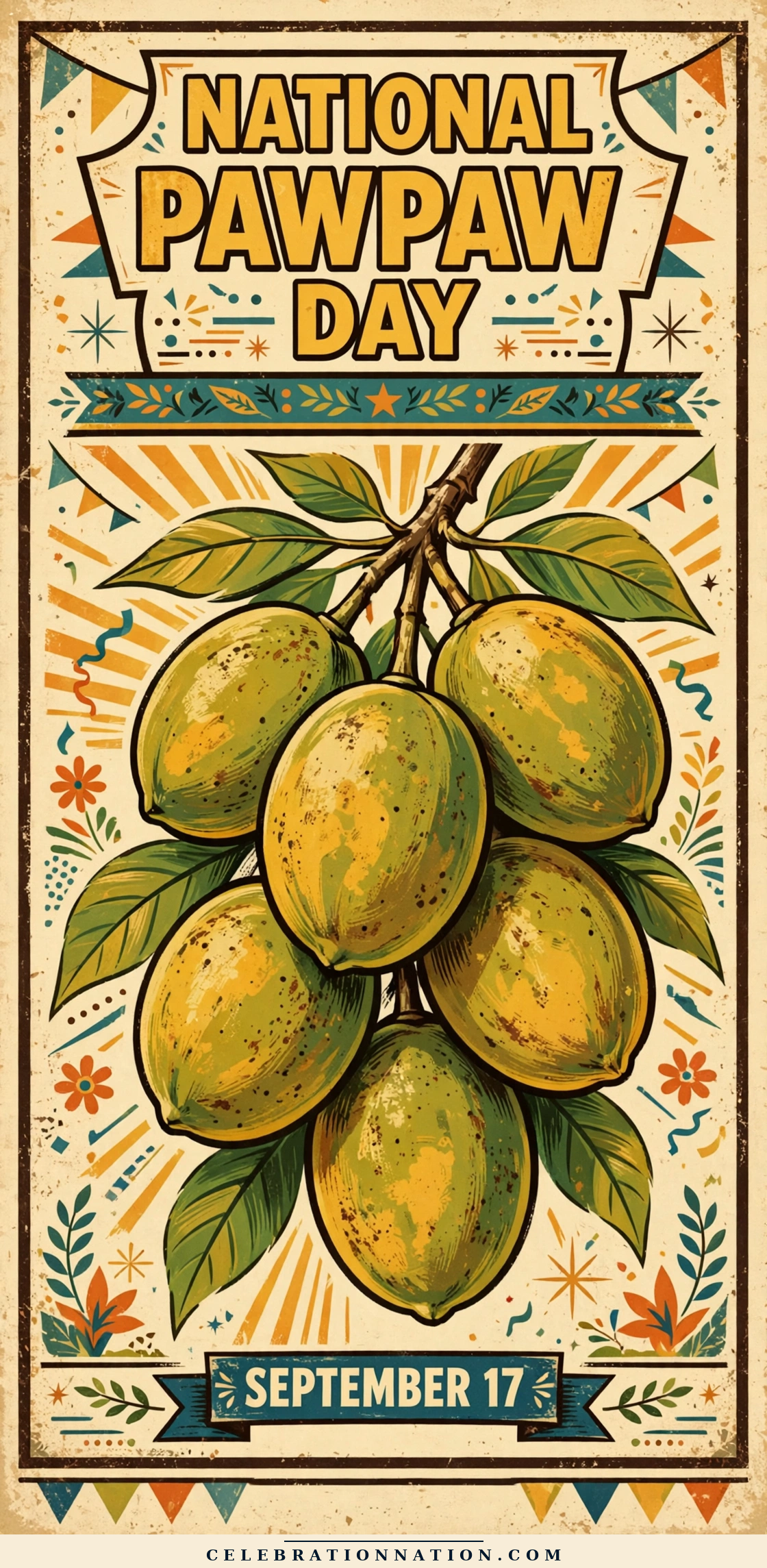
National Pawpaw Day
Discover the delicious world of pawpaws, America’s largest edible fruit.
- Roots
- Founded in 2019 by Kentucky State University
- Vibe
- A celebration of unique flavors and heritage
- Also on Sep 17
- Constitution Day and Citizenship Day · International Country Music Day · Apple Dumpling Day
- Hashtag
- #NationalPawpawDay
3 ways to celebrate
Taste the fruit
Find pawpaws at a market or forager and try them fresh.
Go foraging
Hike with a guide and learn to spot pawpaw trees.
Share the harvest
Bring pawpaw treats to share if you can find them locally.
Plan ahead
National Pawpaw Day is observed on the third Thursday in September. Here is where it lands for the next ten years, handy for planners, marketers and party people.
Fast facts
The story
National Pawpaw Day was established to recognize the pawpaw fruit, which is often overlooked despite its rich flavor and historical significance. Native to the eastern United States, the pawpaw has a custard-like texture and a taste reminiscent of banana and mango, making it a unique addition to various culinary creations. This celebration occurs annually on the third Thursday of September, inviting enthusiasts to explore the fruit's potential in modern cuisine.
Read the full story
The pawpaw tree, Asimina triloba, thrives in the understory of deciduous forests and can grow up to 25 feet tall. Historically, pawpaws were a staple food for Native American tribes and early settlers, who enjoyed the fruit's nutritional benefits. Its revival in recent years has led to increased interest in pawpaw cultivation and appreciation, with farmers and gardeners rediscovering this native gem.
Events surrounding National Pawpaw Day often include local festivals, tastings, and educational workshops. Many farmers' markets showcase pawpaw products, from jams to desserts, allowing visitors to sample the fruit in different forms. Additionally, many culinary experts are experimenting with pawpaw in innovative recipes, highlighting its versatility in both sweet and savory dishes.
As the celebration of National Pawpaw Day grows, so does the community surrounding it. Pawpaw enthusiasts are passionate about sharing their love for this fruit, fostering a sense of connection among growers, chefs, and consumers. By participating in National Pawpaw Day, individuals can contribute to the preservation of this unique American fruit and its place in our culinary heritage.
Did you know?
Largest Edible Fruit
Pawpaws can reach sizes of up to a pound.
Flavor Profile
They taste like a mix of banana, mango, and melon.
Pollination Needs
Pawpaws require specific flies for pollination.
Short Season
Pawpaw season lasts only a few weeks in late summer.
Historical Use
Native Americans used pawpaws for food and trade.
Culinary Versatility
Pawpaws can be used in both sweet and savory dishes.
Nutritional Value
Pawpaws are high in vitamins and antioxidants.
Around the world
Every culture celebrates a little differently.
- USNorth AmericaHome to the native pawpaw tree.
- FRFrancePawpaw is gaining popularity in French cuisine.
- DEGermanyFarmers are exploring pawpaw cultivation.
- GBUnited KingdomInterest in pawpaw as a novel fruit grows.
- BRBrazilPawpaw is often used in tropical recipes.
- AUAustraliaAustralian chefs are experimenting with pawpaw.
Keep the party going
See the calendar


Celebrate every day, all year
Official gear from the people who track 1,700+ celebrations.
Browse the shop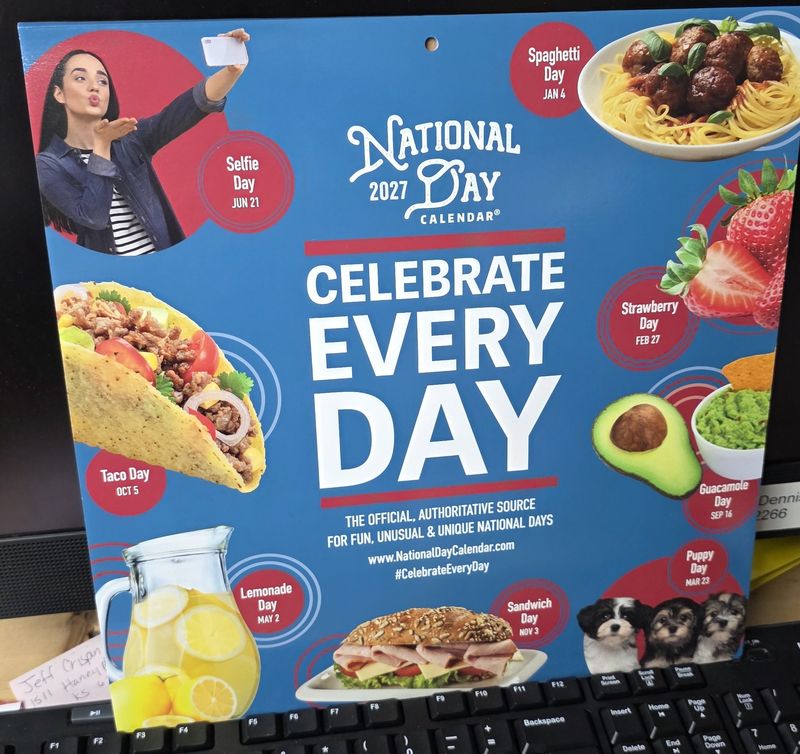 2027 Wall + Desk Calendar BundleCelebrate every day at home and at work.
Never miss a reason to celebrate.
One quick morning email with today's celebrations, ideas and posters. Free, unsubscribe anytime.
🎉 You're on the list! Watch your inbox for The Daily Confetti.