





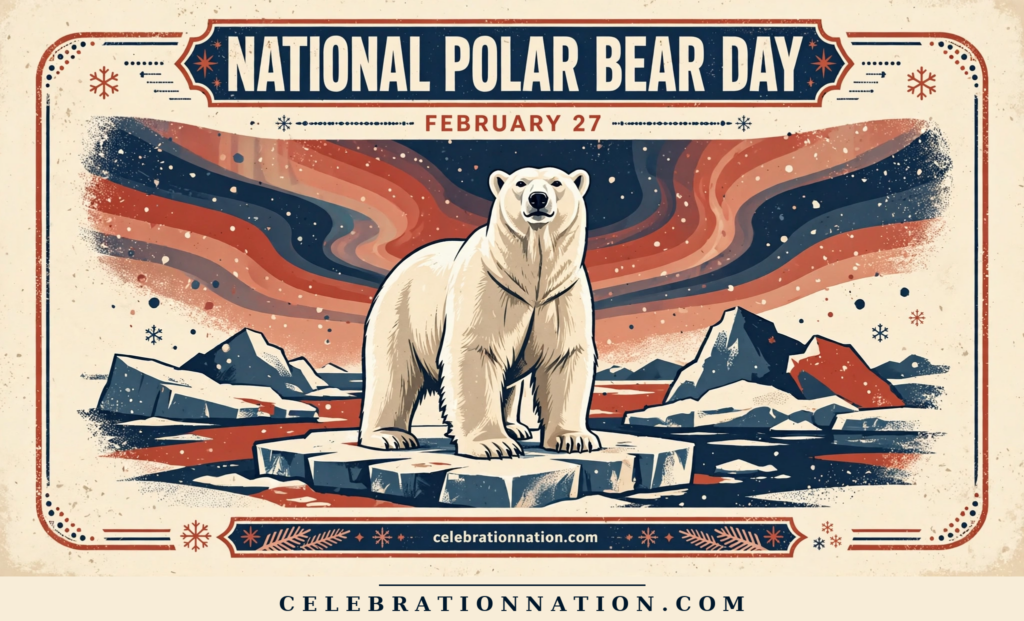
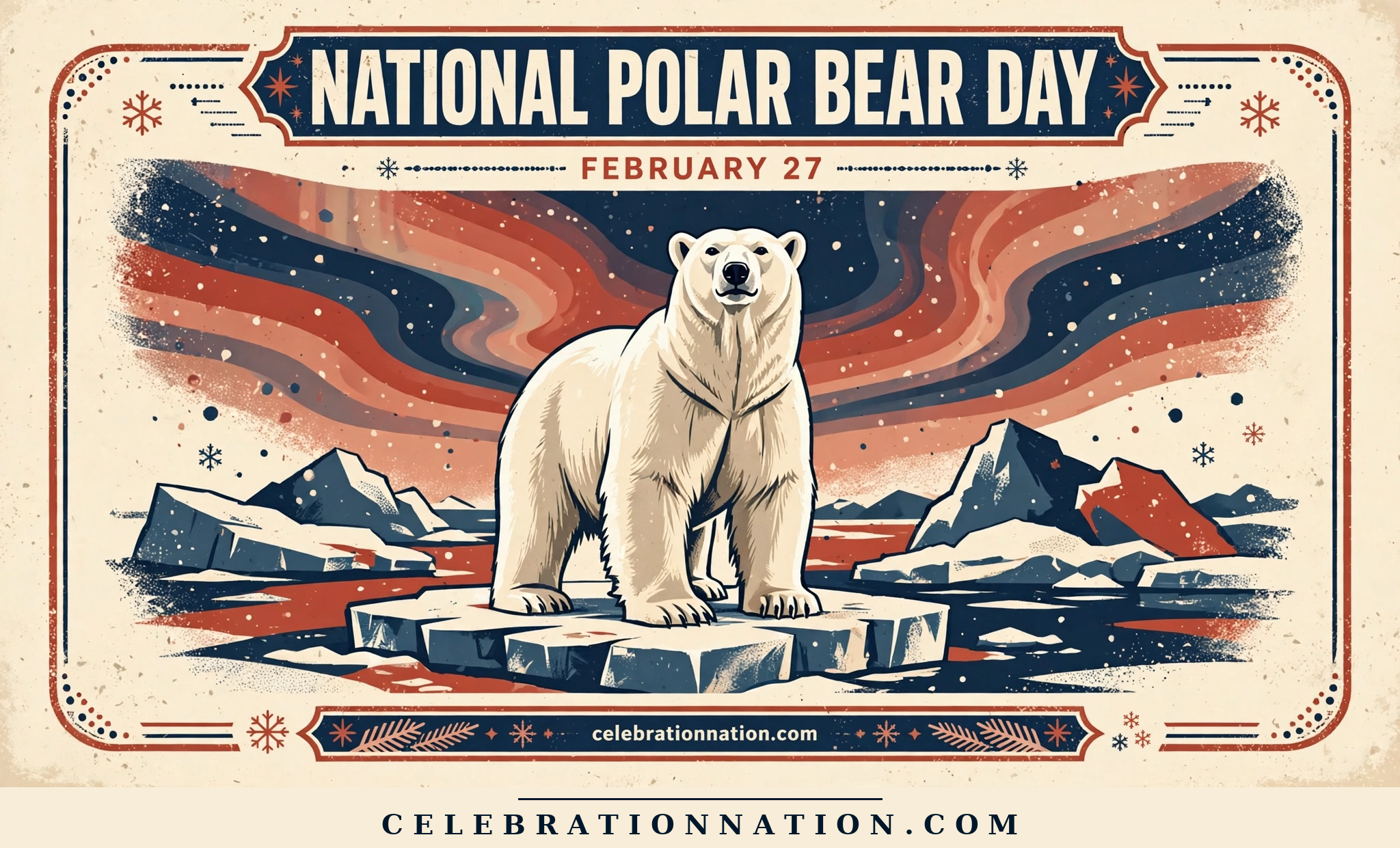
National Polar Bear Day
National Polar Bear Day is a call to action for all of us to protect our planet's wildlife.
- Roots
- Established by Polar Bears International in 2011
- Vibe
- Awareness and conservation focus
- Also on Feb 27
- World Ngo Day · Anosmia Awareness Day · International Polar Bear Day
- Hashtag
- #NationalPolarBearDay
3 ways to celebrate
Draw a polar bear
Sketch the Arctic's biggest predator with the kids.
Plan a zoo visit
See polar bears up close at your local zoo.
Adopt a bear symbolically
Sponsor a polar bear through a wildlife charity as a class.
Plan ahead
National Polar Bear Day is observed on February 27 every year. Here is where it lands for the next ten years, handy for planners, marketers and party people.
Fast facts
The story
National Polar Bear Day, celebrated annually on February 27, raises public awareness about the challenges facing polar bears in a rapidly changing climate. As the Arctic ice melts, these iconic animals find their hunting grounds diminished, impacting their ability to survive. This day serves as a reminder of the interconnectedness of our ecosystems and the urgent need for conservation efforts.
Read the full story
Polar Bears International established National Polar Bear Day in 2011 to highlight the plight of these magnificent creatures. Polar bears rely heavily on sea ice for hunting seals, one of their primary food sources. As global temperatures continue to rise, the loss of sea ice not only threatens polar bears but also the entire Arctic ecosystem, creating ripple effects across the globe.
Educational programs and community events are crucial in promoting awareness about polar bears and their habitat. Schools across the country often engage students with fun facts and activities related to polar bears, fostering a sense of responsibility for wildlife conservation. Families are encouraged to take part in local initiatives that protect the environment, thus contributing to the survival of these majestic animals.
As individuals, we can make a difference by supporting conservation organizations and adopting sustainable practices. Simple actions, such as reducing carbon footprints and advocating for climate-friendly policies, can help protect polar bears and their habitats. On National Polar Bear Day, let us not only celebrate these incredible animals but also commit to safeguarding their future.
Did you know?
Unique Adaptations
Polar bears have transparent fur that appears white.
Swimming Skills
They can swim for days without resting.
Dietary Needs
Primarily carnivorous, they also eat berries.
Cubs' Survival
Mother polar bears can have 1-4 cubs.
Hibernation
Only pregnant females hibernate during winter.
Cultural Significance
Polar bears are symbols of the Arctic in many cultures.
Conservation Status
Listed as vulnerable by the IUCN.
Around the world
Every culture celebrates a little differently.
- USUnited StatesHome to zoos and aquariums that educate about polar bears.
- CACanadaOffers vast Arctic regions that are polar bear habitats.
- RURussiaHosts a significant portion of the polar bear population.
- SESwedenEngages in conservation efforts for Arctic wildlife.
- NONorwayFocuses on climate change impacts in the Arctic.
- DKDenmarkSupports international efforts to protect polar bears.
Keep the party going
See the calendar


Celebrate every day, all year
Official gear from the people who track 1,700+ celebrations.
Browse the shop National Day Celebration Card GameA party in a box, any day of the year.
Never miss a reason to celebrate.
One quick morning email with today's celebrations, ideas and posters. Free, unsubscribe anytime.
🎉 You're on the list! Watch your inbox for The Daily Confetti.