
National Pretzel Day
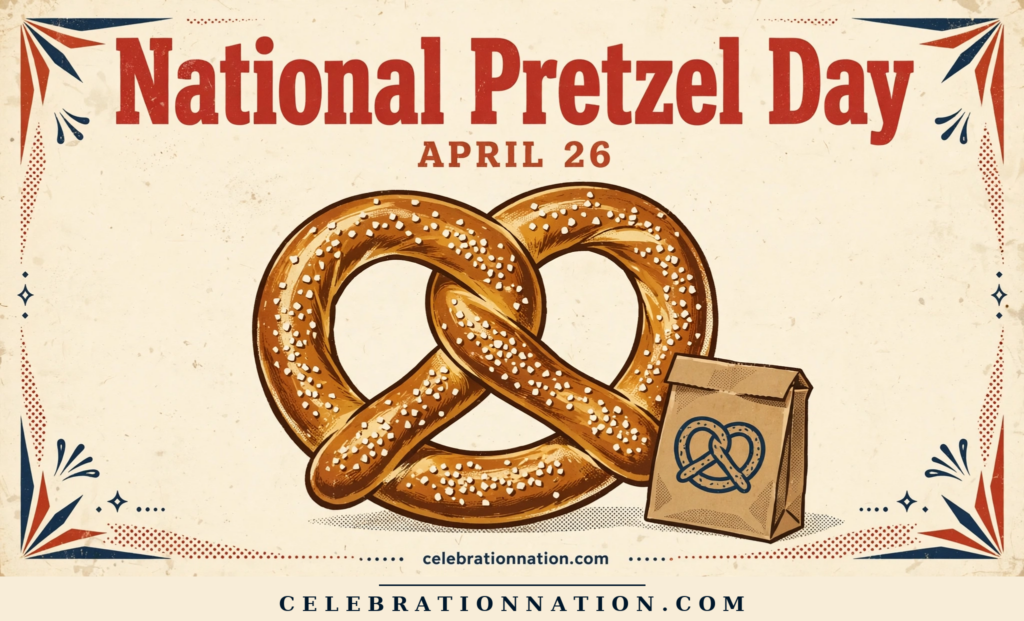
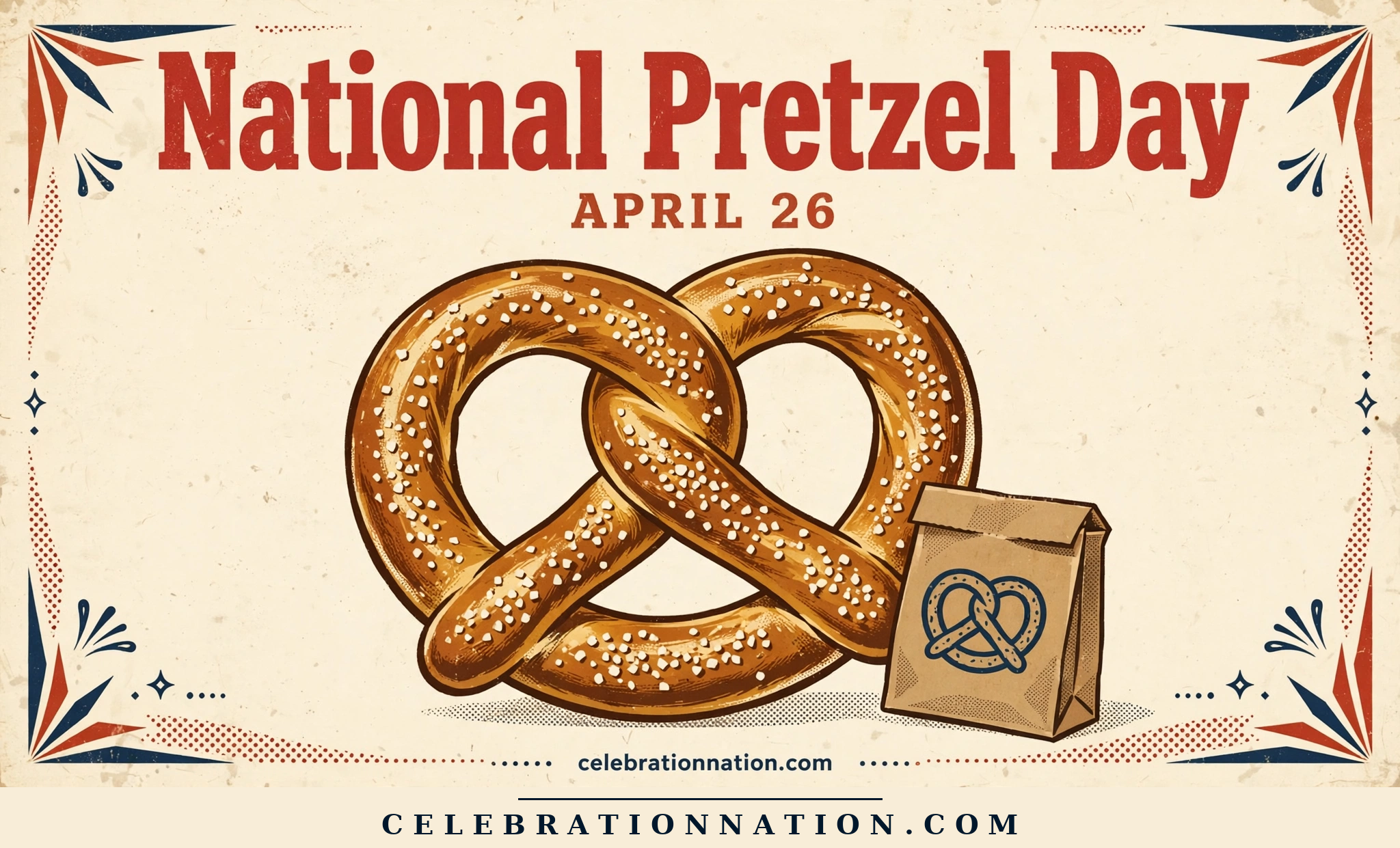
Twisted dough, salt like snow, a pint of something cold. National Pretzel Day on April 26 honors the snack that has been holding beer glasses company for a thousand years.
- Roots
- European Monasteries
- Vibe
- Twisty & Salted
- Also on Apr 26
- World Intellectual Property Day · International Chernobyl Remembrance Day · Help a Horse Day
- Hashtag
- #NationalPretzelDay
Ways to celebrate
Soft or hard, the rules are the same:
- 🥨 Go soft. The fresh, warm, chewy kind. Mall pretzels count. Bakery pretzels are better.
- 🌭 Get mustard. Yellow, whole-grain, honey — whichever, just have it.
- 🍺 Pair with a beer. Pretzels were invented for beer. This is not a coincidence.
- 🥖 Try to make one at home. The lye bath is scary; baking soda works in a pinch.
- 🌍 Upgrade to a Bavarian laugenbrezel. The original. Find a German bakery; buy one.
Make it your kind of celebration
Family
Homemade pretzel night. Kids love the twisting. The dough is forgiving. Golden-brown results in 20 minutes.
Kids
Let them twist their own shapes. Not every pretzel needs to be a pretzel. Hearts, stars, names — all baked, all good.
Couples
German pub night. Soft pretzels, mustard, dark beer, Bavarian playlist. Surprisingly romantic.
Office
Hot-pretzel tray at a team meeting. Zero prep, 100% morale. Every mall has a pretzel stand; there's one near you.
School
Lesson in fermentation + baking chemistry. A pretzel is a yeasted dough with a surface chemistry upgrade (the lye bath = Maillard reaction on steroids).
Community
Oktoberfest-adjacent fundraiser any time of year. Pretzels, mustard, beer, community tables. Draws a crowd.
Just me
One warm pretzel. One cold beer. One magazine. 20 minutes. That's a whole evening.
Plan ahead
National Pretzel Day is observed on April 26 every year. Here is where it lands for the next ten years, handy for planners, marketers and party people.
Fast facts
The story
The pretzel is at least 1,400 years old, and its shape, its name, and even its salt content are all rooted in a story about kids and prayer.
Read the full story
Legend (widely accepted, lightly evidenced) says the pretzel was invented around 610 CE by Italian monks who shaped leftover bread dough into the form of crossed arms folded in prayer. The monks baked them and gave them to children as rewards for memorizing Bible verses. The Latin name was pretiola "little reward." The German mouth couldn't handle pretiola, so it became Brezel, which English absorbed as "pretzel."
For the next 1,000 years, pretzels spread across Europe, monasteries, bakeries, beer halls. In 1510, Viennese bakers reputedly saved their city from a Turkish siege by being up at 3 AM making pretzels, hearing the tunneling underground, and alerting the authorities. For this they were granted the right to display the pretzel on their coat of arms, which is why the symbol for bakeries in Germany, Austria, and Switzerland is still a pretzel today.
Pretzels came to America with German immigrants in the 18th century. The first U.S. commercial pretzel bakery opened in Lititz, Pennsylvania in 1861, Julius Sturgis's bakery, still operating as a museum. Hard pretzels were invented by accident around that time: a bakery apprentice overbaked a batch, they cooled into crunchy pretzels, and the shelf-stable snack food industry was born.
Pennsylvania still produces 80% of America's pretzels. Philadelphia eats more of them per capita than anywhere on Earth (12 pounds per person per year, vs. the 1.5 lb national average). National Pretzel Day was declared by Pennsylvania Governor Ed Rendell in 2003 and adopted nationally soon after.
Four things that make a pretzel a pretzel:
Six regional takes, same idea, wildly different pretzels:
Did you know?
The world's largest pretzel: 842 lbs.
Baked in Mexico in 2015. 26 feet long. Took eight bakers 21 hours to make. Guinness World Record.
Philadelphia eats 12x more pretzels than average.
Average American: 1.5 lbs/year. Philadelphia: 12 lbs/year. The local pretzel industry employs thousands.
Pretzels are in ancient art.
The earliest known illustration of a pretzel appears in a 12th-century illuminated manuscript from Hortus Deliciarum. The shape has barely changed since.
Pretzels are a good-luck symbol.
In old Germany, exchanging a pretzel on New Year's meant good luck for the year. In some regions, couples broke a pretzel at weddings (wishbone-style), the one holding the bigger piece chose the year's decisions.
Keep the party going
See the calendar
Celebrate every day, all year
Official gear from the people who track 1,700+ celebrations.
Browse the shop 2027 National Day Wall CalendarGet the 2026 edition free. 1,700+ observances.
Never miss a reason to celebrate.
One quick morning email with today's celebrations, ideas and posters. Free, unsubscribe anytime.
🎉 You're on the list! Watch your inbox for The Daily Confetti.