

National Prime Rib Day
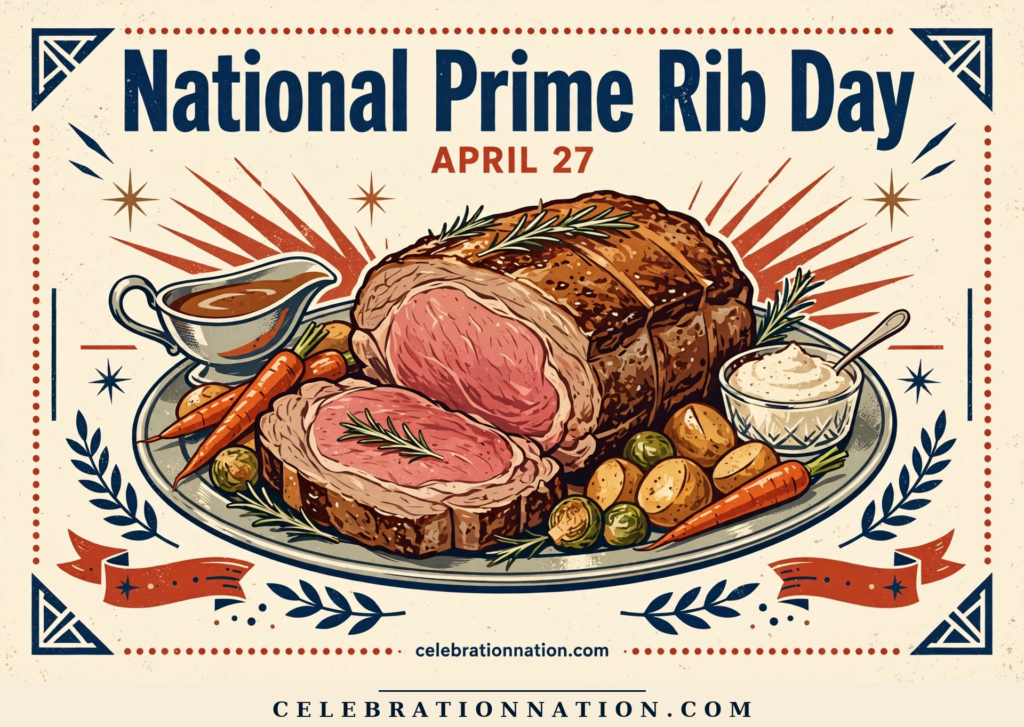
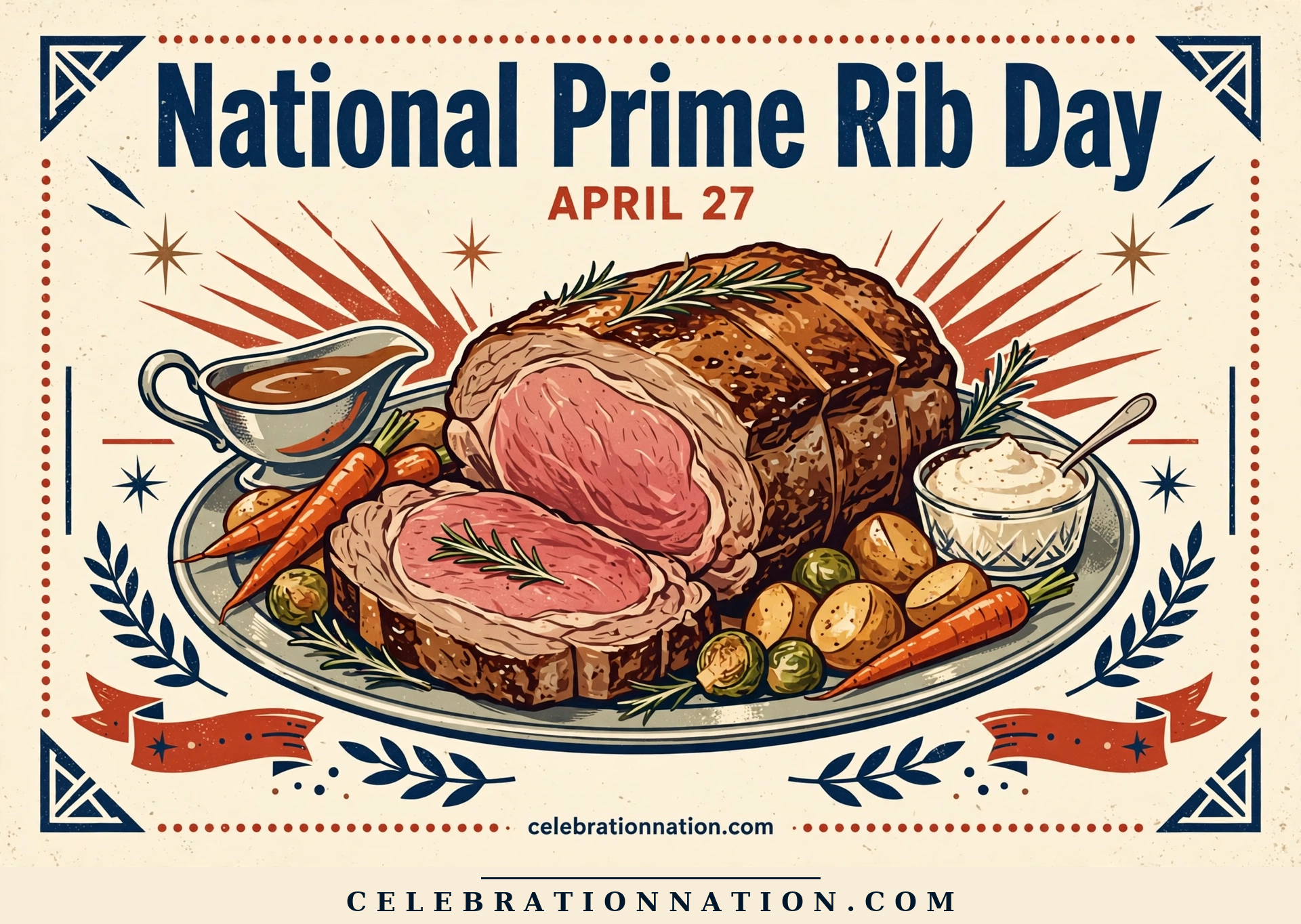
National Prime Rib Day on April 27 honors America's most impressive roast — the standing rib roast, slow-cooked to medium-rare perfection, carved tableside with horseradish cream, sitting at the center of every fancy American steakhouse menu. From Lawry's-style to the modern Wagyu, prime rib is the definitive Sunday dinner of ambitious American home cooks.
- Vibe
- Decadent & Classic
- Also on Apr 27
- World Tapir Day · Gummi Bear Day · Tell a Story Day
- Hashtag
- #NationalPrimeRibDay
Ways to celebrate
Roast, carve, savor:
- 🥩 Roast one at home. 4-6-bone standing rib roast, seasoned, reverse-seared (low-and-slow then blast of heat). Takes 3-4 hours total; feeds 8-12.
- 🍽️ Go to a classic steakhouse. Lawry's, Peter Luger, Gallagher's, Smith & Wollensky. Prime rib is on the menu. Order it medium-rare.
- 🌿 Serve with Yorkshire pudding. The classic British accompaniment. Puffs up in the oven during the last 20 minutes of roasting. Uses pan drippings.
- 🍷 Pair with a big red. Napa Cabernet, Bordeaux, Barolo, or Rioja. Prime rib demands tannin.
- 📚 Read 'Meathead' by Meathead Goldwyn. The reverse-sear method is famous; his 'Mastering the BBQ' techniques are authoritative.
Make it your kind of celebration
Family
Sunday family dinner: 4-bone prime rib roast feeds 6-8. Carving at the table is a memorable ritual. Kids learn to eat red meat properly.
Kids
Kids often prefer medium-well (less 'bleeding' look). Cut thin slices for them; offer mashed potatoes and green beans as sides.
Couples
Couples prime rib night at a classic steakhouse. Split a bone-in cut; share a bottle of big red wine. Date-night classic.
Office
Corporate dinner at a steakhouse. Prime rib is the signature entrée for business gatherings. A tradition.
School
Culinary school lesson: primal cuts of beef, USDA grading, roasting technique. Prime rib is a centerpiece teaching dish.
Community
Friday night fish fries (in Wisconsin/Upper Midwest) often include prime rib. Classic tavern entrée.
Just me
A small 1-bone cut from a good butcher. Roast it yourself; enjoy a solitary steakhouse dinner at home.
Plan ahead
National Prime Rib Day is observed on April 27 every year. Here is where it lands for the next ten years, handy for planners, marketers and party people.
Fast facts
The story
Prime rib, properly, 'standing rib roast', is a beef cut from the cow's primal rib section (ribs 6-12). It's the meat that would otherwise be cut into ribeye steaks; 'prime rib' is the same section, left as a whole roast. The name 'prime' refers to the USDA grade (top 2% of American beef), but colloquially 'prime rib' is the dish name regardless of grade, most restaurant 'prime rib' is actually USDA Choice grade. This naming confusion is worth understanding; true USDA Prime prime rib is a genuine luxury.
Read the full story
The dish has British roots. 'Sunday roast beef' has been an English tradition since at least the 1700s, a weekly dinner of roasted beef, Yorkshire pudding (a batter-baked crust), potatoes, and gravy. The cut used was typically the standing rib. When American cooking absorbed British technique, the standing rib roast became the American Sunday dinner classic. American prime rib is bigger, fatter, and often more elaborately sauced than British roast beef, but the lineage is clear.
The American steakhouse transformation of prime rib dates to 1938, when Lawry's The Prime Rib restaurant opened in Beverly Hills. Lawry's pioneered tableside carving, servers wheel a giant silver cart to your table, carve from a 22-pound standing rib roast before your eyes. The restaurant became iconic. Lawry's also invented "Lawry's Seasoned Salt" (still sold today) specifically for prime rib. The steakhouse model spread, Hollywood's Musso & Frank, New York's Keens, Chicago's Gene & Georgetti, all adopted prime rib as signature.
Home cooking of prime rib is an established American tradition. The classic method: season with salt and herbs; roast at low temperature (225-275°F) for hours; finish with a high-heat blast to crisp the exterior. The 'reverse sear' method, popularized by Meathead Goldwyn and Kenji López-Alt, produces extraordinarily tender meat. A 4-6-bone roast feeds 8-12; a full 7-bone roast can feed 20. The dish remains associated with Sunday dinners, major holidays (Christmas, Easter), and celebratory meals. April 27 is simply the calendar's annual reminder.
From classic roast to modern methods:
How different places honor the roast:
Did you know?
USDA Prime is rare.
Only 2% of American beef qualifies as USDA Prime grade. Most steakhouse 'prime rib' is actually USDA Choice (top 25%) or even Select. True USDA Prime is a genuine culinary luxury, look for it at high-end butchers.
Lawry's Seasoned Salt was invented for prime rib.
The seasoning still sold in American supermarkets was originally developed in 1938 at Lawry's The Prime Rib specifically to season their prime rib roasts. Now a generic American pantry staple.
Prime rib is one of the oldest roasted meats.
Roasted standing rib roast appears in ancient Roman cookbooks. 'Apicius' (1st century AD) includes recipes recognizable as modern prime rib technique, oil, herbs, salt, low-and-slow. The dish is 2,000+ years old.
A whole standing rib roast has 7 bones.
The full 'primal rib' section contains 7 ribs (6-12). Whole roasts weigh 18-22 pounds, feed 20+ people. Most restaurants and home cooks use 3-5-bone cuts. The 2-bone cut is the romantic-dinner-for-2 version.
Keep the party going
See the calendar


Celebrate every day, all year
Official gear from the people who track 1,700+ celebrations.
Browse the shop 2027 National Day Wall CalendarGet the 2026 edition free. 1,700+ observances.
Never miss a reason to celebrate.
One quick morning email with today's celebrations, ideas and posters. Free, unsubscribe anytime.
🎉 You're on the list! Watch your inbox for The Daily Confetti.